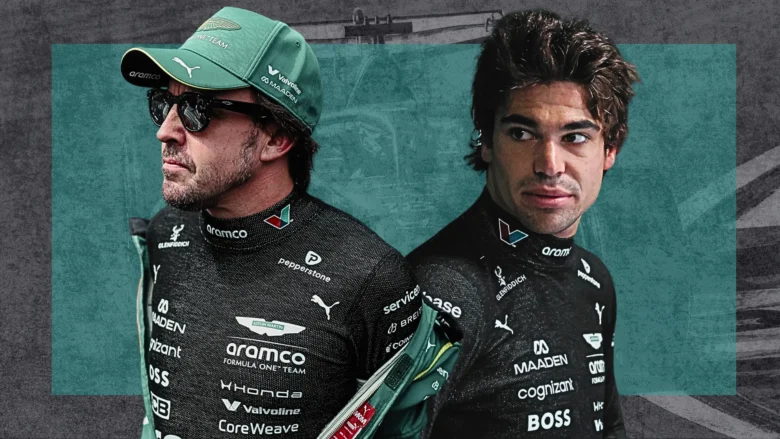
Aston Martin’s start to the 2026 season has been tricky to say the least but, with Adrian Newey at the helm, they have the expertise in play to turn things around. A myriad of issues have curtailed plenty of sessions for Fernando Alonso and Lance Stroll already this year, but there were signs in Japan last time out that some of those problems are starting to be solved…
How has the 2026 season gone so far?
In short, not well. Aston Martin were late to the Barcelona Shakedown, but when they did arrive their car turned heads with what looked a very interesting chassis design. Even George Russell said they were ones to watch.
But it soon became apparent that things were not in a good way with the car or the Honda engine in Bahrain for pre-season testing. Both Alonso and Stroll stopped out on track at various points, and the team completed the fewest laps of anyone at both the first and second test – they managed a total of 334 laps across the six days of testing, in contrast to McLaren who totalled 821 laps.
Newey revealed in Australia that vibrations were limiting how many consecutive laps the car could run before reliability became a factor.
Neither car was classified as finishing in Australia after pulling into the pits with reliability issues, even though Stroll did un-retire and come back out late on to gather more data for the team.
Neither car finished the Grand Prix in China either, but Alonso did see the chequered flag in Japan in 18th place.
Aston Martin have yet to get a car into Q2 in Qualifying, with Alonso’s 17th in Melbourne their best grid slot of the season so far. Needless to say, they have yet to score a World Championship point in 2026 and, along with Cadillac, are rooted to the bottom of the Constructors’ Championship table.
Reasons to be hopeful
In Australia, Newey revealed that Alonso believed the limit he could drive the car in its current state was 25 laps – Stroll said 15, before the vibrations from the engine became too much for the drivers.
But Alonso managed 52 laps at Suzuka last time out, finishing the race one lap down. That is already a huge improvement by the team just three weeks after Newey explained the situation in Melbourne.
Alonso has also shown his pace off the line, with Aston Martin able to get away at the starts well in contrast to some of the other cars. It also shows that Alonso has lost none of his reaction times nor reflexes despite being 44 years young.
Reliability seems to be improving too, and while Stroll retired from the race in Japan, the team managed to get both cars through practice and Qualifying with fewer issues than before.
The April break also gives them a chance to catch up not just with development, but also in manufacturing parts – they were short on battery components in the first three races, and stopped out of caution on a few occasions.
What’s more, it also gives Honda plenty of time to try and get on top of the vibration issues, with Aston Martin Chief Strategy Officer, Andy Cowell, spending plenty of time in Japan to see if the engine manufacturer can unlock some of the potential the team believes is in the power unit.
Reasons to be cautious
Even if Aston Martin do get on top of some of their issues, the rest of the field will have already made a step forward of their own. Mercedes are leading the way at the moment, with Ferrari and McLaren also impressing.
Then comes a tightly packed midfield, with Alpine, Racing Bulls, Audi, Haas and even Red Bull all vying for the points – and Aston Martin remain some way behind that gaggle on pure pace alone.
The new regulations are complex, so while there are big gains to be made from understanding how best to exploit them, it is not going to be simple to do so. And the issues with the Honda power unit have been so large, Aston Martin have yet to truly understand just where their chassis is in terms of competitiveness.
What have the drivers and team bosses said?
No one at Aston Martin has shied away from the issues the team faces. Alonso though, sounded cautiously optimistic when he stated that “clear progress” had already been made from Australia to Japan.
“We know the issues we have so it’s about tackling those as quickly as we can,” Stroll added at Suzuka, the Canadian at least taking the positives of racing wheel to wheel with his team mate.
Chief Trackside Officer, Mike Krack, called Alonso managing a full race distance in Japan a “significant moment” for the team, before also adding that there is work to be done.
“It’s also clear the performance level of our package is far from where it needs to be and we must work hard to deliver improvements,” he concluded.
What do Aston Martin need to work on going forwards?
Aston Martin need to work with Honda to figure out how to solve the power unit’s vibration issue. If they can solve that, reliability should improve.
With greater reliability comes more lap time in practice and the races, more data gathered and so a clearer direction with which to head in terms of development. The team also need to learn all they can about that Newey-designed chassis, to see how best to exploit that at the upcoming races.
They also need to keep team morale boosted, with both drivers so far coping admirably with the difficult circumstances they have found themselves in so far in 2026.
But if the situation does not improve, or even worsens, it is hard to say whether Alonso will remain relatively chipper after admitting that time is not on his side as he hunts that elusive third Drivers’ crown.