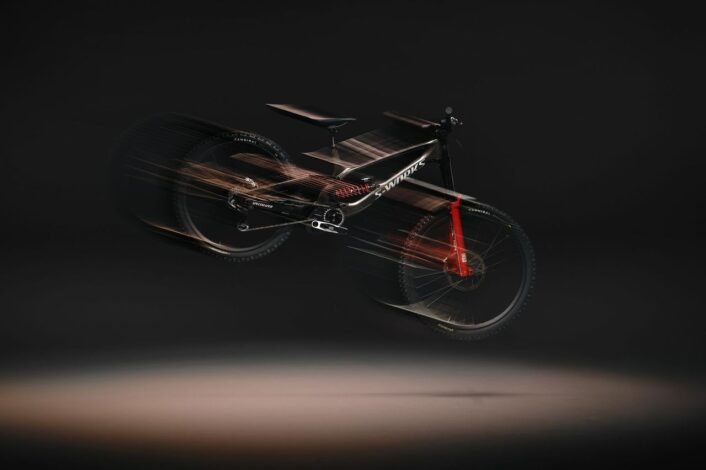
It has been spotted for a while now: an interesting-looking DH offering from Specialized. Different from the previous Demo, but close enough to recognize nearly the same chassis.
Hiding under frame and shock covers for the last few years is a completely new suspension design for Specialized. In fact, Specialized claims that prototype testing has been underway for the past three years.
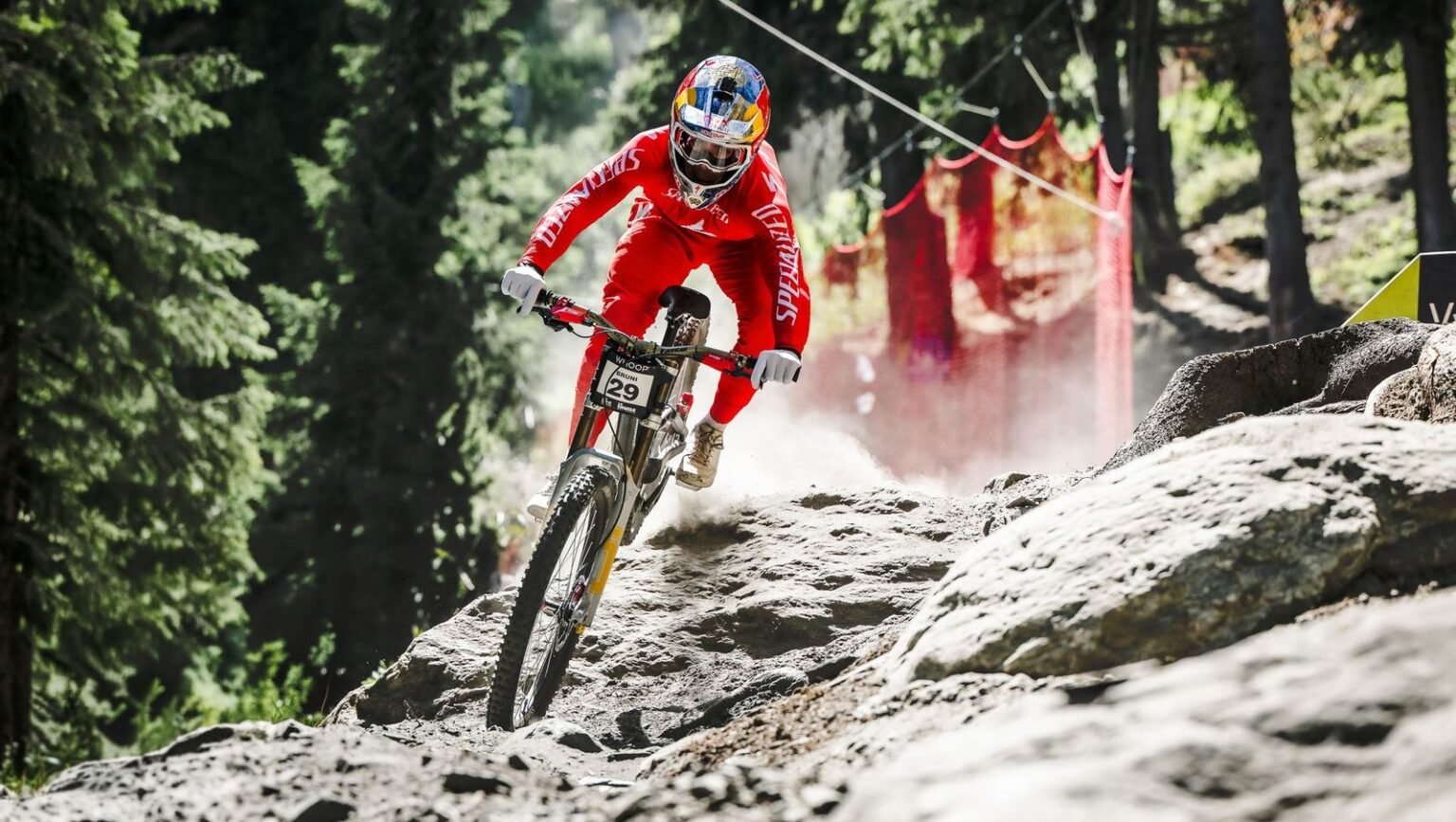
But now the wait is over. Introducing the new Demo 11, S-Works style.
Two New Designs Working Together
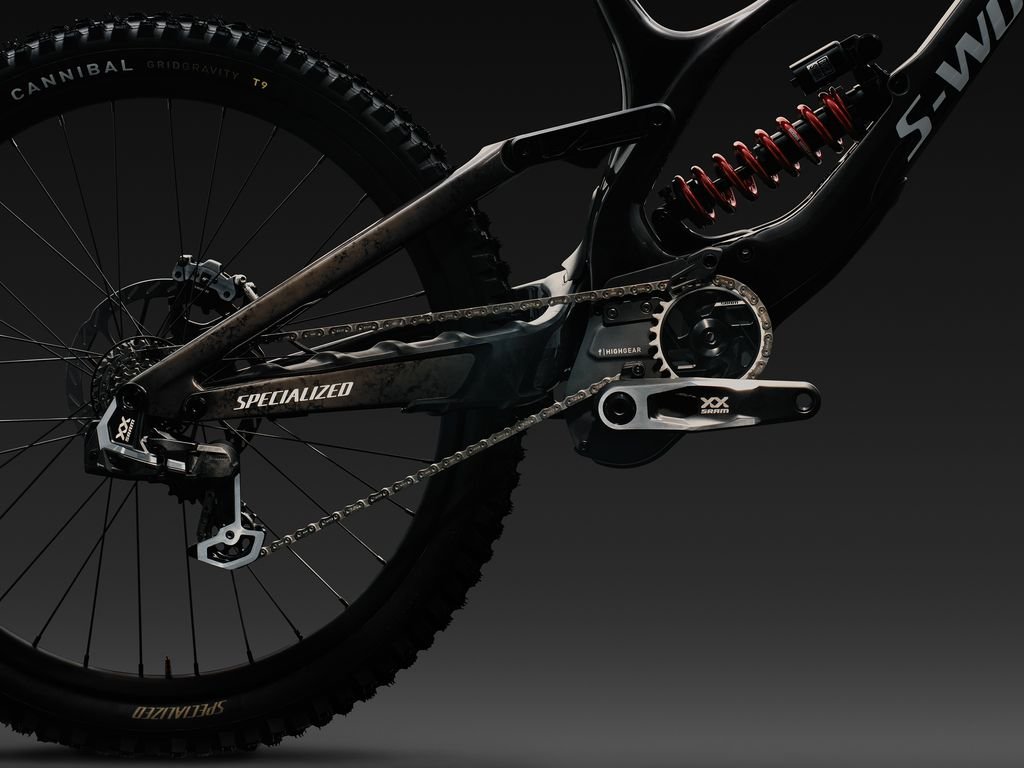
The most unique aspect of the new Specialized Demo 11 is the bottom bracket area. The cranks aren’t connected to a traditional chainring, suggesting something’s happening on the inside. Rather, there is a mash-up of new designs, with the HighGear and OBB designs working together.
“Together, HighGear and OBB (Over Bottom Bracket) linkage deliver a fully active, fully independent suspension system that yields superior bump force management, stays calm under extreme load, virtually eliminates pedal feedback, and allows riders to carry more speed through any terrain with complete control.”
Big claims from Specialized, but ones that are definitely backed by World Cup wins.
HighGear Gearbox
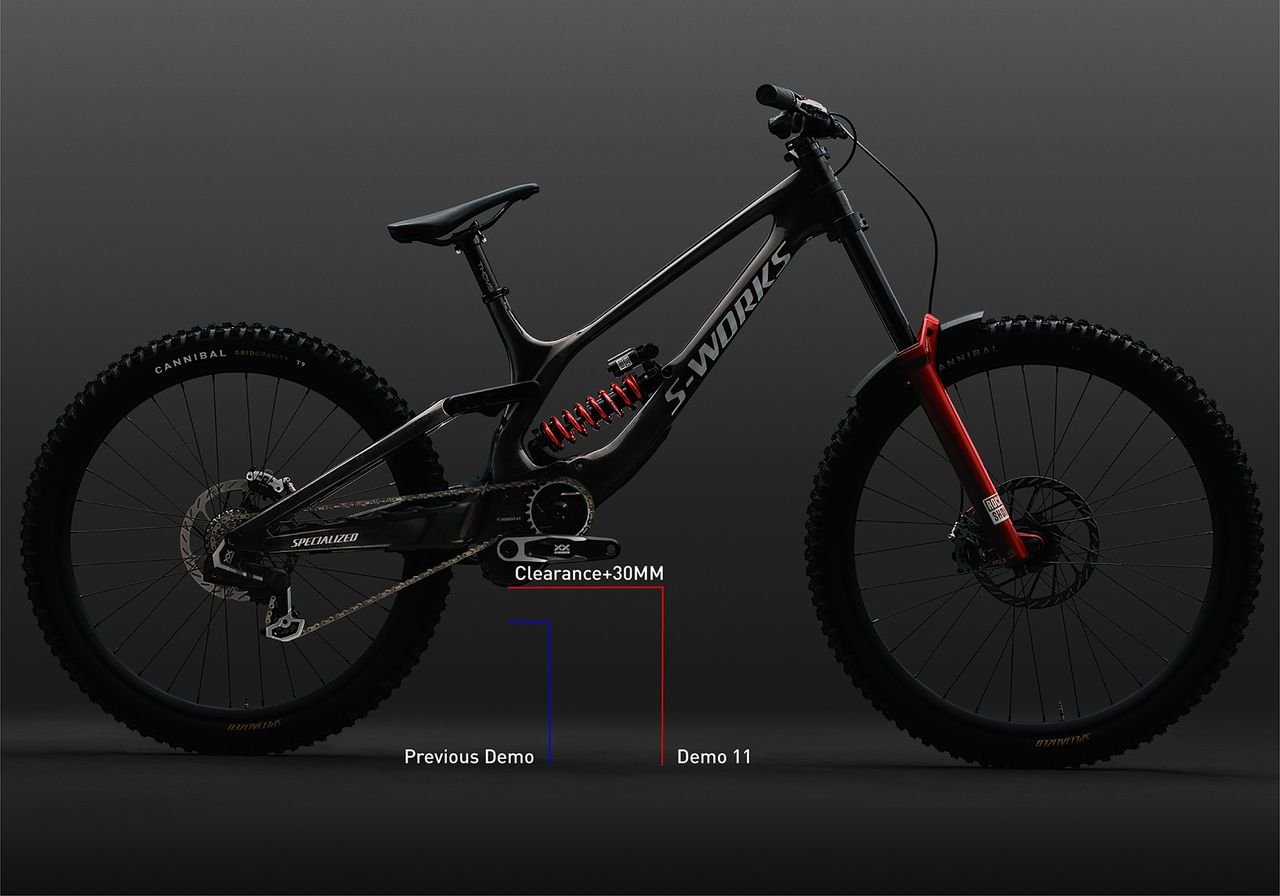
First looks and attempts to understand suggest the new platform isn’t too dissimilar from Pivot’s Phoenix, albeit most of the system is housed internally. Despite the presence of a rear cassette and derailleur, HighGear is essentially a gearbox.
Specialized developed the patent-pending HighGear with help from SRAM, saying that it “removes unwanted drivetrain influence from the suspension.” An optimized axle path and fully active suspension performance with virtually no feedback in the pedals.
HighGear consists of a compact chainring mounted to a crank spindle that drives a jackshaft. This is all inside the gearbox. Mounted to the jackshaft is an external drive ring, connected to the rear cassette, which drives the bike forward.
In layman’s terms, the cranks are connected to gears within the gearbox, which is also connected to an external chainring. The location of this external chainring is significantly farther forward and above the bottom bracket. This location keeps the chain length constant, separating it from the suspension.
It also adds 30mm of clearance to the new Demo 11 compared to the previous iteration, and makes the bike compatible with 27.5” rear wheels only.
OBB
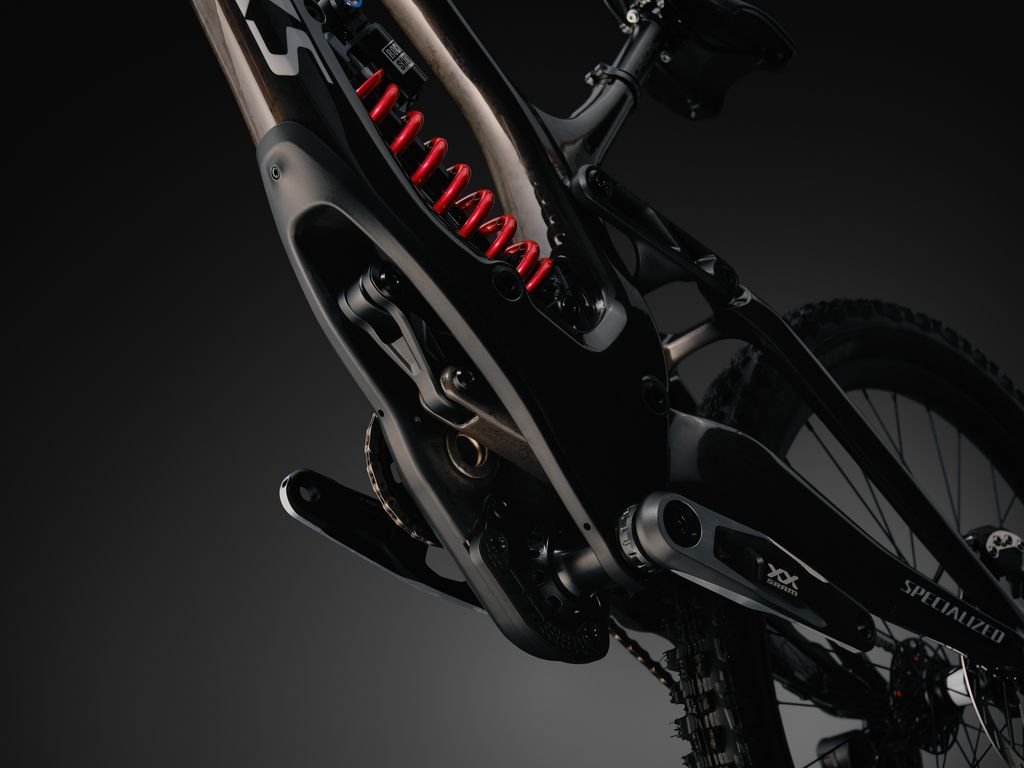
OBB provides Specialized with significant tuning freedom in Demo 11. The linkage allows engineers to independently tune axle path, leverage rate, and braking behavior. Tuning these three attributes separately means there is no need to compromise regarding rear suspension performance.
Separating these forces “enables precise control of bump force management while keeping the suspension fully active, even under hard braking. The result is a bike that delivers predictable control, remains composed when braking hardest, reduces rider input, and saves energy deep into long downhill runs.”
Specialized landed on a 24% progressive leverage curve for the Demo 11. The axle path is rearward for the first part of the travel, then moves forward later in the stroke.
To help ensure a smooth transition of the axle path, Specialized also claims to have a self-aligning chassis. The claim is that the “shock is driven through the chainstays, pulling between the main pivot and rear axle.” Keeping the wheel aligned leads to greater predictability and a calmer experience throughout the travel.
“Pulling” is the keyword here. Specialized explained that pulling rather than pushing keeps things aligned. They used the example of pulling a wagon by its handle versus pushing it by the handle. When you pull the wagon, it’ll track straight behind you. Pushing it is a different story.
Specialized Demo 11 Geometry
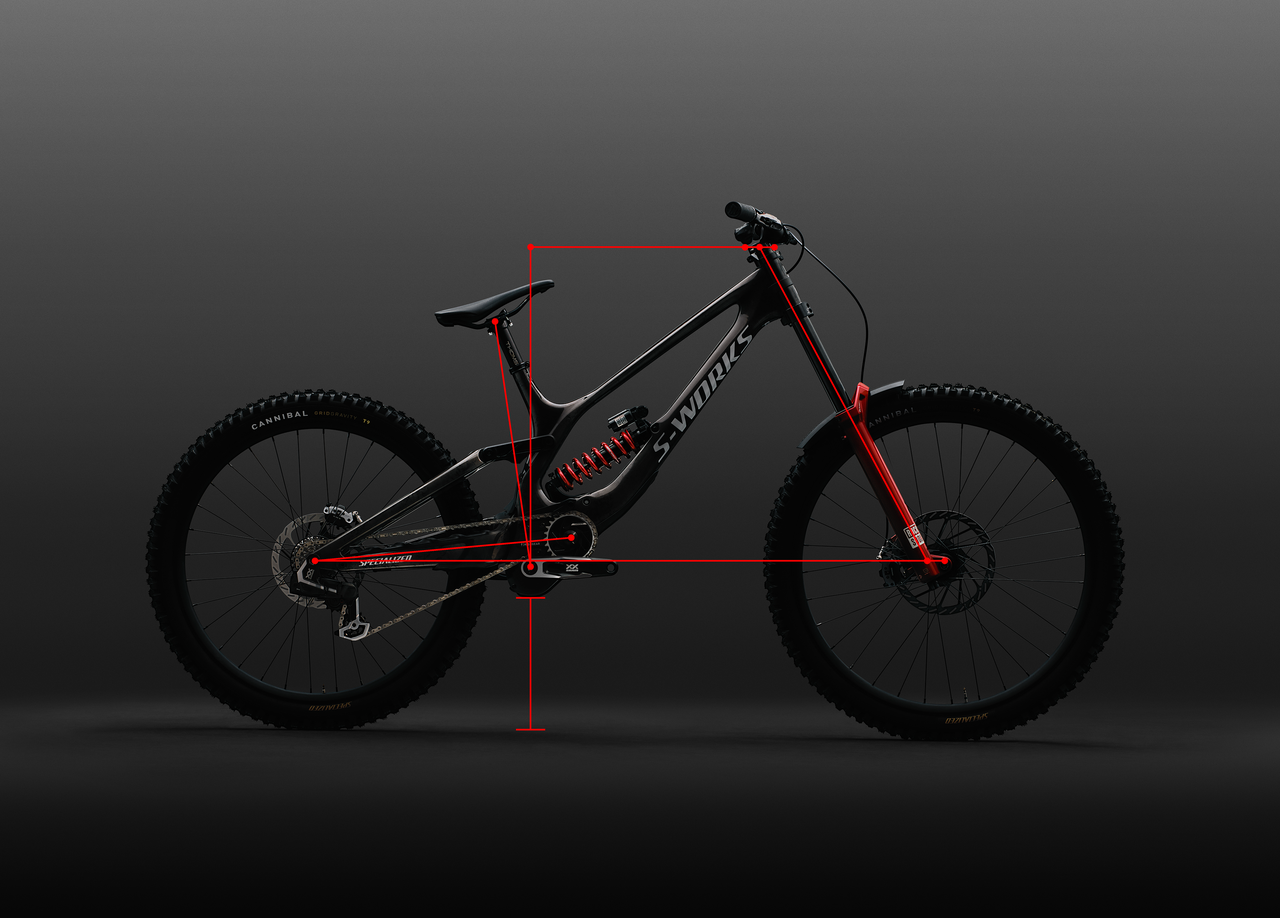
Another significant change Specialized made to the new Demo 11 was its geometry. Compared to the previous iteration, Demo 11 has grown significantly. Perhaps not to fit any trend, but to actually accommodate more riders.
For example, the longest reach on the previous Demo was in the 460s. Specialized extended that, significantly, along with some other major sizing changes.
First is the sizing in general. The previous Demo came in three sizes: S2, S3, and S4. The new Demo 11 starts at S3 and now goes through S5.
The reach across the range is 445-500mm. Now, Specialized does make these reach numbers adjustable, with +/-6mm for each size. This accommodates a wide range of riders seeking reach between 439mm and 506mm (if my math serves).
The bottom bracket can also be adjusted by 7mm, and the chainstays are size-specific across the three sizes.
Builds and Price
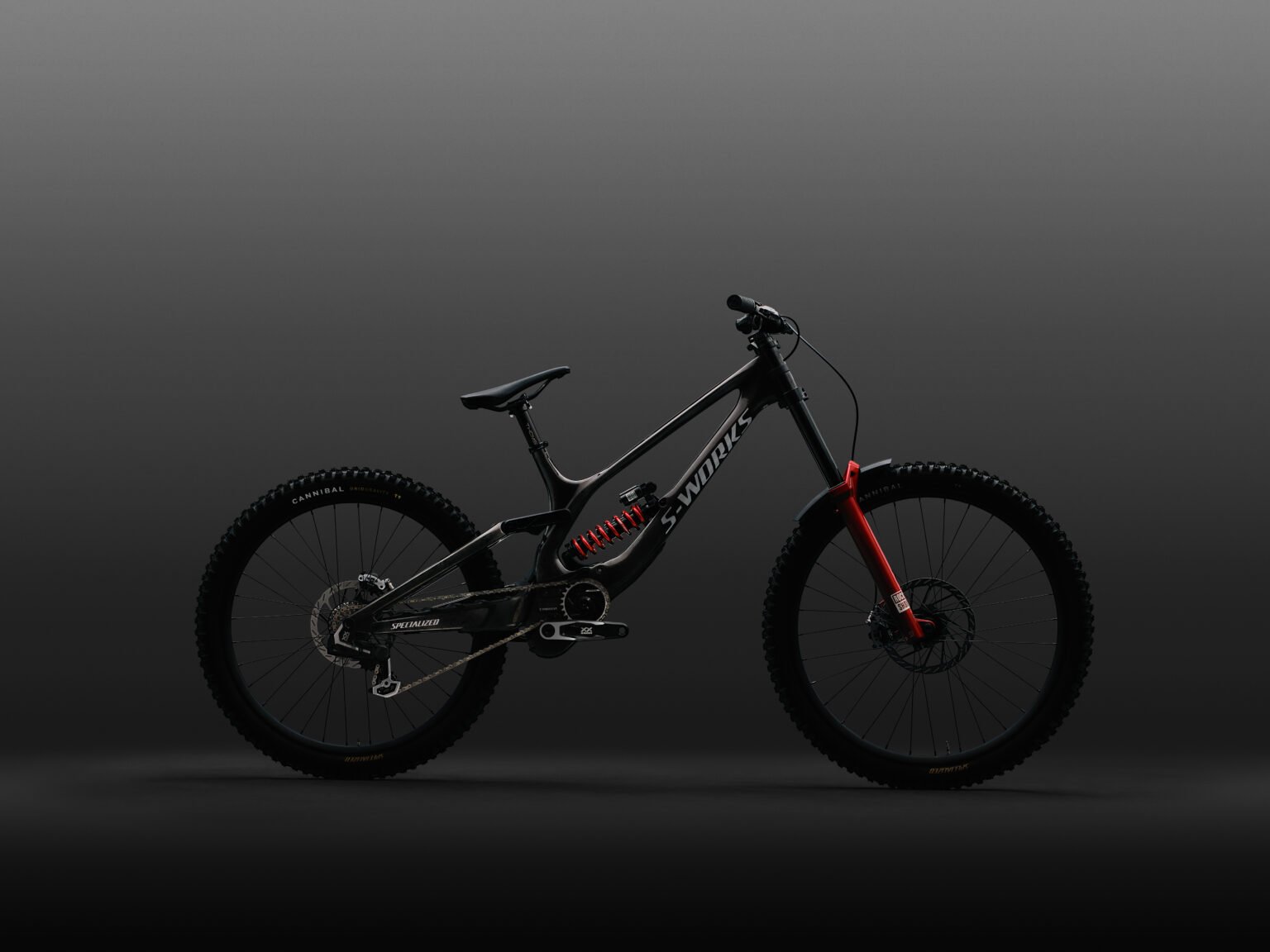
If you thought the S-Works Demo 11 was going to be inexpensive, you’d be wrong. Specialized currently offers one build in the S-Works tier, priced at $11,000.
In fact, the S-Works tier is all they currently offer for the new bike. A frame-only option is also available, and that will only set you back $6,500 (that statement is dripping with sarcasm).
Here is what $11,000 gets you:
- RockShox Boxxer Ultimate fork
- RockShox Vivid Coil Ultimate DH
- SRAM Maven Ultimate B1 brakes
- SRAM XX DH AXS T-type drivetrain
- HighGear 165mm cranks
- Roval Traverse Gravity alloy rims
- DT Swiss 350 hubs
- Cannibal Grid Gravity 2.4″ tires
- Descendant 35 handlebar
- Descendant 50mm stem
- Deity Supracush grips
- Body Geometry Henge DH saddle
- Thomson alloy seat post
This adds up to just a bike that is (claimed) 41lbs. Obviously, a lot of that weight is due to the HighGear addition. But it is located low, and you’re riding a chairlift up, so who cares?!
Ultimately, the bike looks very cool, and we’re excited to see what Loic Bruni and the rest of the team will do on it this season.
specialized.com