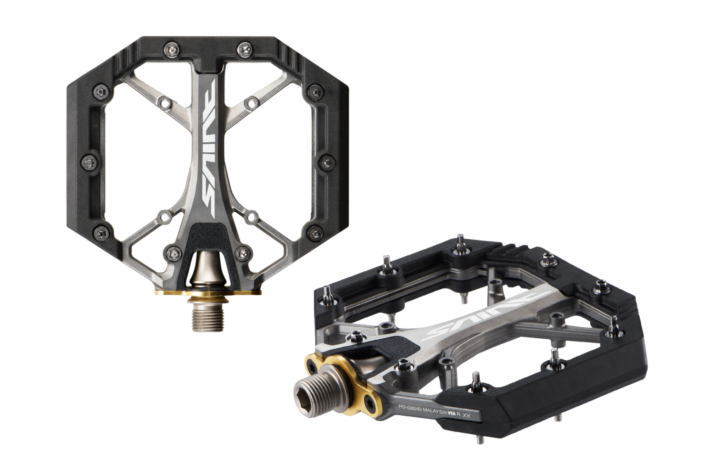
Today, Shimano is releasing two “new” flat pedals, the Deore XT and Saint. While both pedals share a very similar look and design, there are a few key differences between them. This includes weight, number of pins, and a skid plate on the Saint pedals. And, these differences also affect the price.
But, seeing these latest offerings from Shimano might just cause a bit of deja vu, as well. “Hey, wait, haven’t I seen these pedals before?” Well, yes, and no (well… kind of). Let us explain…
Shimano Saint and Deore XT Flat Pedals
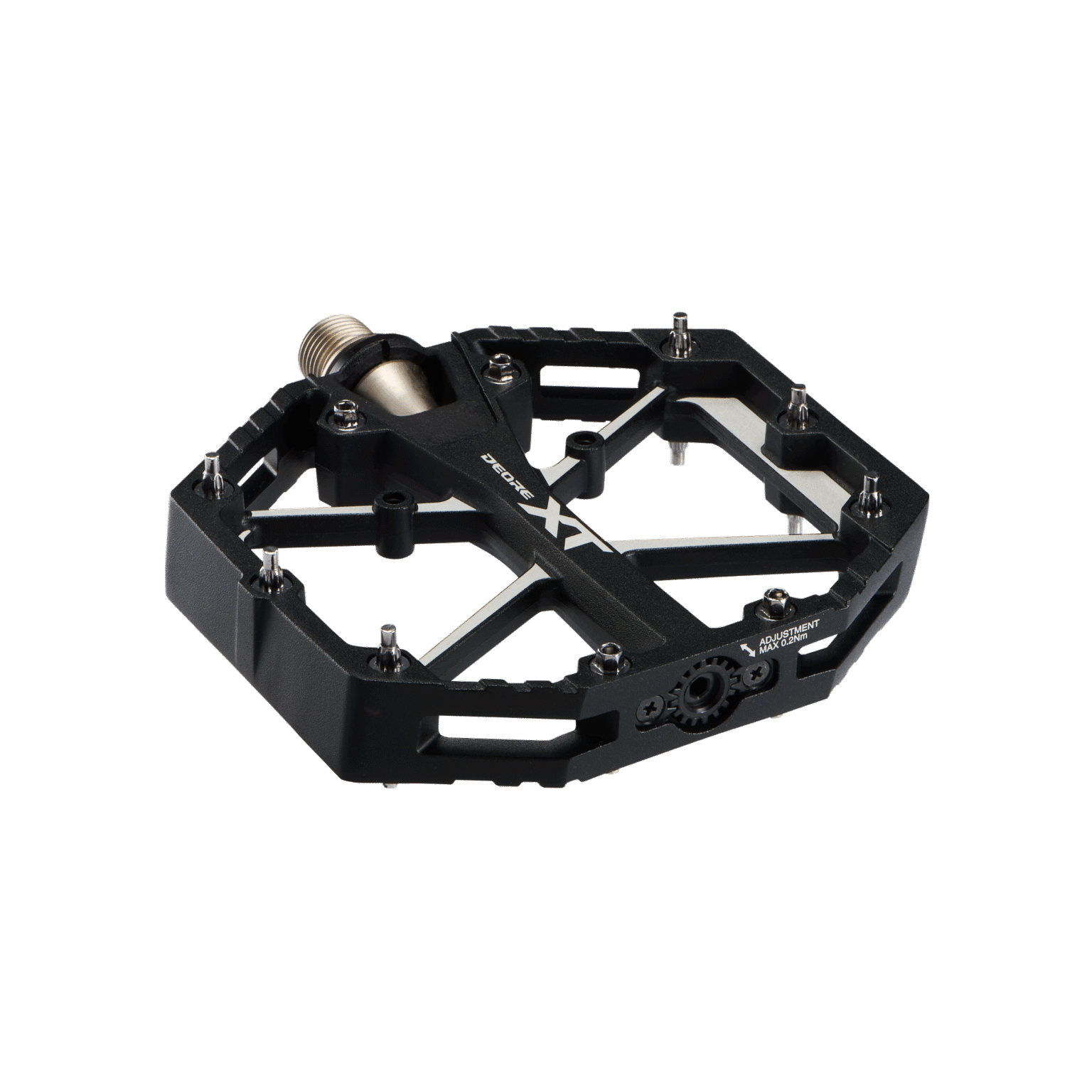
Shimano designed both the new octagonal Saint and Deore XT pedals very similarly.
Here is a quick look at what both pedals share:
- Extra-wide, dual-concave shape
- 121mm x 110mm platform
- 10+ replaceable pins per side standard
- Flat platform design for consistent pedal height and no protrusions from the axle
- Thin pedal body for improved ground clearance
- Forged alloy pedal body
- Impact-resistant traction pins
- Durable axle and bushing construction
- Fully serviceable with readily available replacement parts
- Included 6mm and 3mm pins plus a dedicated E5 socket wrench pin tool
- They look pretty damn good!
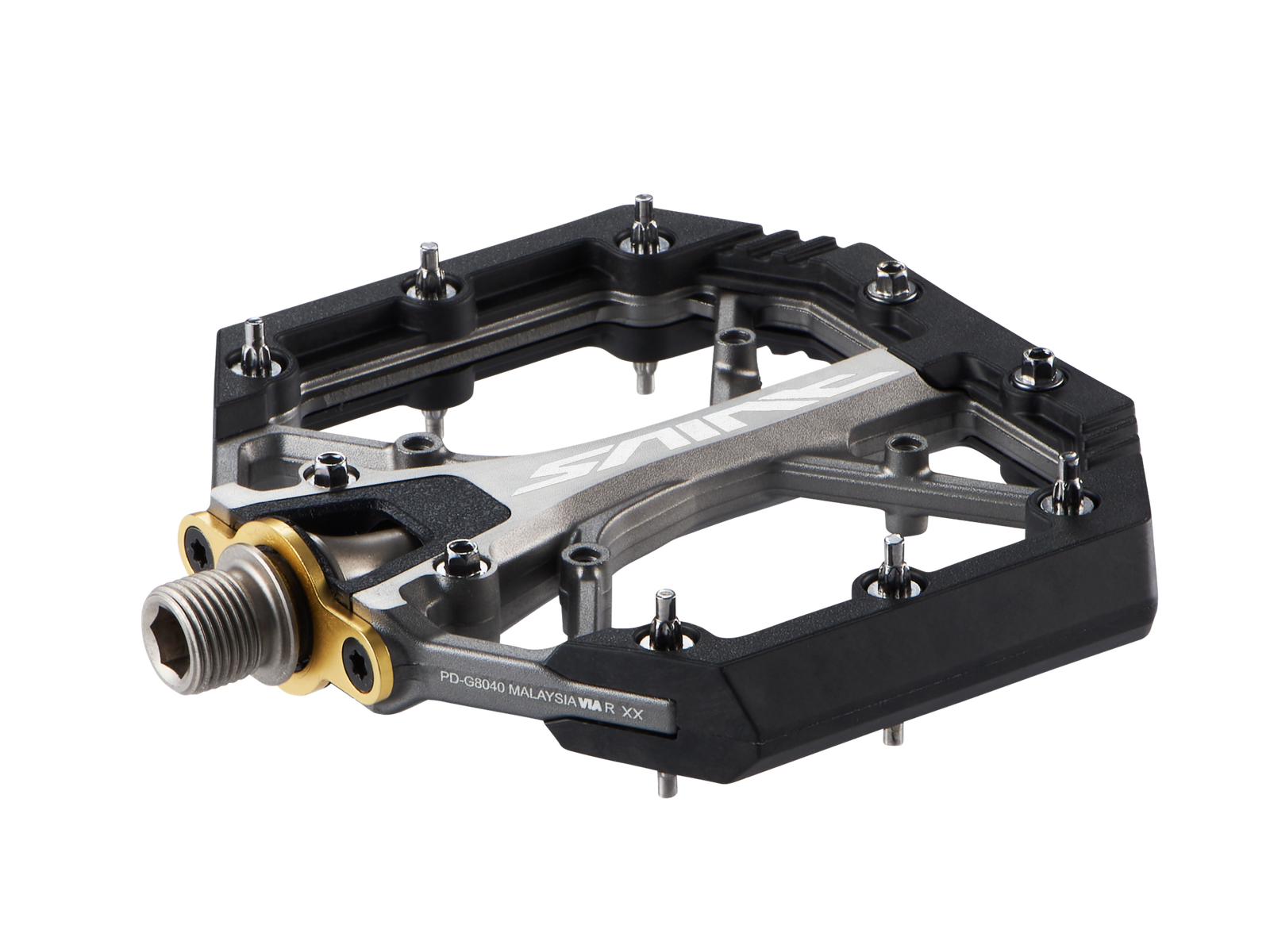
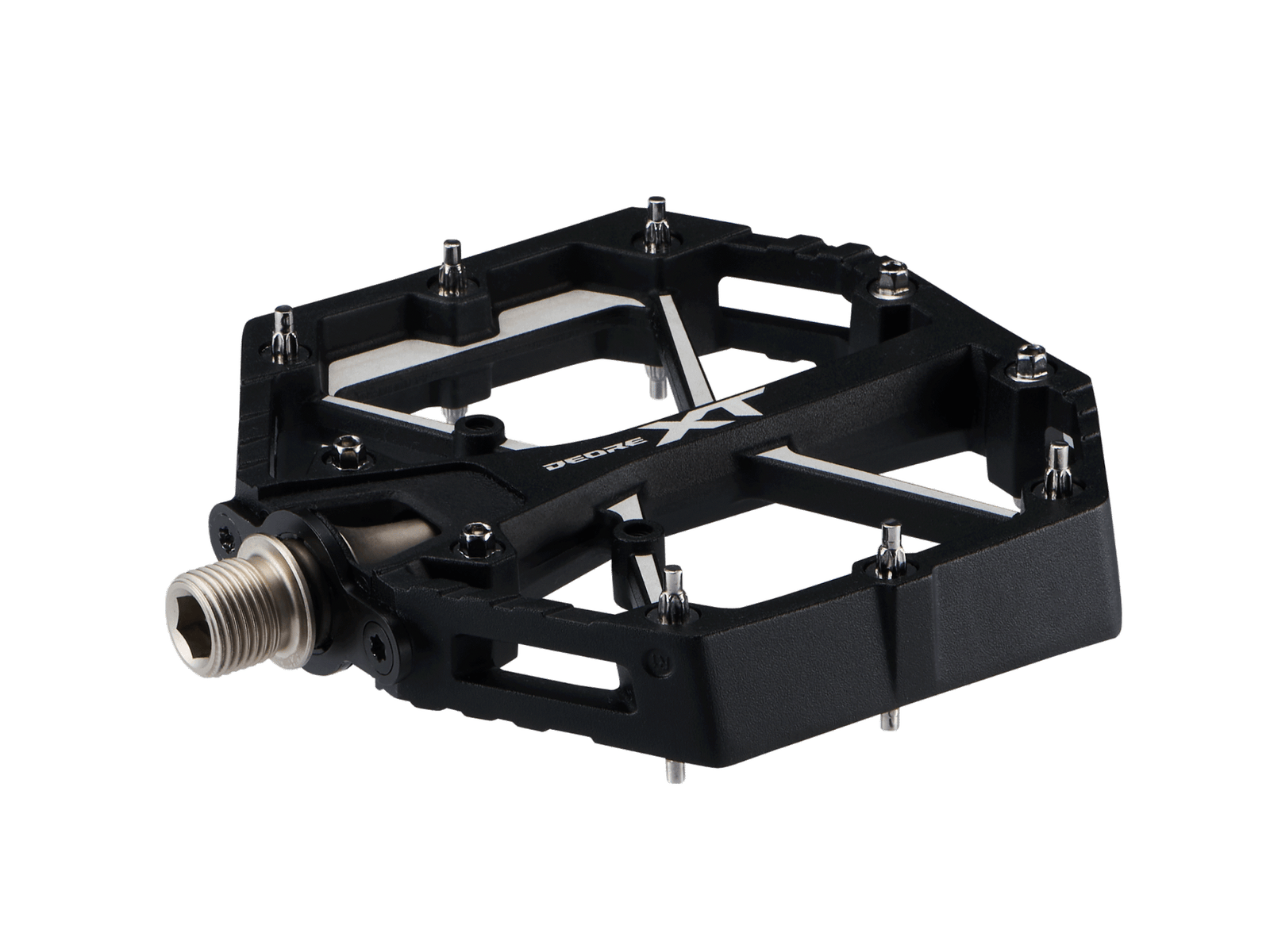
Okay, that last one was me, but I think it is a sound observation. But the point is that the Saint and XT pedals are very similar. Shimano designed both with a large, concave platform that positions and secures the foot well. Both pedals also feature a slimmer profile than Shimano’s current GR-500 (old Saint pedal) for better clearance.
But, eventually, you will hit rocks. Shimano knows that, so both the Saint and XT pedals feature a robust alloy pedal body and impact-resistant pins. They also use bushings rather than bearings for their durability and longevity, although some might argue bearings are always the way to go. (That’s up for debate).
And, when it is time for a service, Shimano has made everything rebuildable. They include extra pins for both the XTs and Saints, and other replacement parts are available.
What’s different between XT & Saint?
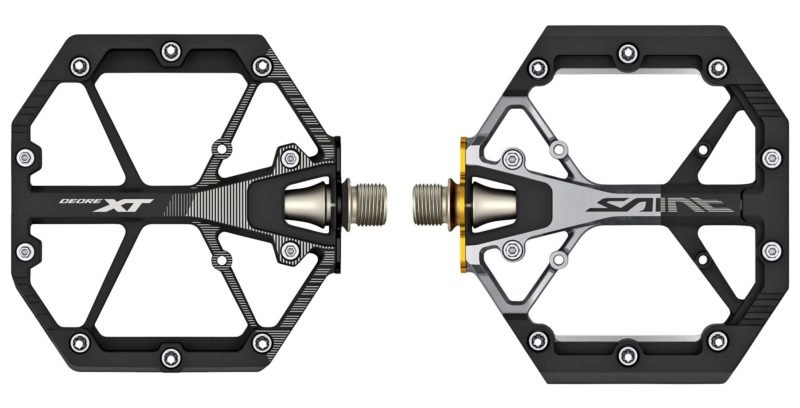
However, there are a few differences between the two pedals. In addition to the look and branding, the Shimano Saint pedals feature an additional skid plate along the entire outer edges of the pedal. This composite skid plate helps the pedals deflect off rocks, roots, and other obstacles more effectively, rather than hang up. It replaces some excess alloy material that the XTs have and can be replaced.
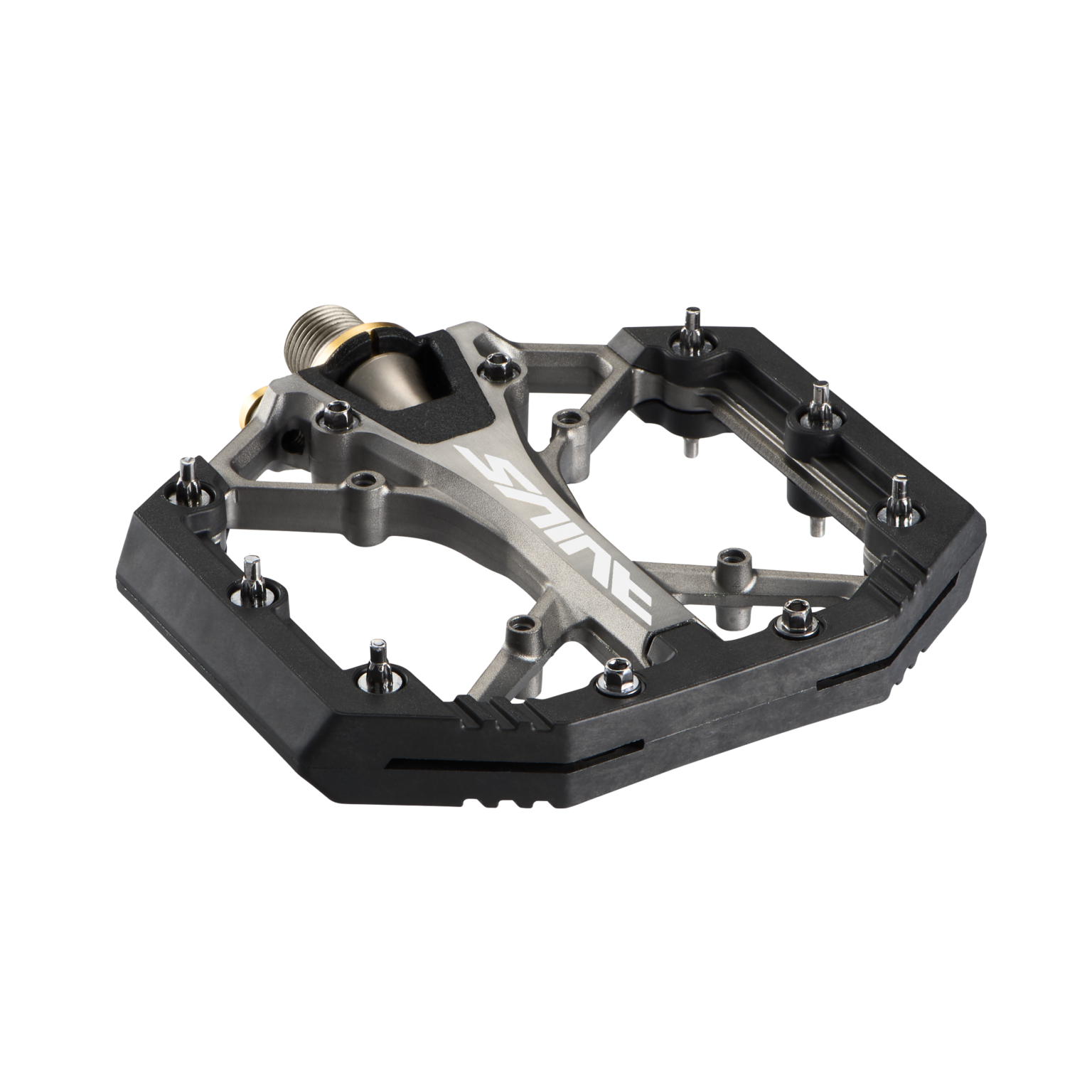
Replacing the skid plate should keep the Saints looking fresher, and saves 30g.
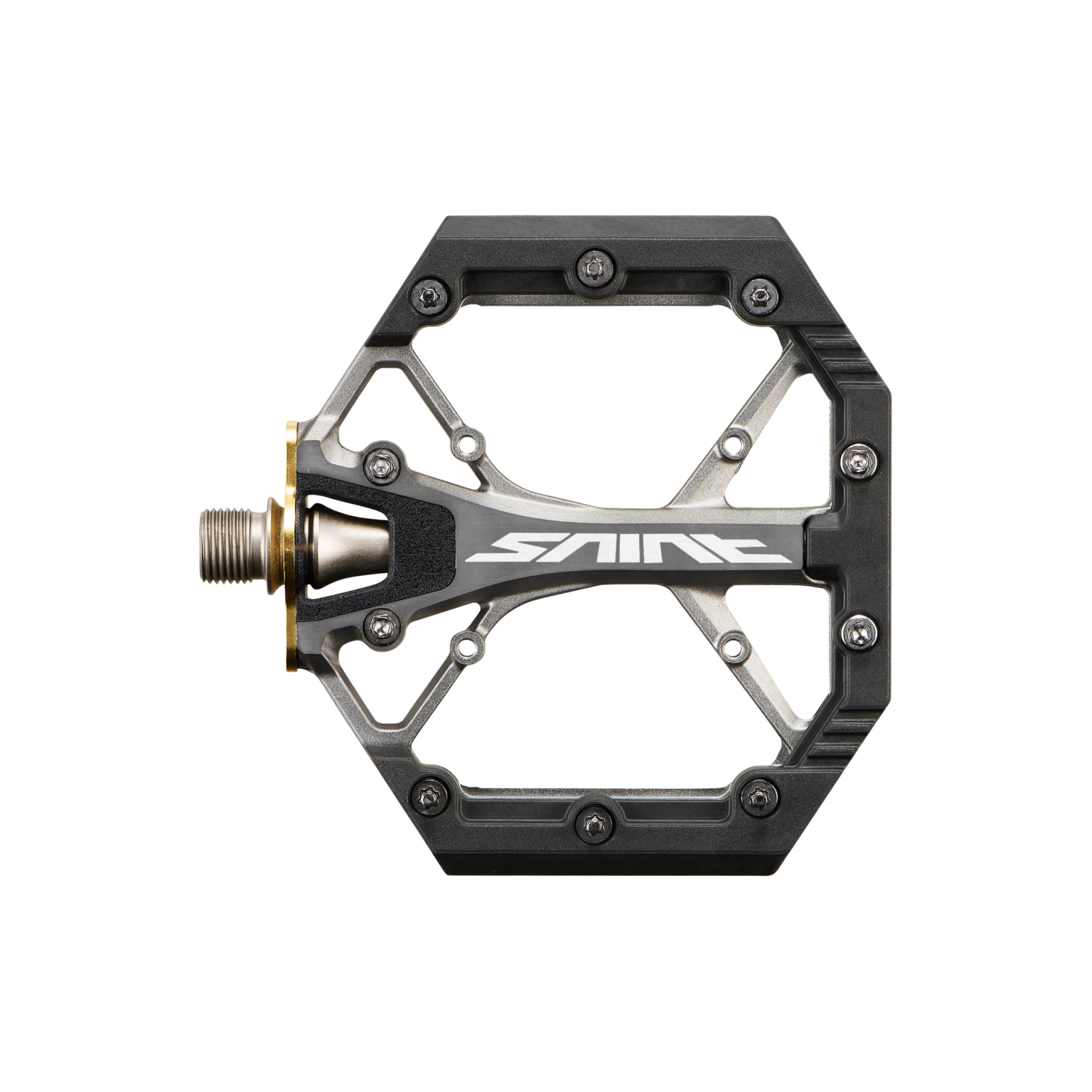
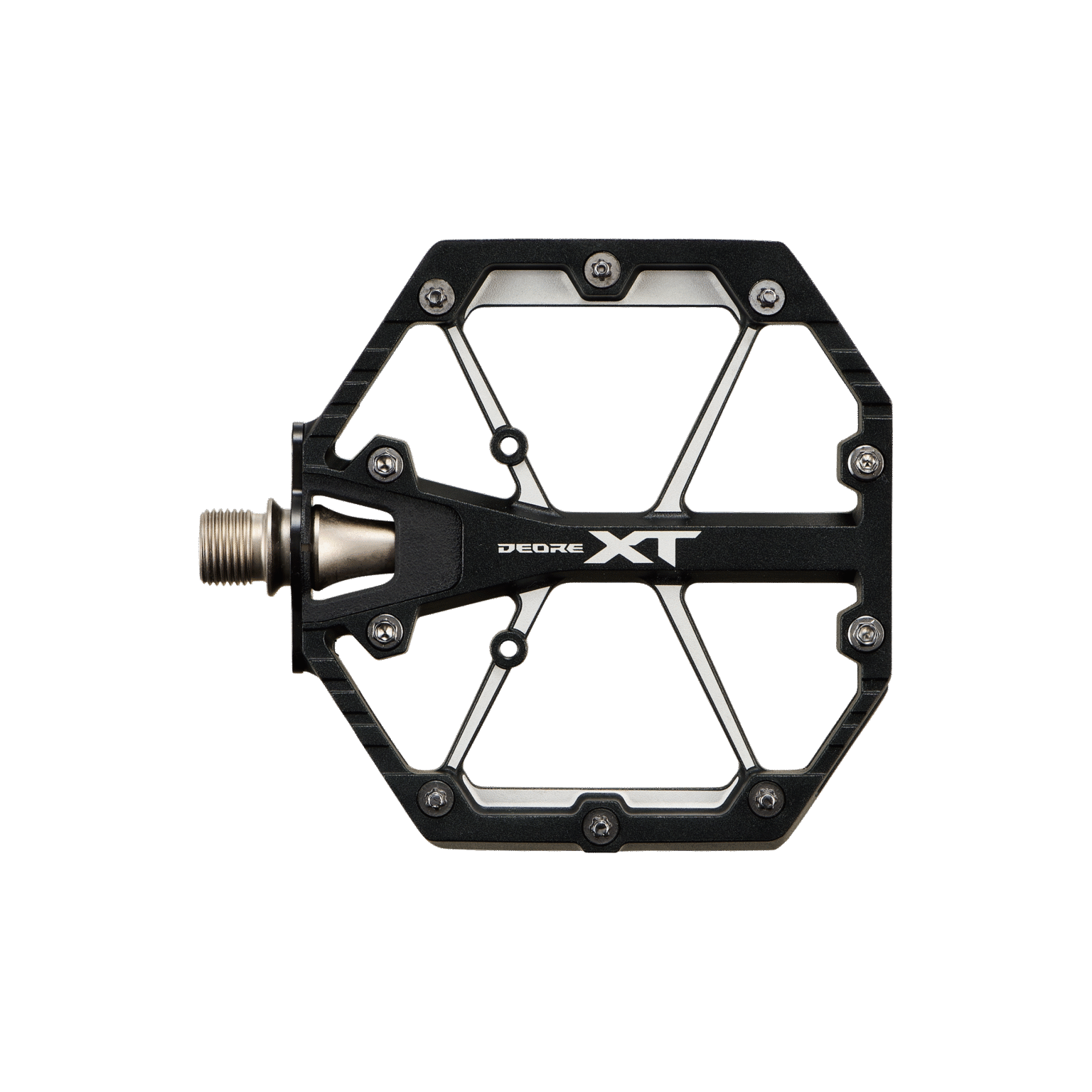
Another slight design difference is additional pin options. Out of the box, both pedals feature 10 pins (per side) around the perimeter, with the option to add pins in the middle. For XT, two more pins can be added. With Saint, it’s four.
The Shimano Saint flats weigh 393g and retail for $225. The XTs weigh 423g and retail for $175.
So, Are These Really New?
As I said earlier, you might feel as if you’ve seen these pedals before. Like, in an article, similar to this one, on the internet. We covered a very, very similar Shimano Saint and XT pedal release in 2021.
However, these are technically new. First, the names are new. Well, not “XT” or “Saint,” but the numbers and letters Shimano puts with all of their products (that aren’t confusing at all). In 2021, for example, the Saint pedals were the “Saint PD-M829.” Today’s pedals are the “Saint PD-G8040.” The PD for pedals is straightforward, but we guess Saint isn’t just Mountain anymore and gets upgraded to Gravity. (Hope we don’t confuse that with Gravel.)
The new pedals also shed a few grams from the 2021 Saint and XT offerings: four and five grams, respectively. These are claimed weights, of course, as we don’t yet have a set of either of the new pedals.
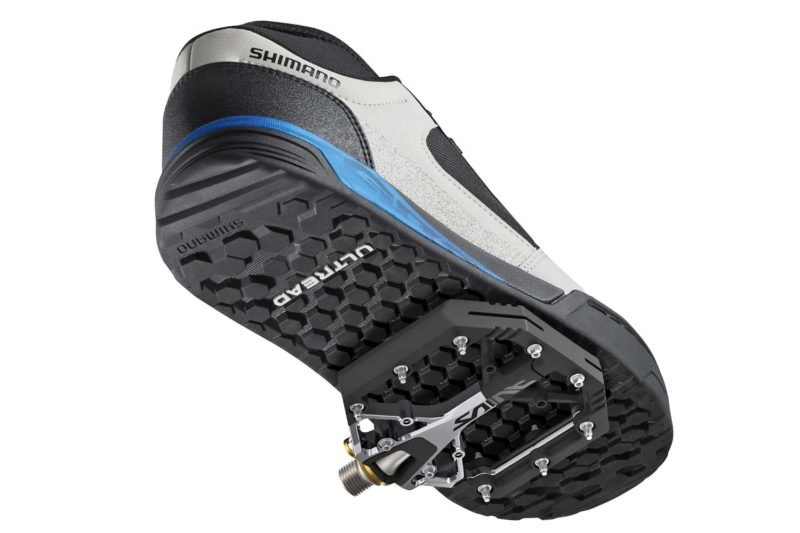
And they are claimed weights on the 2021 pedals, too. Why? It looks like no one really had the chance to try those. In my “Oh, yeah, what happened with those pedals?” quest, forums and article comment sections popped up with users complaining that Shimano announced them, but didn’t seem to actually release them. They popped up in online shops, but almost always ‘out of stock’ as far as I could see. Customers looking to buy still couldn’t find either pedal years after the apparent release.
COVID? Supply chain issues? We’re not sure. But, here they are again, and we’re hopeful this time that we’ll actually see both pedals on bike shop shelves now.
bike.Shimano.com