Former Formula 1 race director Michael Masi has received support from his successor Niels Wittich with regards to his controversial officiating in the title-deciding 2021 Abu Dhabi Grand Prix.
Max Verstappen and Lewis Hamilton were tied on points going into the Yas Marina race, meaning whoever finished ahead would claim the title – unless they both ended up out of the top 10, in which case the Dutchman would prevail on countback.
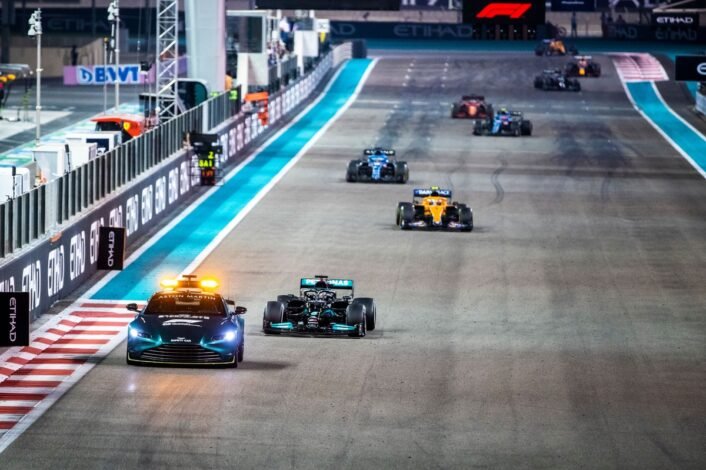
Hamilton led Verstappen by more than 11 seconds when the race was neutralised by the safety car with six laps remaining, after Williams’ Nicholas Latifi crashed as he battled with Haas’ Mick Schumacher over the penultimate position.
Due to concerns the red flag might be waved and allow a free tyre change, or the race might end behind the safety car, Mercedes decided against pitting its race leader in order to preserve track position. Having nothing to lose, Verstappen went for new soft tyres and maintained second place.
On lap 57 of 58, Masi directed the five lapped cars separating Hamilton and Verstappen – and only those – to unlap themselves, and instructed the safety car to pit straight away ahead of the final lap. Verstappen overtook Hamilton, whose car was still fitted with used hard rubber, and claimed his maiden title.
Masi’s officiating was at odds with F1’s sporting regulations.
Article 48.12 stipulated: “If the clerk of the course considers it safe to do so, and the message “LAPPED CARS MAY NOW OVERTAKE” has been sent to all Competitors via the official messaging system, any cars that have been lapped by the leader will be required to pass the cars on the lead lap and the safety car.
Verstappen becomes F1 world champion
Photo by: Erik Junius
“Unless the clerk of the course considers the presence of the safety car is still necessary, once the last lapped car has passed the leader the safety car will return to the pits at the end of the following lap.”
If the safety car had pitted at the end of the following lap – the final tour – as prescribed by the rules, the championship would have gone to Hamilton.
“From my point of view, Michael didn’t do that much wrong,” Wittich, who officiated in F1 from 2022 to 2024, told Autosport’s sister YouTube channel Formel1.de. “The regulations didn’t strictly define everything. What he did was within his authority. He had a certain level of discretion in how to deploy the safety car.
“One key factor was that teams, FIA, and Formula 1 had all agreed – over many meetings – that races should, if possible, finish under green flag conditions. Nobody wanted a race ending behind the safety car.
“In Abu Dhabi, the situation was such that any intervention would have disadvantaged someone. You could have red-flagged the race – but that requires specific conditions like danger to personnel or a blocked track. That wasn’t the case. So red flag wasn’t really an option.
“Then came the lapped cars question. Initially, he said they wouldn’t unlap themselves, then he allowed it – but modified the usual procedure by not waiting an extra lap. That was within his authority under the regulations at the time.
“He essentially did what everyone had agreed upon: create one final racing lap. It produced a spectacular finish, an overtake, a winner and a runner-up. It could have gone the other way just as easily. That’s sport.
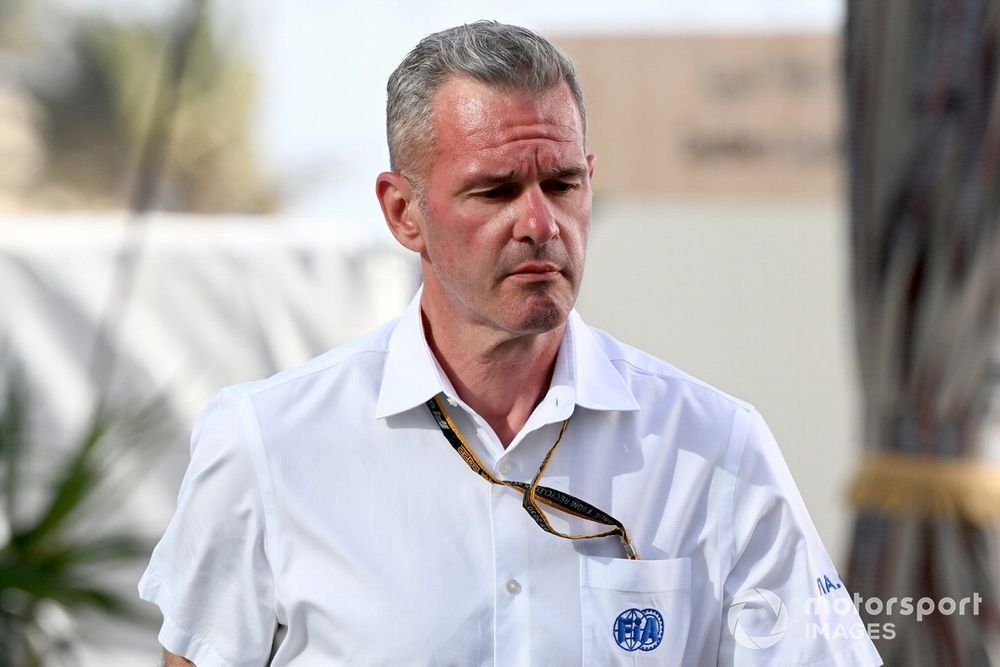
Niels Wittich, Race Director, FIA
Photo by: Mark Sutton / Motorsport Images
“A late safety car is always controversial. Fans don’t like it if it decides the race – but that applies everywhere. Whether it’s lap one or the final laps, someone gains, someone loses. That’s part of the sport.
“The Abu Dhabi race itself had been quite uneventful until Latifi’s crash. Without that, it would have been a straightforward, perhaps even dull finale. But because of the incident and the intervention, it suddenly became decisive – and that upset one group of fans or the other.
“People later said, ‘You could have red-flagged it, you could have done this or that.’ Yes, you could – but those would have been inconsistent decisions compared to earlier races. And consistency is key.
“In meetings with the teams in early 2022, I asked them directly: ‘Do you want us to red-flag every minor incident?’ They said no. ‘Do you want different rules for the final race?’ Again, no.
“A championship isn’t decided in one race alone. Points lost earlier in the season matter just as much. Both Hamilton and Verstappen had chances to secure the title earlier.”
The FIA attributed the incident to a “human error” and removed Masi from the race director position as the Australian suffered a wave of abuse, including death threats, before he eventually left the federation altogether.
“After the investigation following Abu Dhabi, the conclusion seemed to be that Michael had to go – essentially finding a scapegoat,” Wittich added.
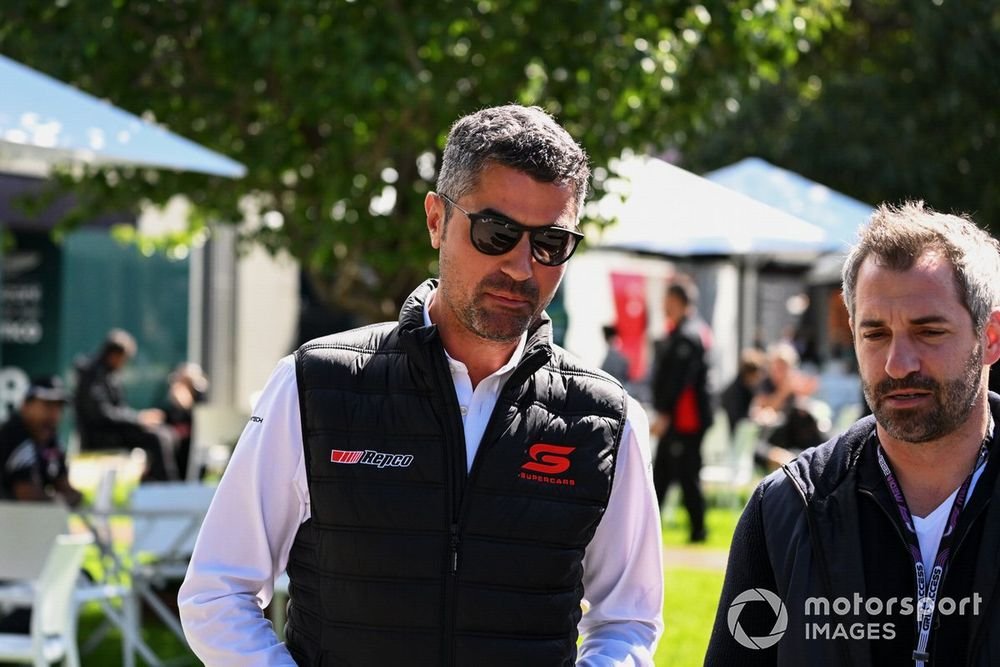
Michael Masi
Photo by: Simon Galloway / Motorsport Images
“What was really disappointing – for me and many colleagues – was the lack of support from the FIA for Michael. That’s something that needs to be clearly criticised. Everyone knew that in extreme situations, you’d be left on your own.
“In the past, under Charlie Whiting, there was always backing from FIA leadership – Max Mosley stood firmly behind him. That support wasn’t there anymore. It still isn’t. That’s one of the reasons I’m no longer a race director in Formula 1.
“Whatever happened, there was no proper discussion, no backing for employees. And that’s the worst takeaway from that whole situation.”
Masi is currently on the board of directors of Karting Australia and was the event director for the Repco NextGen NZ Championship, which includes the Formula Regional Oceania Trophy.
We want to hear from you!
Let us know what you would like to see from us in the future.
Take our survey
– The Autosport.com Team