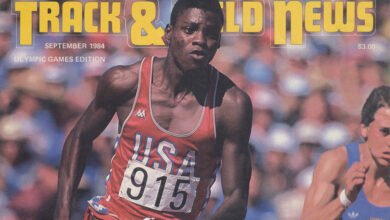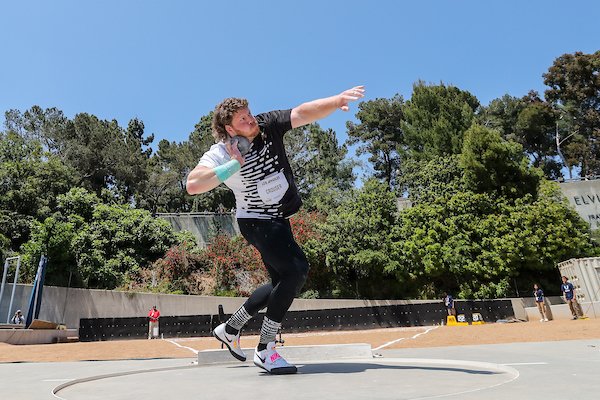
Phase Three: accelerations and drills: All throws have an acceleration phase using the legs, so your throwers need some acceleration sprints, albeit over very short distances. These can range from 10-20 meters for shot and discus, to 20-40 meters for javelin throwers. Repetitions can number from 4-10. Allow good recovery between these drills.
After acceleration drills, many coaches have their throwers do a series of general practice drills. With these drills, the coach is limited only by his imagination and the plethora of books on this subject. Here are a few examples of general drills: sideways walking or running crossovers (without legs crossing over behind each other), backwards running, quick foot turnover in ladders and other ladder drills, cone running for agility, forward lunge walking, side lunges, calf walking, hopping, bounding, plyometrics, calisthenics like squat thrusts, etc–you get the idea!
The number of repetitions of each of these drills will vary according to how long each drill takes and its complexity. Generally you would expect your throwers to do 5-10 repetitions of each drill before moving on to the next one.
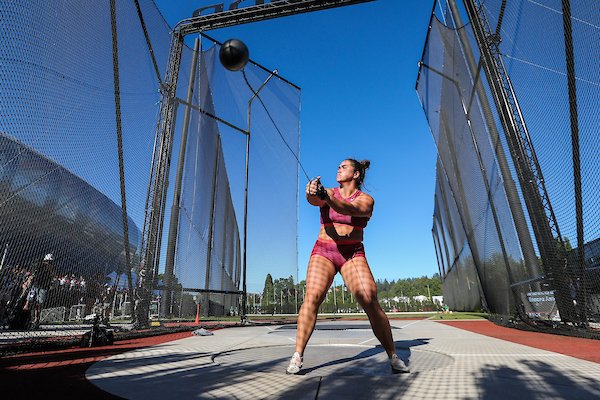
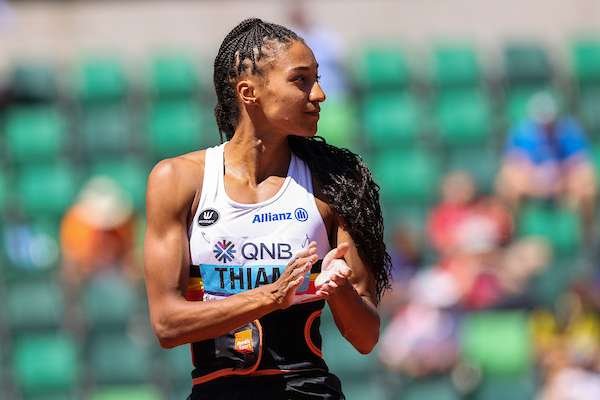
USATF Outdoor Track and Field Championships held at Hayward Field, University of Oregon, June 23-26, 2022, photo by Kevin Morris
Throwers should then proceed to more specific throwing drills using basketballs, weighted balls, medicine balls, kettle bells, the shot or discus. There are dozens of these drills available in coaching manuals, ranging from one armed throws to two arm throws, and many others. It is not necessary to do all of these drills in every warm up–in fact it would be impossible! So just select a few different drills for each warm up to keep it varied, interesting, and fun.
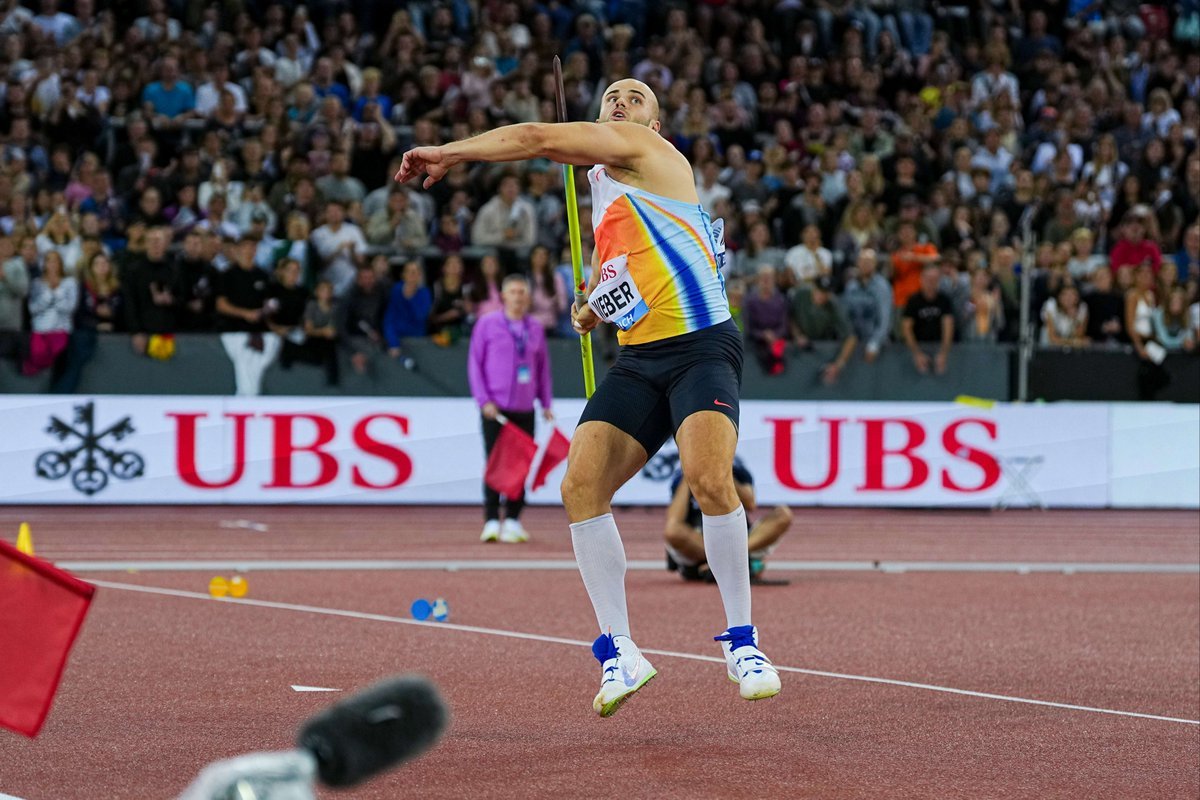
Use your more skilled athletes to demonstrate each drill to the rest of the throwers before they try them. The drills should eventually transition to the specific skills for each throwing, starting with movements that make up part of the whole throwing action, and then proceeding to the whole throwing movement. The total drill phase of the thrower’s warm up should take 15-25 minutes, longer at the beginning of the season.
Former U.S. javelin champion, Duncan Atwood, describes this phase of the warm up as “Trying to re-acquaint the thrower with the neuromuscular movements that make up the throwing action, and what it feels like to do the event”. Simple actions such as standing throws help the thrower make this transition, followed by throws with a short run up, or in the case of shot and discus, reduced turns. “But” cautions Atwood, “the big mistake many high school athletes make in this phase is trying to throw too hard. Emphasize throwing far with the least effort possible”.
A final note: before competition throwers should do not do as many drills or repetitions as before their track workouts. You are trying to do just enough drills to facilitate their neuromuscular coordination, without causing fatigue.
Post competition, serious throwers will often have a moderate weightlifting session, then take the next day off, then throw fresh the following day, then lift or do drills after this.
For more on the throws, and to subscribe to American Track & Field, please click on American Track&Field.