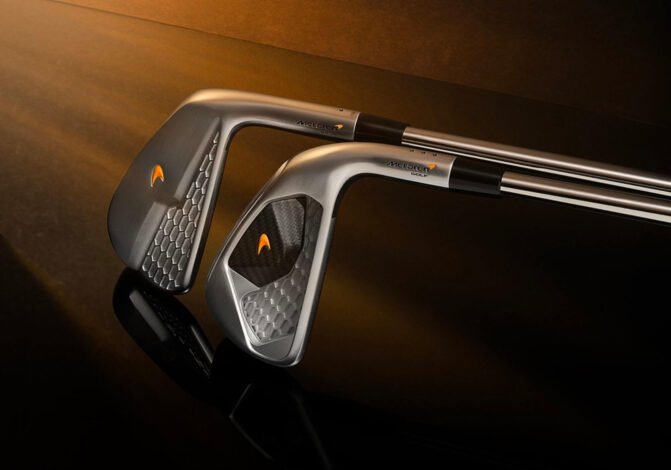
Two MIM’d iron sets. With an engineering team pulled from the golf industry, McLaren says it isn’t trying to be “those guys.” And $375 per iron.
When we wrote about McLaren’s plans to enter the golf equipment space, we had a lot more questions than answers. Today, most of those answers are in.
McLaren Golf is officially launching with a pair of iron sets: the Series 1 and the Series 3. Both are fully MIM’d (more on that in a minute). Both are positioned near the premium end of the price spectrum. And both, according to McLaren, are the product of legitimate golf industry expertise wrapped around the company’s broader engineering and materials know-how, rather than the badge-slap exercise that car brands-in-golf has historically amounted to.
Before we get to the irons themselves, a few things worth knowing.
Why golf?

McLaren’s read is that there’s significant crossover between golf fans and racing fans. Said another way, a lot of golfers are racing fans. I’m not a racing guy so I can’t tell you whether that’s actually true. What I can tell you is that over the years there have been countless examples of club designers who very much are F1 fans (and racing fans more broadly) with the motorsport influence showing up in their work. So, at a minimum, there’s precedent for the Venn diagram.
A slow burn
Entering the golf category wasn’t a quick decision. McLaren is always on the lookout for ways to extend the brand and a golf product was in discussion internally for a couple of years before the jump got made.
“Not trying to be those guys”
Where McLaren fits in the larger industry puzzle is still TBD but the company has been pretty clear about what it isn’t trying to be. “Those guys,” as McLaren puts it, are largely the brands TaylorMade, COBRA, Titleist and Callaway. Which is interesting, because a lot of the McLaren golf team came from exactly those places.
The team behind the badge
This is the part that matters most.
McLaren Golf isn’t a bunch of car guys trying to make golf clubs. The operation is led by Ryan Badgero, former Head of Product Development at COBRA. JP Harrington, McLaren’s Head of Design and Development for Irons and Wedges, is well known for his time at Titleist and for his own wedge brand. Jacob Sandborn, who some know as the Wedge Wizard, joins as senior Product Design Engineer for Irons and Wedges after stints at Wilson and Callaway.
As McLaren expands into other categories, expect more of the same industry experience.
Not a collab
The most important framing point: this isn’t a collaboration, a licensing deal nor a limited-edition cosmetic exercise the way Red Bull x TaylorMade has played out in recent years.
McLaren Golf is 100 percent McLaren—leveraging the company’s engineering and materials expertise, combined with the golf industry know-how of the team it’s built, to produce premium golf products under its own banner.
That’s the pitch, anyway.
The products
For now, McLaren’s golf lineup is two iron sets: Series 1 and Series 3. A key (though not unique) feature of both is that they’re fully MIM’d. If you’ve been around the golf equipment space long enough, you may recognize MIM from past offerings by COBRA and Callaway.
A quick refresher on MIM
Metal injection molding is pretty much what it sounds like. Fine metal powder is mixed with a polymer binder to create what’s called a feedstock. The feedstock gets injected into a mold, the binder is removed (chemically, thermally or some combination of the two) and the resulting part is sintered in a furnace at temperatures approaching the metal’s melting point. What comes out the other side is a dense, nearly finished shape that closely mirrors the mold geometry.
That “near-net” part is the point. Traditional casting and forging processes leave parts that need significant grinding, buffing and finish work to arrive at spec with each step introducing variability and another opportunity for a part to miss its target. MIM’s geometry comes out almost complete: less post-processing, tighter tolerances, more consistency head-to-head within a given set. You still finish the face and tidy up the cosmetics but the heavy shaping is done before anyone picks up a grinder.
McLaren’s differentiator is what it describes as a proprietary steel blend engineered to deliver not just the performance profile the design team was after but the sound and feel properties too. As “proprietary” tends to suggest, McLaren isn’t saying exactly what’s in it. Only that it’s unique.
Initial impressions
As I mentioned, I’m not a racing guy. I’m outside the intersection of the golf and automotive racing Venn diagram. What I know about McLaren comes largely from driving past the Ramsey, N.J., dealership on my way to visit the in-laws.
Brief aside: If I ever find myself in a mid-life crisis, a McLaren would be a welcome addition to the timeline. But, again, that’s about the extent of my knowledge so forgive the ignorance but I was expecting the designs to be quite a bit flashier.
Instead, what you’ll find is relatively understated irons. That speaks to what I’ve come to learn is a core McLaren design principle. Paraphrasing a bit: Every element of a design has to have a purpose and it needs to do exactly what you say it does.
It’s fair to say there are often extraneous bits of flash in golf gear. Shiny objects whose real-world functions don’t always line up with the claims on which they’re built. The suggestion is you won’t get any of that from McLaren which, I suppose, is an intriguing proposition.
With that out of the way, let’s look at McLaren’s first golf offerings.
Series 1
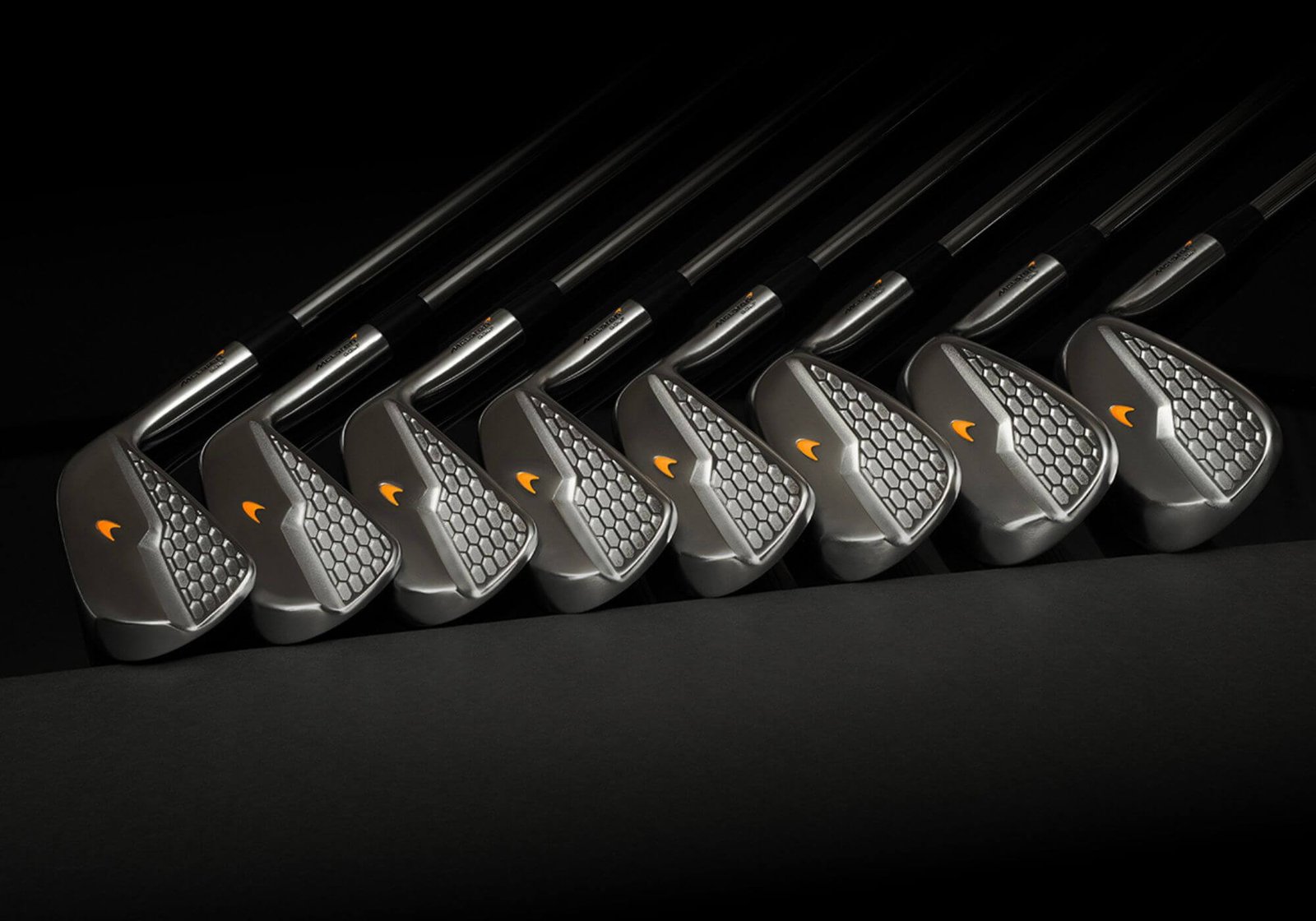
The Series 1 is a traditional muscle-back design. Metal injection molded, obviously.
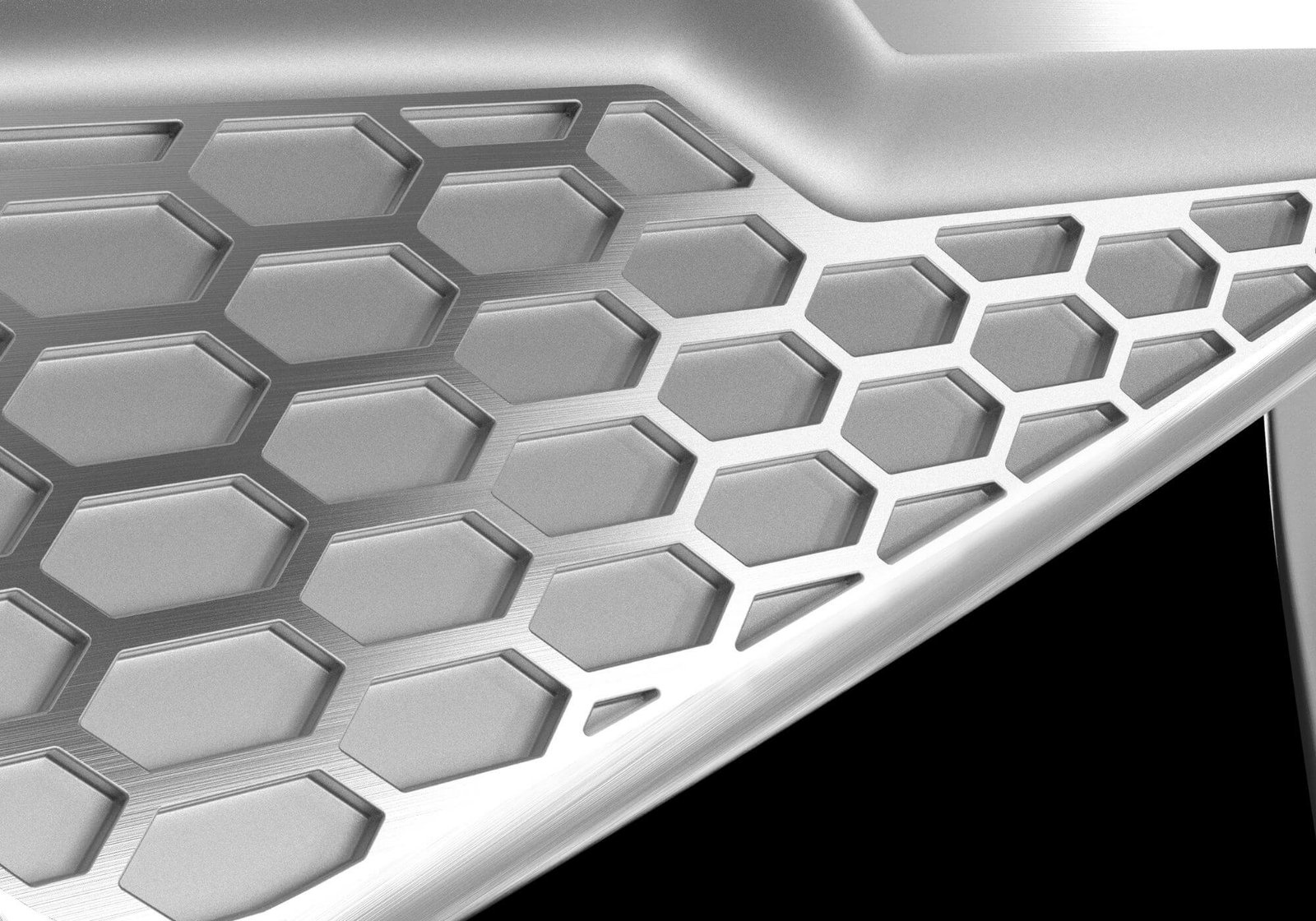
The first thing you’re likely to notice is a structural mesh design in the back cavity. It gives the iron a distinct look that might wind up being the early signature feature of McLaren designs. True to the purpose-built philosophy, the mesh saves weight while still providing additional strength. And because McLaren is a golf company now, that saved weight gets reallocated elsewhere to deliver performance benefits.
Series 1 features a progressive center-of-gravity design driven by internally placed tungsten bars. The bars are unique in shape and weight (16 to 24 grams depending on the head) which lets McLaren tune the properties of each iron in the set individually.
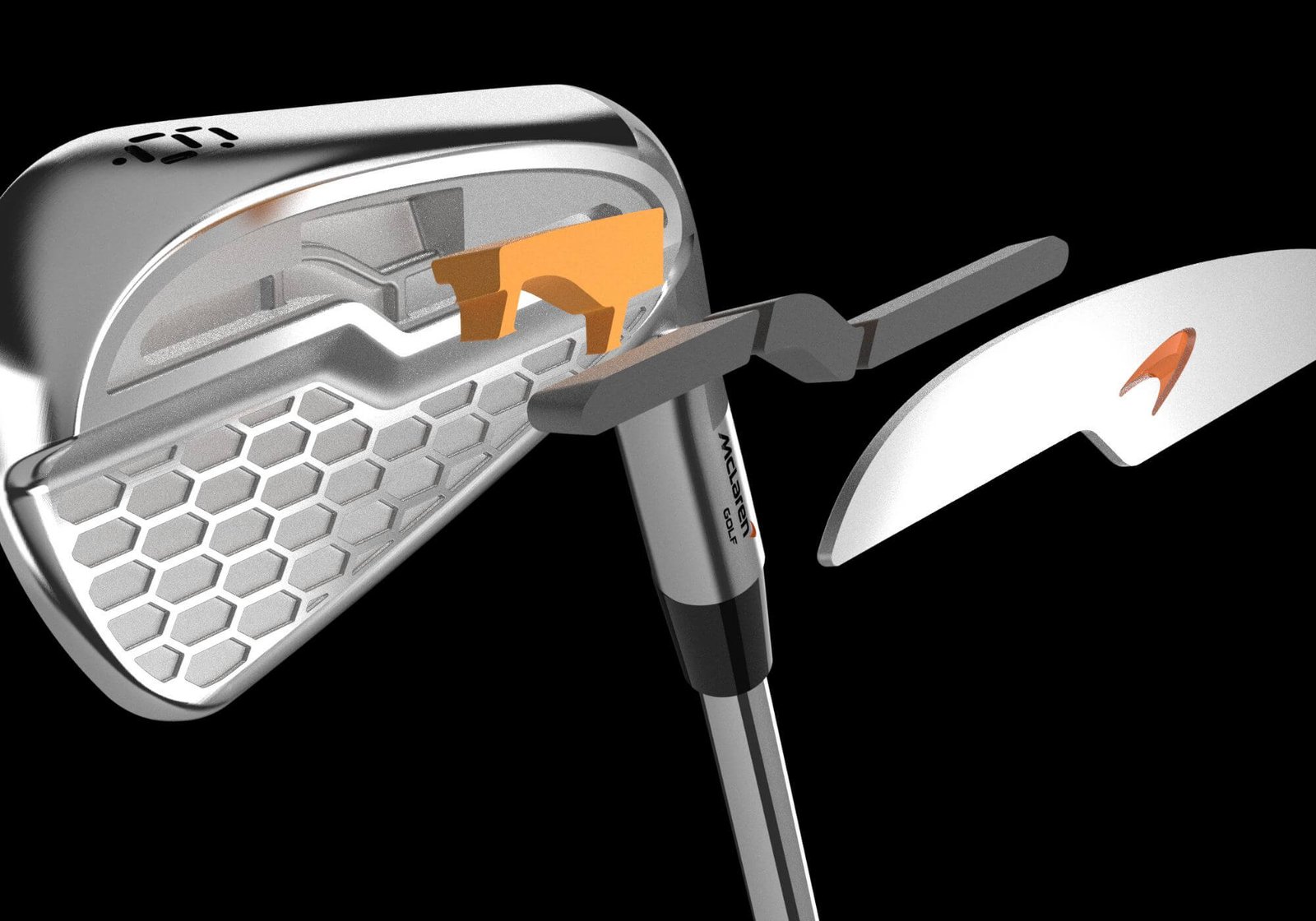
There’s also a piece of injection-molded silicone that dampens vibration while serving as part of the precision-weighting story.
The sole design will get more attention in a minute but the quick version is that Series 1 runs flatter (less cambered) than Series 3.
In one sense, Series 1 is a typical modern blade. But there are subtleties. The most notable is a fairly aggressive progressive offset design. In addition to using weight placement and CG to shape flight, added offset in the long irons (paired with some native heel bias) helps square the face coming into impact. CG is lower in the long irons, too, to produce easier launch and higher flight. As you transition from long to mid to short irons, offset reduces gradually but significantly, creating the clean lines better players expect in the scoring clubs. Flight comes down while spin rates climb and the trajectory profile behaves the way a player would expect.
Shapes were developed with input from tour players including those joining McLaren as ambassadors.
Lofts more or less line up with what we’d expect from a modern player’s iron. A 46-degree pitching wedge means a 50- or 52-degree gap wedge still makes sense while a 34-degree 7-iron suggests a focus on shot-making over pure distance.
Series 3
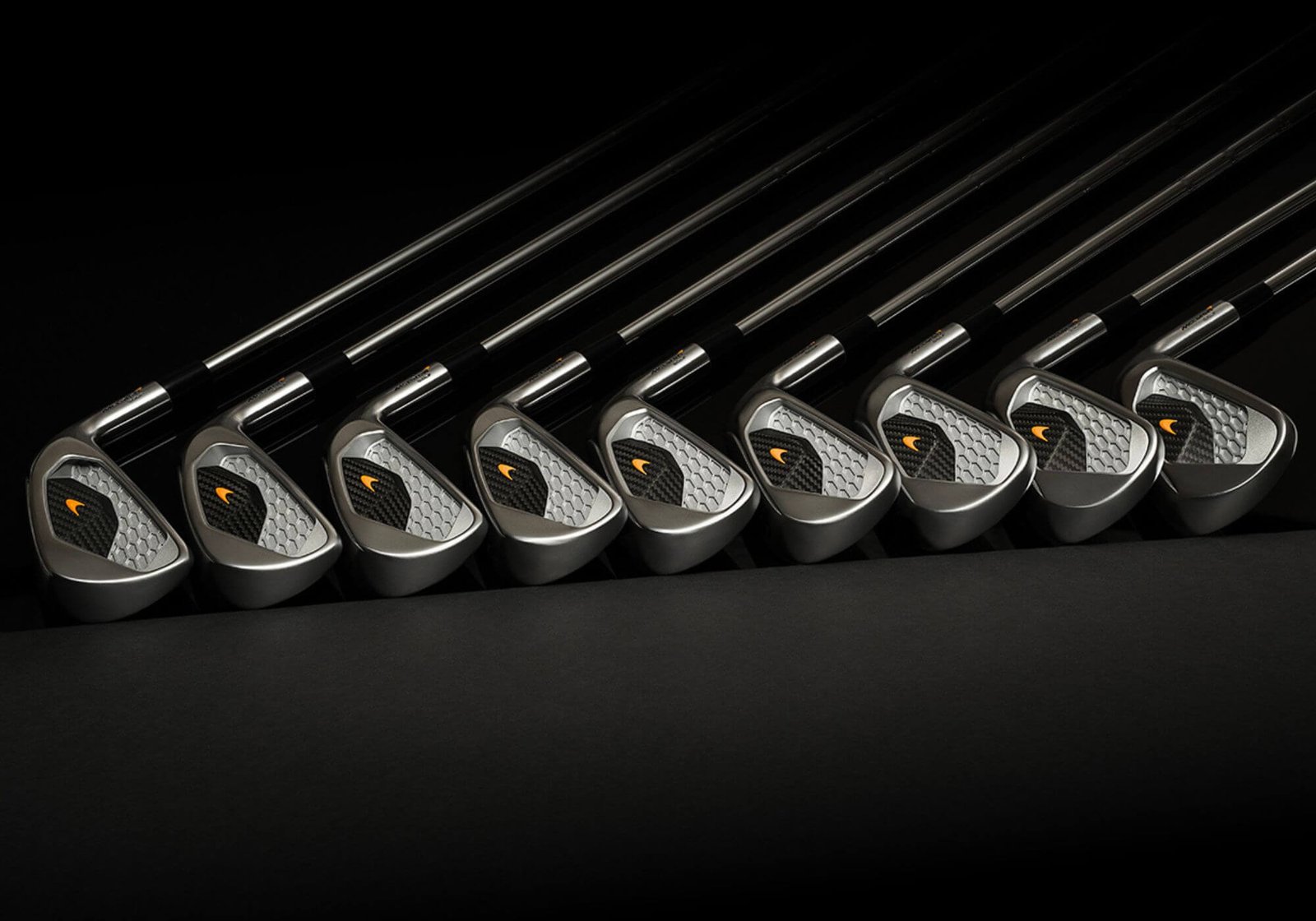
Yup. We just skipped right over Series 2. Nothing to see here (yet).
There’s a case to be made that the Series 3 iron could fit comfortably in either the game-improvement or player’s distance category. The non-specific claim here is a balance of performance and forgiveness. There’s plenty of shared tech with the Series 1 but the implementation is different and as you’d expect moving from a blade into something more forgiving, Series 3 is generally larger, the offset is a little more generous and the topline is noticeably thicker.
Like the Series 1, the Series 3 features a structural mesh cavity design. You’re still getting the progressive CG approach, too. Each iron uses a centrally positioned tungsten weight (10 to 17grams depending on the loft). Precise weight placement is aided by a carbon fiber bonnet that also helps dampen vibration. And to be clear: We’re talking actual carbon fiber here, not some other material with a carbon-weave print.
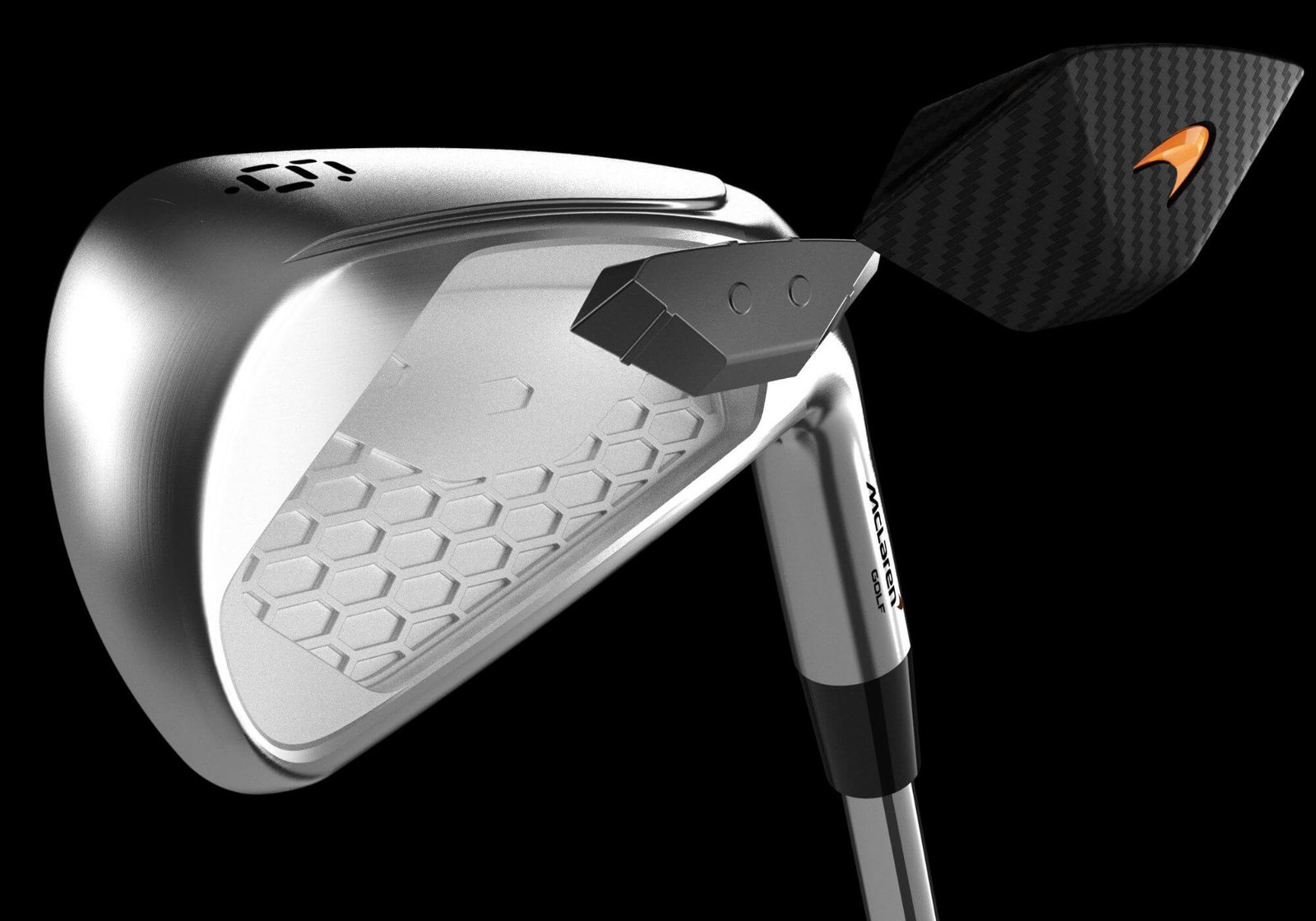
The Series 3 also features tungsten toe weights. Not an unfamiliar approach in this category and, as always, it’s about dialing in CG location and the performance of the individual irons in the set.
Arguably the most notable feature of the Series 3 is the sole design. It’s a dual-camber sole which simply means there’s curvature from toe to heel as well as from front to back. Sole design and its role in turf interaction has long been a focus of JP Harrington’s work so it’s no surprise to find it emphasized here.
The objective is to promote center-sole contact with the turf. Think of it as an added measure of protection against fat shots that also helps provide more consistent results.
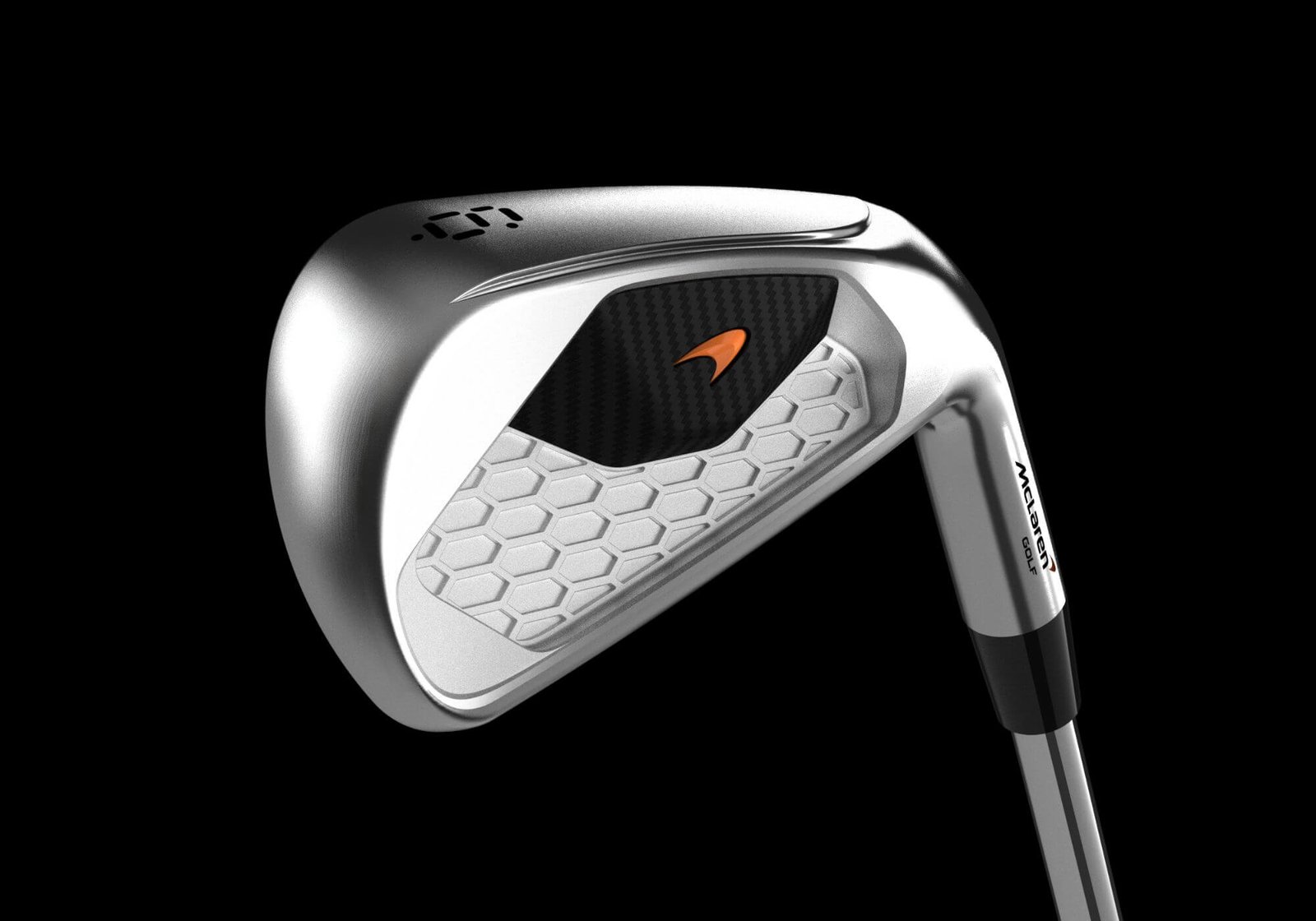
The loft package is in line with similar iron designs. At 44 degrees, the PW is strong but not egregious. A 31-degree 7-iron is sensible enough.
The road not traveled (yet)
McLaren’s golf lineup is, for today, limited to these two iron sets. As you’ve probably pieced together from the naming convention, there’s clear space for a Series 2 iron. Look for it in early 2027.
Arrival dates for the rest of the lineup haven’t been shared but make no mistake about the objective. McLaren has every intention of establishing itself as a full-bag company. Irons today, the rest tomorrow. Or maybe the day after. It’s a metaphor. The point is that additional product lines are being developed in parallel and what you see today is really just the beginning.
The bottom line
McLaren Series 1 and Series 3 are positioned as timeless premium designs. If you want to think of them as craftsman’s clubs, I’m sure McLaren would be fine with that. The subtleties of the design hide the underlying technology and while that’s maybe not what we expected, it seems McLaren is content to let the performance do the talking.
Along those same lines, the company isn’t making bold performance claims. It’s encouraging you, the golfer, to do your own testing and decide.
Of course, as you’d expect, that design comes at a cost. Retail price for Series 1 and Series 3 irons is $375 per iron, just over $2,600 for a basic build. Add shaft and grip upgrades and it’s easy to climb north of $3,000.
Pricing and availability
McLaren Series 1 and Series 3 irons are available through custom fitting locations including Club Champion, True Spec and others. There are no current plans to distribute through big-box retailers such as Golf Galaxy or PGA TOUR Superstore.
For more information, visit McLarenGolf.com.