“The wind didn’t move it as much, and even 5 yards of difference there is huge,” Rietveld said.
TaylorMade 2026 TP5 Golf Balls
The best players in the world, like 2025 champion in Augusta and career Grand Slam winner Rory McIlroy and Collin Morikawa have already made the switch to the fastest ever TP5. It’s time for you to make the switch, too.
Microcoating
No two golf balls are the same, but the all-new TP5 sets out to solve an invisible problem through our revolutionary microcoating finish process. Uneven paint and excess pooling in the dimples can compromise distance and accuracy. Microcoating uses precision application technology to ensure uniform coverage across the ball’s entire surface. Click on the video for a deep dive.
Thinner Than a Human Hair
Microcoating is thinner than a human hair and delivers measurable performance advantages: more consistent ball flight, optimized distance, and tight left-to-right dispersion.
The Fastest TP5 Ever
TP5 has long been our softest five-layer Tour ball, but now it’s faster than ever. Employing our largest Tour core to date, the TP5 retains more energy at impact, which results in faster ball speeds and more distance at the top of your bag.
Tour Flight
The reengineered Tour Flight Dimple Pattern features new dimples that when combined with microcoating, promote a more predictable, penetrating ball flight with optimized peak height performance and increased accuracy.
View Product
ALSO AVAILABLE AT: PGA Tour Superstore, TaylorMade
Driver
;)
TaylorMade
Specs
TaylorMade Qi4D LS 9.0
Actual Loft: 9.75°
FCT Setting: 1 click higher (1˚ degree sleeve)
TAS Weights: 3g front, 8g Back
Lie: 58.5°
Face: W/ Fiducials
Shaft: Fujikura Ventus Black Velo+ 7X
Length: 45.25″ EOG
Tipping: 1″
Swingweight: D4
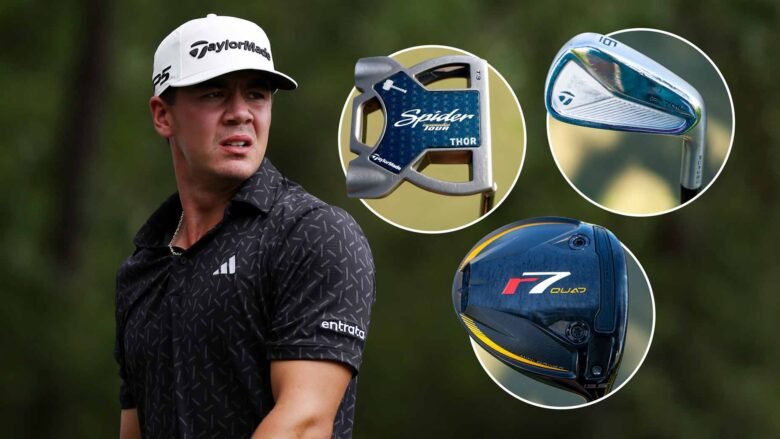
Thorbjornsen’s best weapon is his driver. As a rookie, he ranked 7th in SG: Off the Tee, 6th in distance (318 yards) and 48th in accuracy.
He was previously in the Qi35 LS last season and has stayed in the model family with the Qi4D LS this year. One of the reasons he continues to use the most compact model in TaylorMade’s lineup, despite being a draw player, is the increased spin retention from the tighter roll radius on the Qi4D.
“He hits a draw, and I think that tautness of the spin tolerance that we’re getting out of the face now gives him the confidence to turn it over where the ball’s not going to drop,” Rietveld said. “When you get into that 2000 and less, that can cause what I think is a big miss.”
The TAS weights on his driver are fairly neutral, with just 3g forward and 8g back, but that gets his typical spin window in the 2350-2400 rpm range, which is where his best dispersion is.
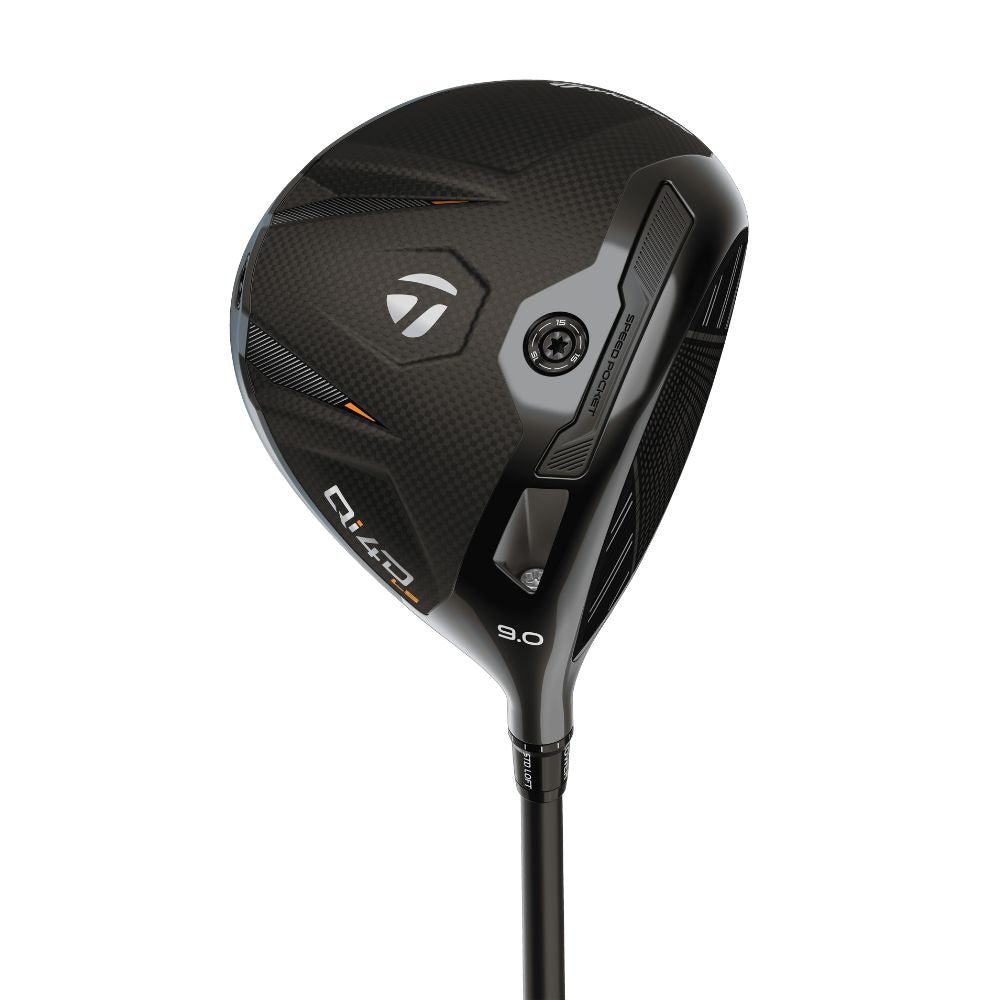
TaylorMade Qi4D LS Custom Driver
SHAPED FOR SPEED
Traditional address shape based on feedback from world-class players helps create confidence on every shot.
Qi4D LS is the lowest spinning option in the Qi4D lineup.
FACE FOR DISTANCE
Qi4D LS drivers feature a new and improved roll radius, yielding more consistent spin across vertical impact locations.
ADJUSTABLE PERFORMANCE
4° loft sleeve can be used to adjust loft, lie and face angle for optimized flight.
TOUR PROVEN TECHNOLOGIES
New and improved cut-through Speed Pocket™ protects ball speed and reduces spin on low-face strikes.
Advanced CAD modeling creates a design with a clean and powerful sound, a foundation of TaylorMade driver performance.
Multi-Material Construction allows engineers to strategically place mass in areas of the head where it maximizes performance, speed, and stability.
View Product
ALSO AVAILABLE AT: PGA Tour Superstore, TaylorMade
Mini Driver
;)
Jack Hirsh/GOLF
Specs
TaylorMade R7 Quad Mini 13.5˚
Actual Loft: 13.5˚
FCT Sleeve setting: Standard (1.5˚ sleeve)
Front Weights: 5g Toe, 7g Heel
Back Weights: 10g Toe, 10g, Heel
Shaft: Fujikura Ventus TR Blue 8-X
Length: 44″ CUT
Tipping: 1.5″
Swingweight: D4.5
The mini driver has become a core part of Thorbjorsen’s identity, and it’s a big reason his accuracy stats are so much better than those of many other high-ball-speed players.
The club gets a lot of use when there are holes that are too short for his regular driver and this week at Harbour Town is going to be one of those weeks.
“Being a 180-plus ball speed guy, the mini driver is kind of a safety for that,” Rietveld said. “When he doesn’t feel comfortable with driver, it becomes almost like a 300-yard club to get him in play and keep him in the tournament.”
For a lot of players, the mini driver is like a safety valve for when a shot can’t be hit as far, but the can still swing just as freely as they do with a driver. That’s the case for Thorbjornsen.
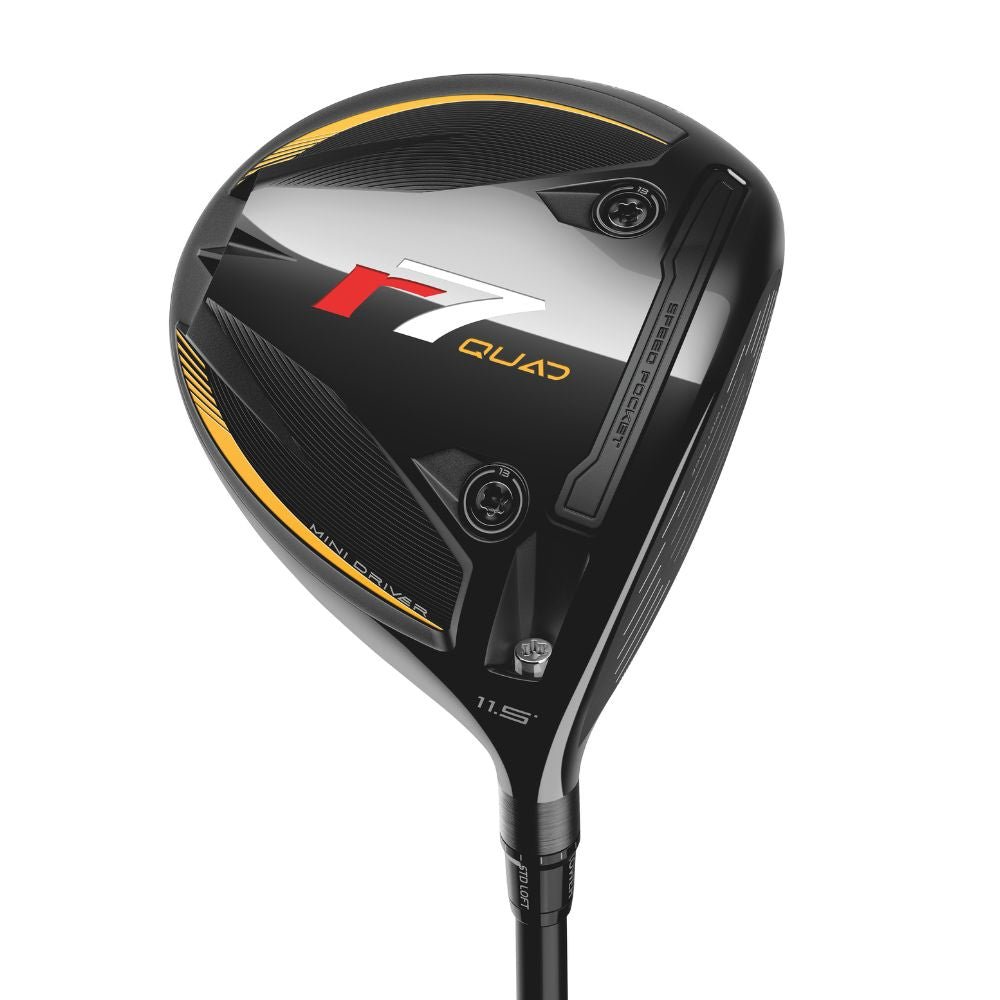
TaylorMade R7 Quad Custom Mini Driver
PERFORMANCE FOR THE MODERN PLAYER
Inspired by one of the most iconic models in TaylorMade history, the R7 Quad Mini Driver pays homage to what’s come before, while creating its own modern identity in the same breath. It’s that very modern design that incorporates proven TaylorMade technologies to give golfers versatility and playability.
R7 QUAD WEIGHTING SYSTEM
The new quad weighting system features four movable weights (13g x2, 4g x2) that provide the ultimate in spin management and shot shape control. Forward CG creates a penetrating flight best suited for maximizing distance whereas rear CG helps prioritize control and ease of use from the deck. Shot shape can also be fine-tuned helping create the most optimal flight. Additional weights can be purchased for a wider range of adjustability.
INFINITY CARBON CROWN
A new satin Infinity Carbon Crown has been added to the R7 Quad Mini Driver chassis creating a stunning look while saving weight for better mass optimization. The cosmetic package is clean, elegant, and confidence-inspiring.
View Product
ALSO AVAILABLE AT: PGA Tour Superstore, TaylorMade
7-wood*
;)
TaylorMade
Specs
Qi4D 21˚
Actual Loft: 20˚
FCT Setting: 1 Click Lower (1.5° sleeve)
TAS Weight: 8g
Lie: 58.5˚
Shaft: Fujikura Ventus TR Blue 9-X
Length: 41 3/8’’ CUT
Tipping: 2″
Swingweight: D5
This season, Thorbjorsen added a 7-wood for most courses to better bridge the gap between his irons and mini driver. He still uses a P770 3-iron for drier courses or windier days, but the 7-wood is getting the bulk of the reps this year.
Like many players, his 7-wood is set lower on the FCT sleeve to not only bring down flight a little, but also open the face angle to guard against a left miss.
“Anytime you’re taking loft off in woods, you’re trying to help encourage better shot dispersion. For him, it just complements everything around it,” Rietveld said. “That 7-wood is quite versatile. It retains his spin beautifully for a high-ball hitter and allows him to be more aggressive in that regard.”
*The 7-wood is switched out with the 3-iron (or potentially a 2-iron this week) based on course/conditions.
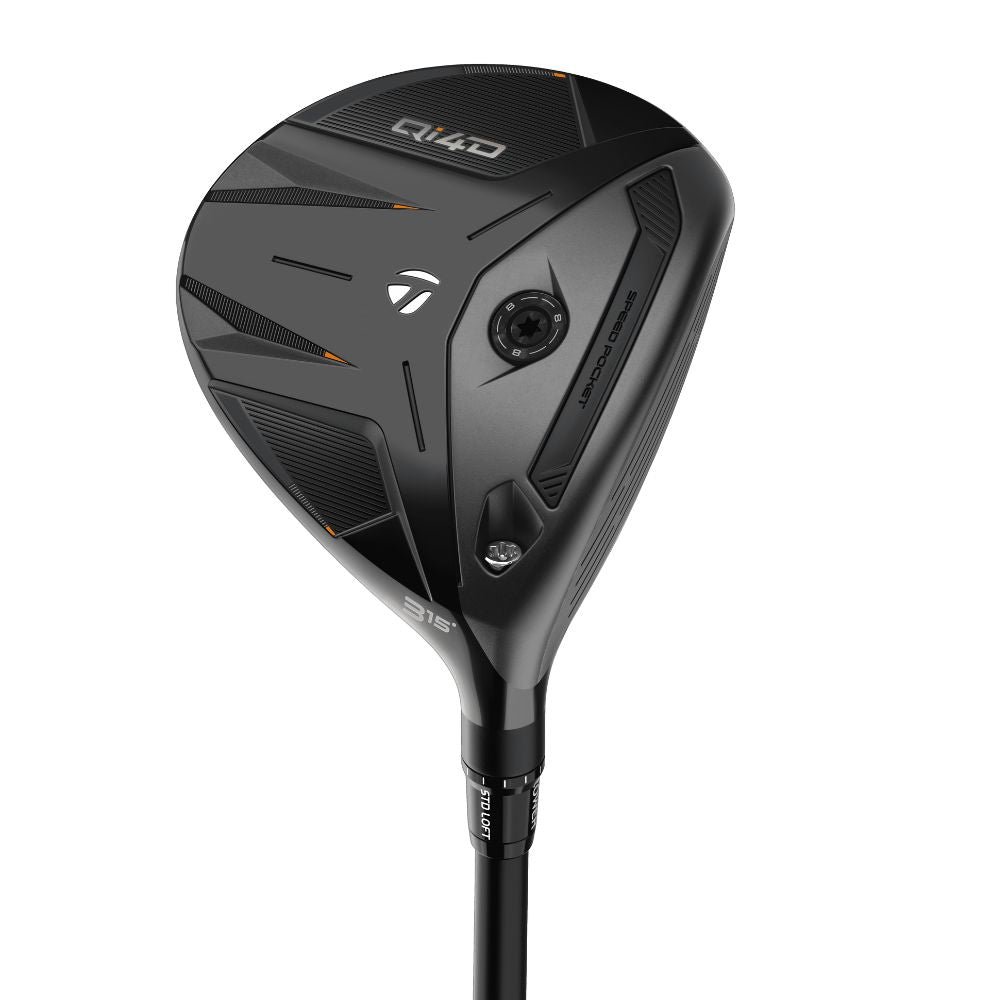
TaylorMade Qi4D Custom Fairway Wood
PROVEN RECIPE
TaylorMade Fairways have dominated on Tour for over a decade because of their unique performance recipe, which enables maximum distance and versatility.
The Qi4D fairway is designed for golfers who want the most advanced technology while still prioritizing versatility and control with amazing distance.
ADJUSTABLE PERFORMANCE
Utilizing a single Trajectory Adjustment System weight (8g x1) provides the golfer a more mass efficient way to adjust flight, spin and swing weight.
4° loft sleeve can be used to adjust loft, lie and face angle for optimized flight and is available in all lofts.
REFINED ATTRIBUTES, BIG CHANGES
Engineers conducted an objective analysis of all the performance attributes and discovered new methods to enhance performance and confidence.
Sit points, lie angles, address views, and center of gravity locations were all updated based on Tour feedback and the expertise of leading fitters worldwide, ensuring the optimal fairway across skill levels.
TOUR-PROVEN TECHNOLOGIES
New and improved cut-through Speed Pocket™ protects ball speed and reduces spin on low-face strikes.
Advanced CAD modeling creates a design with a clean and powerful sound, a foundation for TaylorMade fairway performance.
Twist Face™ features corrective face curvature designed to provide straighter shots on mishits.
Multi-Material Construction allows engineers to maximize performance by increasing discretionary weight.
View Product
ALSO AVAILABLE AT: PGA Tour Superstore, TaylorMade
Irons
;)
;)
Specs
TaylorMade P770 (3)*, P7MC (4-PW)
Shafts: True Temper Dynamic Gold X7 (3), X100 (4-PW)
Lofts: 21/24/28/32/36/40/44/48
Lies: 60/60.5/61/61.75/62.75/63/63.5/64
Length: 1 1/4″ long (38 1/4″ 7-iron)
Irons are perhaps where Thorbjorsen has made some of the biggest changes since turning professional.
He’s stayed in the TaylorMade P7MC head despite many players on the PGA Tour moving on to the newer, slightly larger and more forgiving P7CBs, but he’s completely changed his loft spec since he started working with Rietveld about a year ago.
“I think he was two degrees strong, one and a half degrees strong when I got hold of the irons. And once I had finished with them, I really had put them all back to traditional blade lofts,” Rietveld said. “That was probably the most significant change, because you’re not just tweaking the irons. You’re moving them a lot. He’s going to see a new window, a new spin profile.”
It wasn’t that someone had made a mistake with Thorbjorsen’s irons before. Rietveld said it’s not all that uncommon for standout college players to make pretty significant spec changes once they arrive on the PGA Tour.
They now have access to stay on top of their specs every week that they didn’t have while in college when they only saw their rep a few times a year, if that.
Adding loft back onto the irons also improved Thorbjorsen’s turf interaction because of the added bounce.
You’ll also notice Throbjorsen uses irons 1 1/4″ longer than standard length to account for his height. His irons are fairly standard lie angles, getting a bit more upright in the mid- and short irons.
The P770 3-iron he has and still uses for tighter tracks (like potentially this week) is not only built with a steel shaft, but it’s built with a Dynamic Gold X7 steel shaft that’s heavier and stiffer than the X100s in the rest of his set.
“The 3-iron has just been a club that he’s grown to love,” Rietveld said. “We have tried to put it in an X100 and it’s not been as good. It must be something to do with these bigger heads in the long irons.”
Thorbjorsen and Rietveld worked on a 2-iron to potentially use this week and it is once again shafted up with an X7.
*The 3-iron is switched out with the 7-wood (or potentially a 2-iron this week) based on course/conditions.
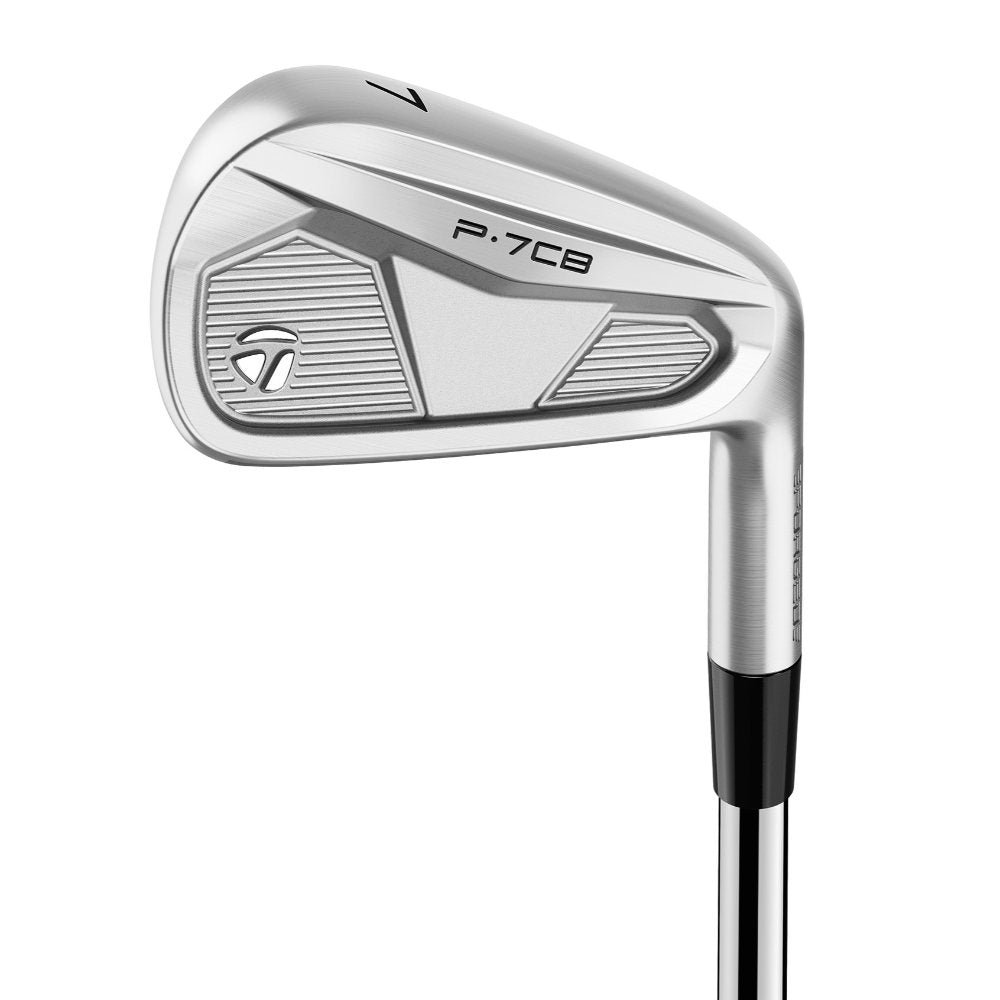
TaylorMade P7CB Custom Irons
BEST-IN CLASS FEEL
Using Tour feedback and modal analysis we’ve strategically designed mass placement for best in class feel. Crafted using Compact Grain Forging and 2000 tons of pressure to deliver the purest feeling 1025 soft carbon steel possible.
PRECISE CONTROL
Precise milled face and grooves combined with a constant CG the P•7CB is designed to deliver an optimal launch and spin combination for the ultimate control and precision.
CONSISTENCY
Created to maximize accuracy and consistency. The P•7CB optimized perimeter weighting and co-forged tungsten designed to deliver a beautiful blend of stability and workability.
COMPACT TOUR SHAPING
Every aspect of shaping in this iron was intended to meet the needs of discerning ball strikers. A compact blade length and thin topline create a confident, clean look in the playing position while the sole camber and progressive bounce profile provide consistent turf interaction.
View Product
ALSO AVAILABLE AT: PGA Tour Superstore, TaylorMade
Wedges
;)
Jack Hirsh/GOLF
Specs
TaylorMade MG5
Lofts/Grinds: 52 SB, 56 SB, 60 SC
Shafts: KBS Tour V 120 X
Lie: 63.5˚
Length: 36 5/8″, 36 5/8″, 36 1/4″
With the golf ball change, Thorbjorsen moved the lofts on his wedges a degree to a degree and a half weaker to take advantage of the extra spin he could now generate.
What has changed is the grind of his MG5 lob wedge, moving from the TW-grind to the SC, and it’s coincided with a dramatic improvement in his play around the greens. In 2025, Thorbjorsen was 159th in SG: Around the green. This season, he’s all the way up to 34th, a difference of nearly half a stroke.
“We’ve been testing 60-degree wedges since Phoenix,” Rietveld said. “Just kind of making multiple options and him taking them on to the golf course, a real kind of like trial-and-error situation. Every week you’ve got different sand and different run-offs and just trying to figure out what variety of shots he’s comfortable hitting and which grind helps him the most.”
Uniquely, Thorbjorsen plays the softer and lighter KBS Tour V in his wedges simply because he prefers the feel. His clubs are longer than standard which also makes them heavier, so there isn’t much of a concern with them being too light.
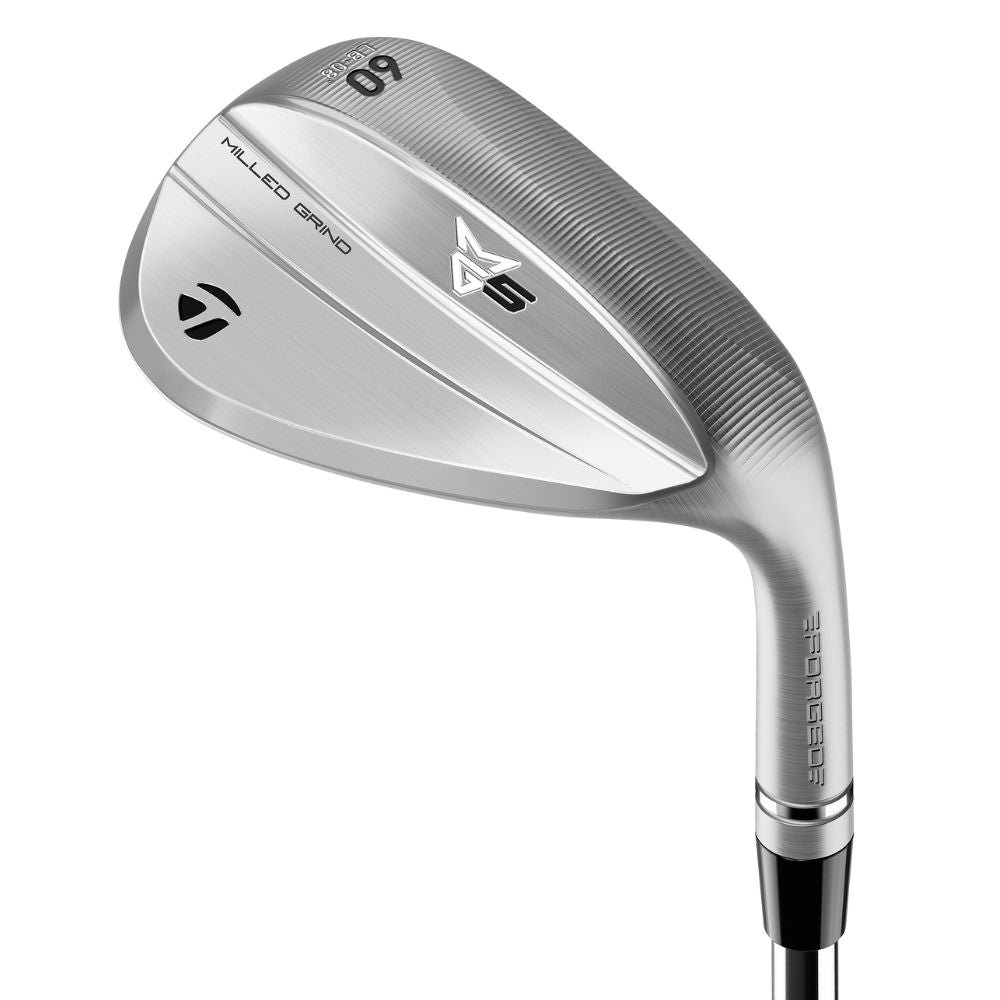
TaylorMade Milled Grind 5 Tiger Woods Custom Wedge
Updated to match Tiger’s recent wedge preferences. A new leading edge blend with increased effective bounce in the heel.
FORGED FEEL
Incredible feel is a must for having a great wedge game. MG5 has been forged from soft carbon steel and designed with geometry to provide excellent feel with great feedback.
MAXIMUM SPIN
MG5 uses all-new, more aggressive grooves designed to maximize spin. Saw-milled grooves produce tighter tolerances allowing engineers to design steeper walls and sharper radii intended to maximize spin in both dry and damp conditions.
PERFORMANCE IN ALL CONDITIONS
RAW face with Spin Tread technology channels away moisture to help retain spin. The same way that tire treads help your car stay connected to the road, laser-etched channels redirect water at impact and creates more friction between the club face and golf ball to maintain spin in wet conditions.
View Product
ALSO AVAILABLE AT: PGA Tour Superstore, TaylorMade
Putter
;)
Jack Hirsh/GOLF
Specs
TaylorMade Spider Tour
Loft: 1.75˚
Lie: 70
Length: 35.5″
Hosel: Short Slant
Alignment aid: Back T w/ True Path
Insert: 80/20 Pure Roll
Swingweight: E7.5
Grip: SuperStroke Pistol Tour
One thing that Thorbjorsen hasn’t changed much in his setup is his Spider Tour putter. During his college days, he was in the more compact Spider Tour X but has been in the larger profile Spider Tour since 2024.
He takes advantage of all the tech TaylorMade has to offer with the highest MOI Spider head, plus a unique “Back T” with TruePath alignment aid. His Spider has the 80/20 Surlyn/aluminum insert that has become by far the most popular Spider insert.
While the putter hasn’t changed much in his time on Tour, what Rietveld says has changed is his approach to putting.
“You can see how structured his practice is now; the drills, the process,” he said. “He’s gone from a talented putter to more of a student of the game.”
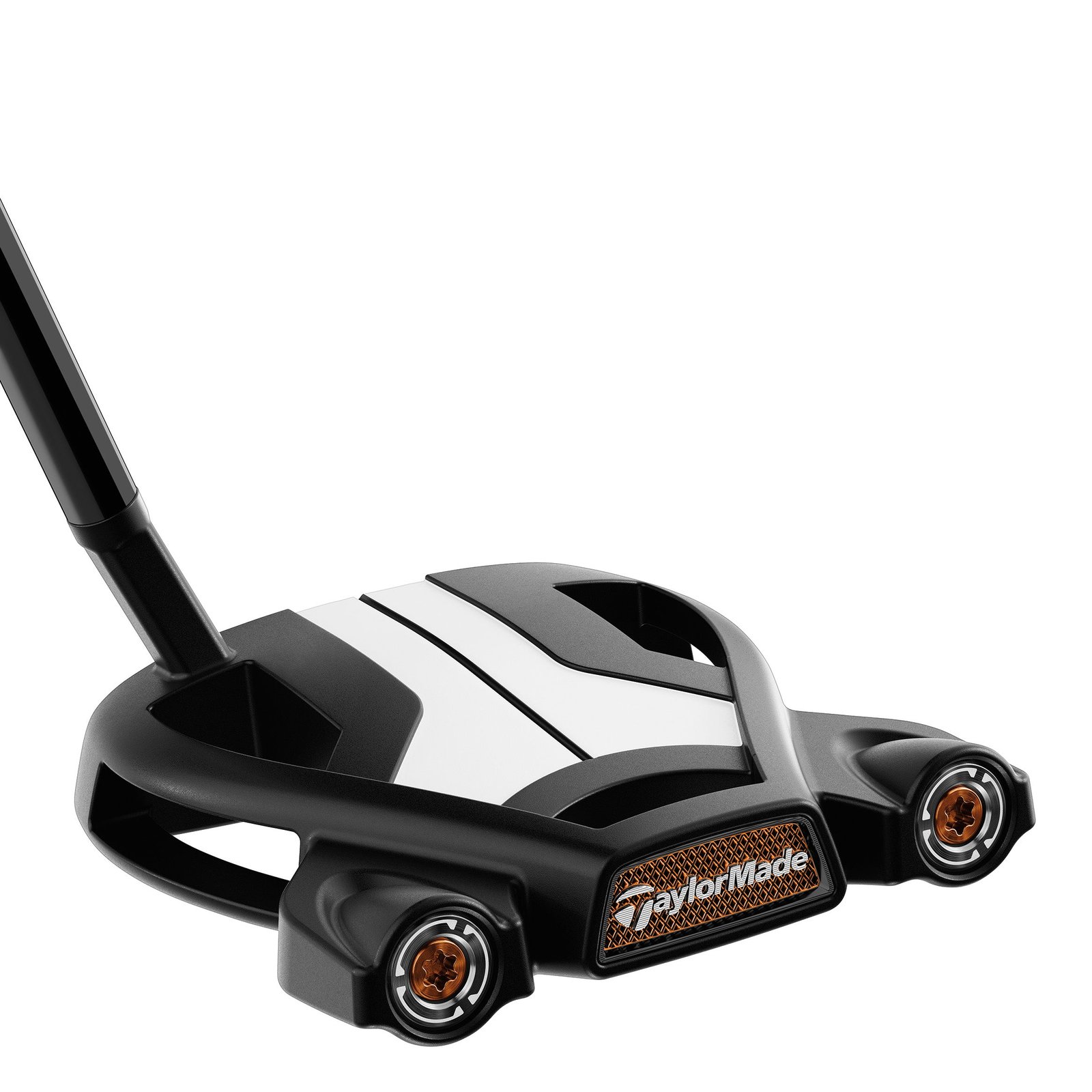
TaylorMade 2025 Spider Tour Black Custom Putter
BLACK PVD FINISH The durable PVD coating creates a beautiful high-quality finish with sole plate, back badge and copper accents.
TRUE PATH™ ALIGNMENT The patented alignment system provides visual clarity and helps golfers better envision the line to the hole.
WHITE TPU PURE ROLL™ INSERTMade from a combination of Surlyn and aluminum, the white TPU Pure Roll™ insert creates a softer feel.Grooves are angled at 45° to encourage optimal forward roll as well as better sound, feel and overall roll characteristics. The white insert also creates better symmetry with the white True Path alignment.
THIN WALL UNDERCUT CONSTRUCTION We’ve engineered a super stable structure by removing excess weight to create high MOI and legendary Spider performance.
HYBRAR ECHO®DAMPENER HYBRAR is behind the face to dampen unwanted vibrations, delivering premium sound and feelon every putt with the best possible sensation.
TSS WEIGHTING TSS weights provide balanced weighting and help optimize performance for all various putter lengths.
STEEL WIREFRAME Allows engineers to better control weight distribution and CG location.
View Product