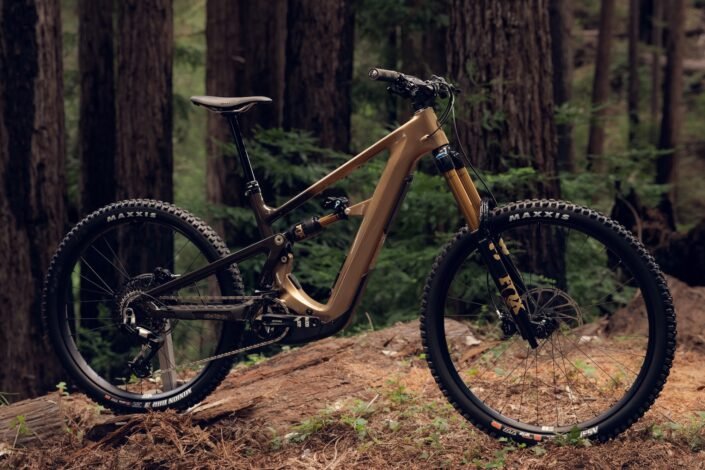
Ibis took its time bringing its first and only eMTB to market, which it did with the original Oso that came out in 2022. That bike was a pretty significant departure from the brand’s typical design language, featuring a funky-looking “upper-link suspension dw-link platform” and a large swingarm in the rear. Its performance was solid, but its looks were polarizing to say the least. Now, Ibis is bringing the 2nd-generation Oso in line with the aesthetics of its non-electric bike lineup while expanding it to three models built around the same frame.
The new Oso is available in three “personalities”: HD, TR, and S, each offering different travel and geometry. All three versions use the same frame, but swapping the shock, clevis, and fork makes it a modular platform with three distinct models. And with Oso being the Spanish word for bear, it’s kinda like Goldilocks and the Three Osos — most people should be able to find the version that’s “just right”. This is a similar approach we’ve seen recently from other brands, including Trek with its latest Fuel+ models. But since we’ve essentially got three bikes to talk about here, let’s dig in.
Ibis Oso Details
All three versions of the new Oso use the same carbon frame, which has been built around the Bosch CX Gen 5 drive system. As mentioned above, the frame has a similar look to the latest versions of the Ripmo and Ripley with clean lines and a “normal” appearance compared to the outgoing model. That includes the familiar dw-link suspension design that Ibis uses across its entire lineup. With the modular design, the three Oso models closely mirror the non-electric HD6, Ripmo, and Ripley in terms of travel and intended use.
The frame comes in 5 sizes, with Ibis’ extra-medium (XM) falling between the medium and large frames. The brand states that since ~80% of riders fall between 5’5” and 6’0”, this provides more options for the bulk of riders to find a good fit. And Ibis has gone with size-specific wheel sizes, geometries, and suspension kinematics to ensure consistent handling and ride feel across the size range. All frames have straight, uninterrupted seat tubes so that riders on all frame sizes can maximize dropper length.

Modularity
The Oso is a modular frame platform, and by swapping the shock, clevis, and fork, it can transform into three different models with varying travel lengths. The Oso HD has 165mm, the Oso TR has 150mm, and the Oso S has 130mm of rear wheel travel. In theory, it should be possible for riders to switch between the various setups, assuming you have the parts to do it. We’re guessing most people will get the version best suited to their riding style and terrain and stick with it.
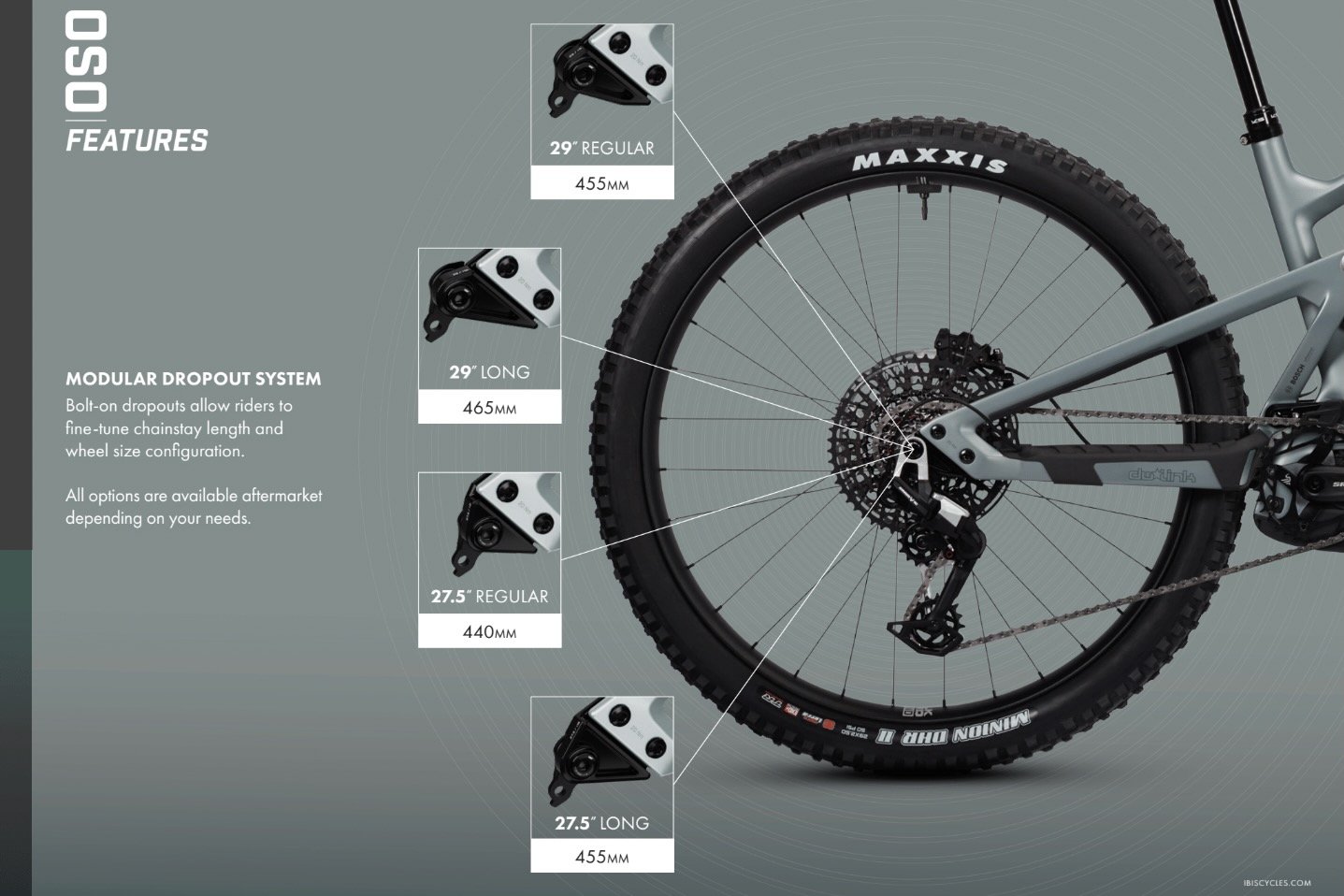
Ibis also added a modular dropout system with bolt-on dropouts and brake mounts, allowing riders to adjust chainstay length and switch between rear wheel sizes. There are two lengths of bolt-on dropouts for each wheel size, and Ibis says they will all be available aftermarket should you wish to switch it up. For 27.5” wheels, riders can choose between 440mm and 455mm chainstay lengths. For 29” wheels, the options are 455mm and 465mm.
Geometry
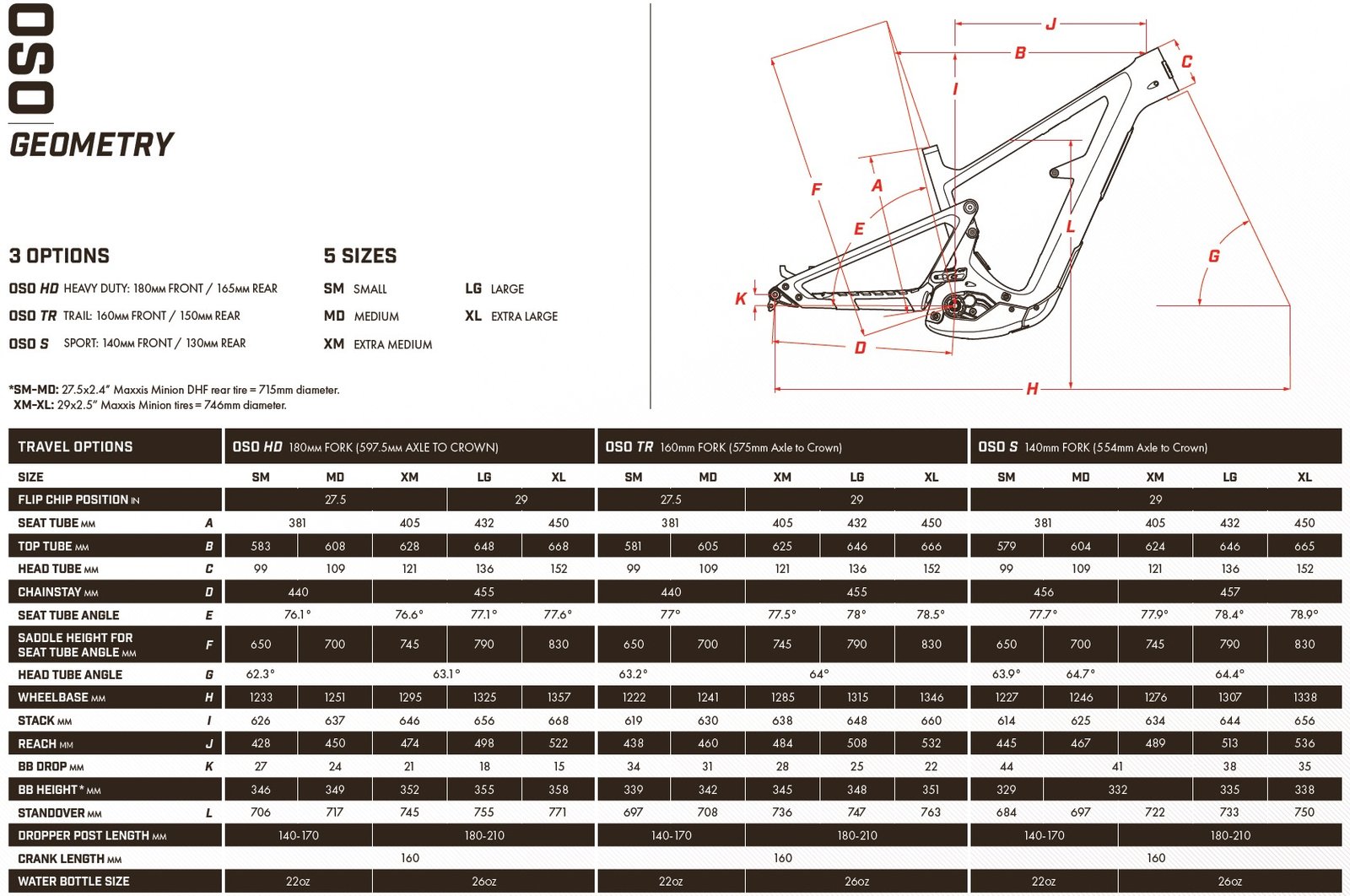
Each version of the Oso has a different geometry, and all of them are listed in the chart below. It’s quite a lot to process, but the quick and dirty is that the longer the travel, the slacker the geometry. All three versions appear to have well-considered angles and numbers that align well with their travel and intended use.
Motor and Battery
Ibis is sticking with the proven Bosch CX Gen 5 drive system for the new Oso lineup. After the last over-the-air update, the motor specs were bumped from the original 85Nm of torque and 600W of peak power up to 100Nm of torque and 750W of peak power. Now that Avinox continues to push power specs higher, we wouldn’t be surprised to see other brands follow suit. We’ve heard rumors of another Bosch CX motor update potentially being in the works, but we don’t have any details.
Regardless, the Bosch CX already has plenty of power, smooth power delivery, and relatively quiet operation. It uses a wireless handlebar remote to switch between its four output settings, with the top-tube-integrated Kiox 400 color display showing all your pertinent ride info at a glance. The Bosch Ride App also lets you customize and tune the settings, so you can dial it in to your exact preferences.
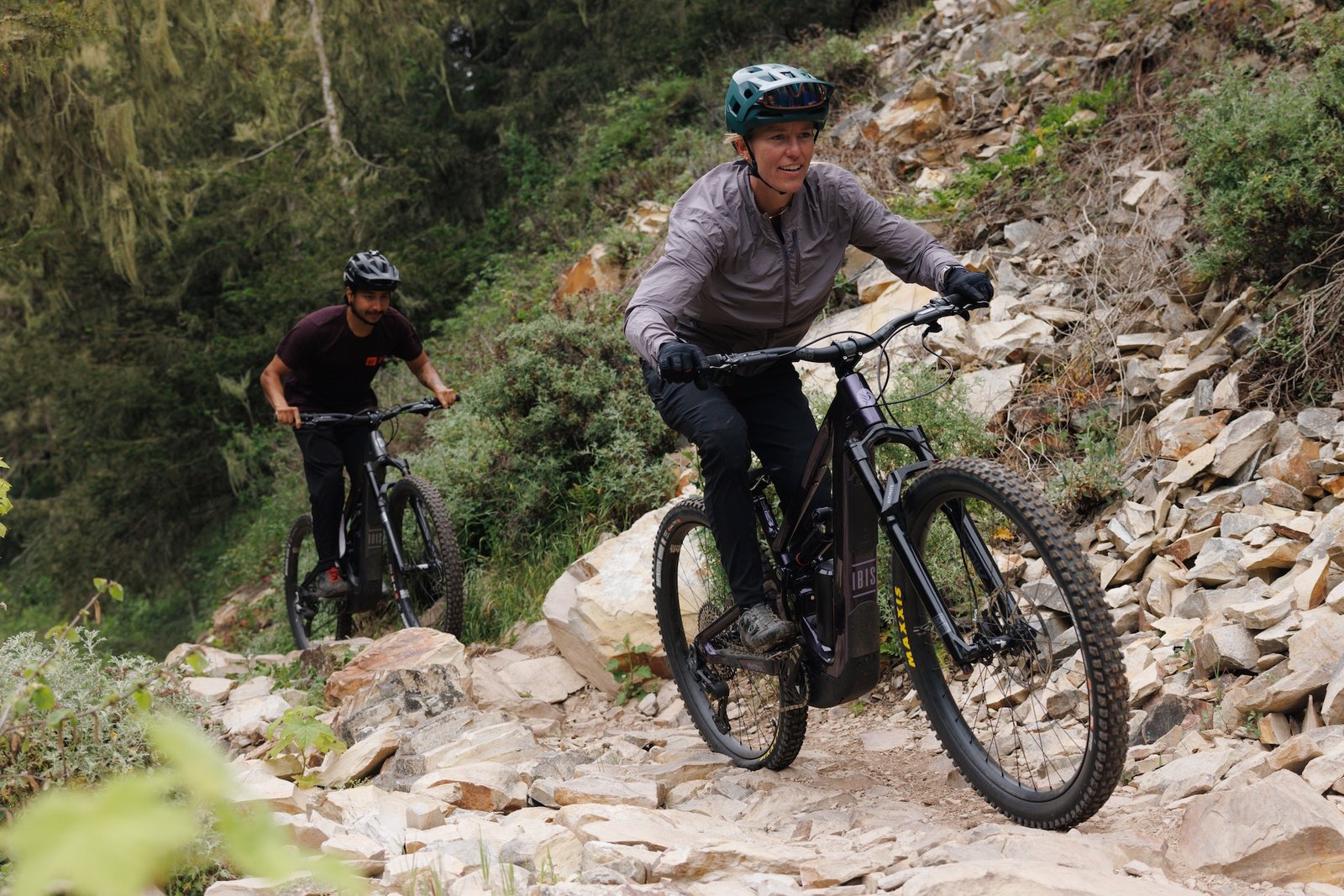
Similar to what Santa Cruz did with the Vala eMTB, Ibis chose the 600Wh Bosch PowerTube battery for the new Oso models. This was a conscious decision to reduce the total bike weight by 2.2 lbs (1kg), while also keeping the weight lower on the frame, compared to the 800Wh battery. The goal was to keep the handling a bit lighter and for the bike to feel more nimble. I actually saw these bikes in person a few weeks back when I visited Ibis, and felt it for myself. I was quite surprised by the impact the lighter battery and its low placement had on the weight balance and handling feel of the bike.
Of course, the Oso is also compatible with the Bosch Powermore 250Wh range extender. This gives riders the ability to have up to 850Wh of battery capacity, and the options to adapt their setup depending on their ride goals. All bikes also ship with the Bosch Bottle Cage/Battery Mount for secure mounting of the range extender. The folks at Ibis mentioned that if purchased with the bike, the PowerMore range extender would cost less than if purchased separately, but unfortunately, I don’t have an exact number to share.
Ibis Oso HD: Downhill Both Ways

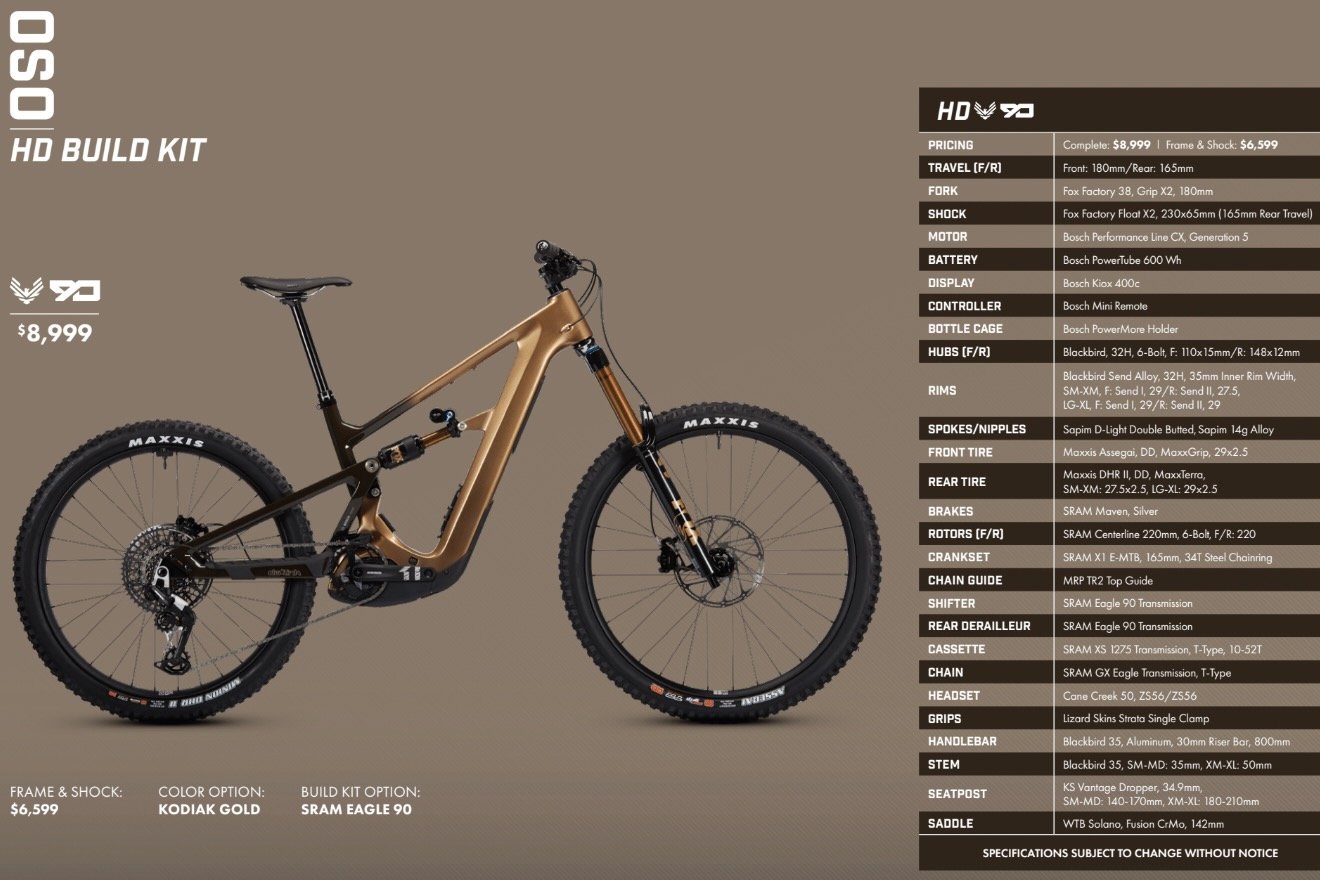
The Oso HD is the “Heavy Duty” version that essentially looks like an electrified HD6 Enduro bike. It has 165mm of rear wheel travel and comes with a 180mm fork. It’s also got the geometry to match, primarily in the form of a 63.1-degree head tube angle (62.3 degrees on the S frame), but also the lengthy wheelbase, generous stack, and relatively steep seat tube angle (see the chart above for all the details).
The S, M, and XM sizes come with mixed wheels, while the L and XL are full 29”. It comes in one complete build, and is sold as a frame and shock only for $6,599
Oso HD Eagle 90: $8,999
Ibis Oso TR: Trails All Day
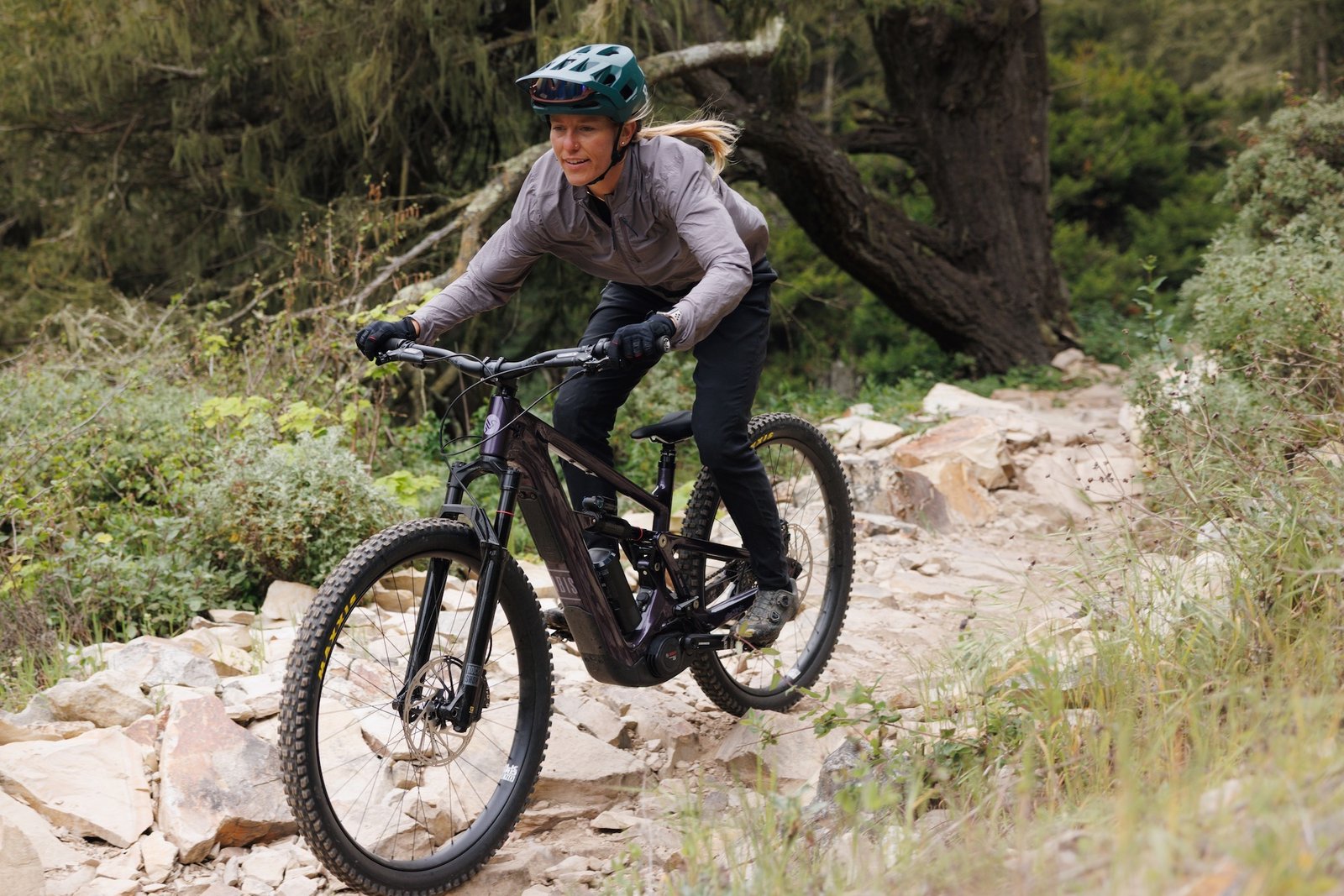
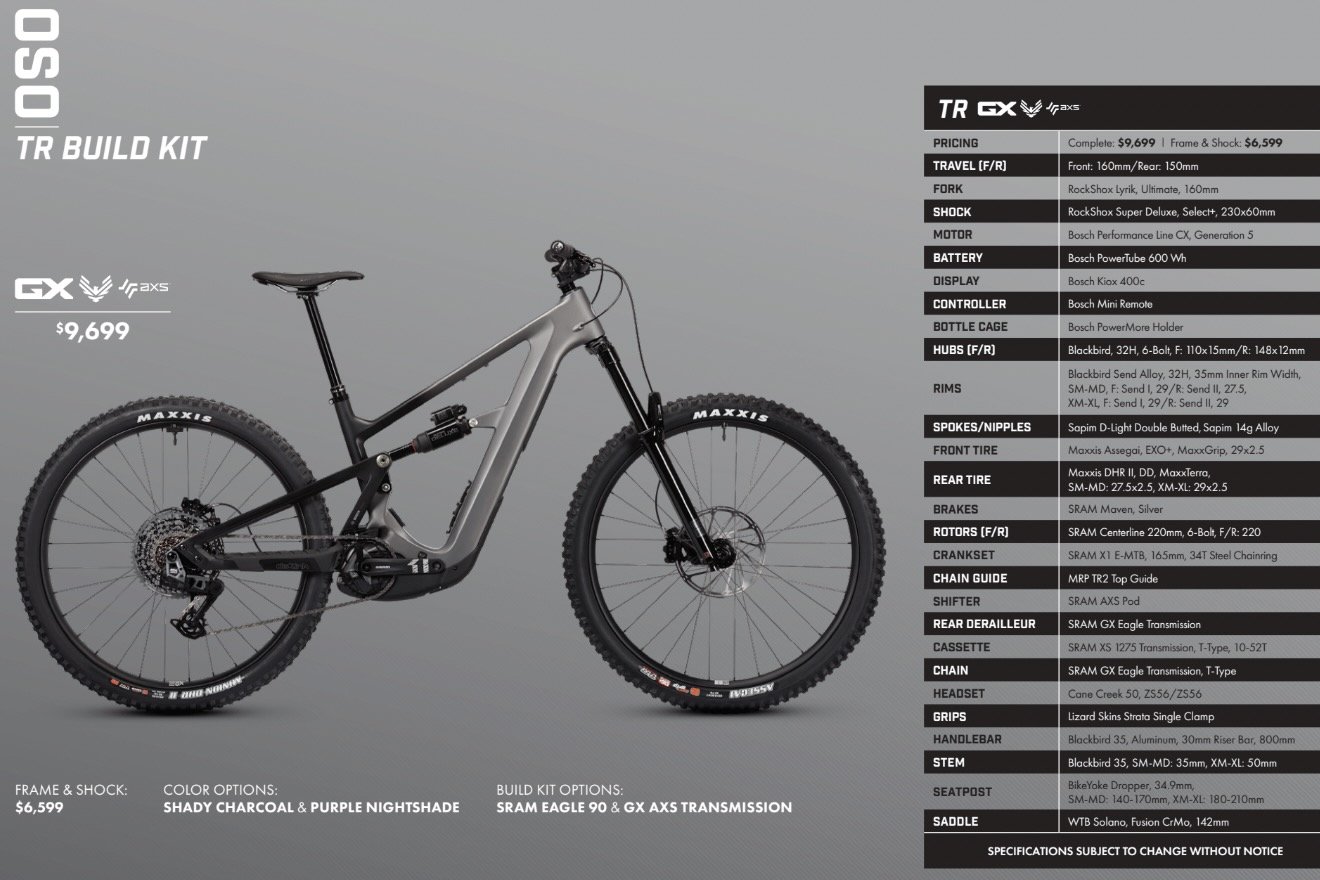
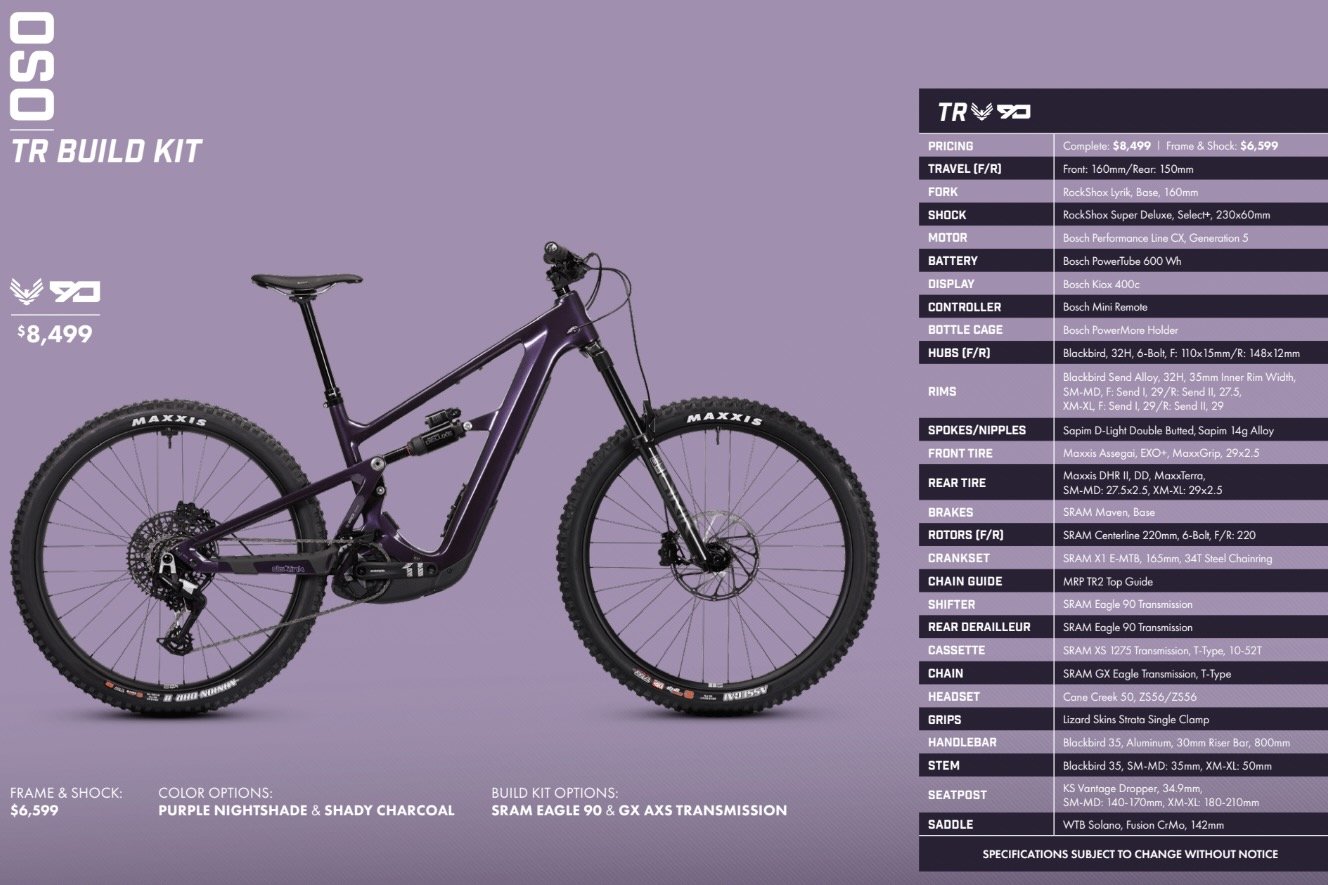
The TR is the “Trail” version of the Oso, which is pretty much an electric Ripmo. It has 150mm of rear travel and is designed around a 160mm fork. It has a more trail-oriented geometry with a 64-degree head tube angle, properly steep seat tube angle, and slightly lower stack and shorter wheelbase than its HD sibling. Check out the geometry chart above for all the specifics.
The S and M frames come with mixed wheels, and the XM, L, and XL frames are full 29” affairs. It comes in two complete builds, or it can be purchased as a frame and shock only for $6,599.
Oso TR GX AXS: $9,699
Oso TR Eagle 90: $8,499
Ibis Oso S: Oh So Fast
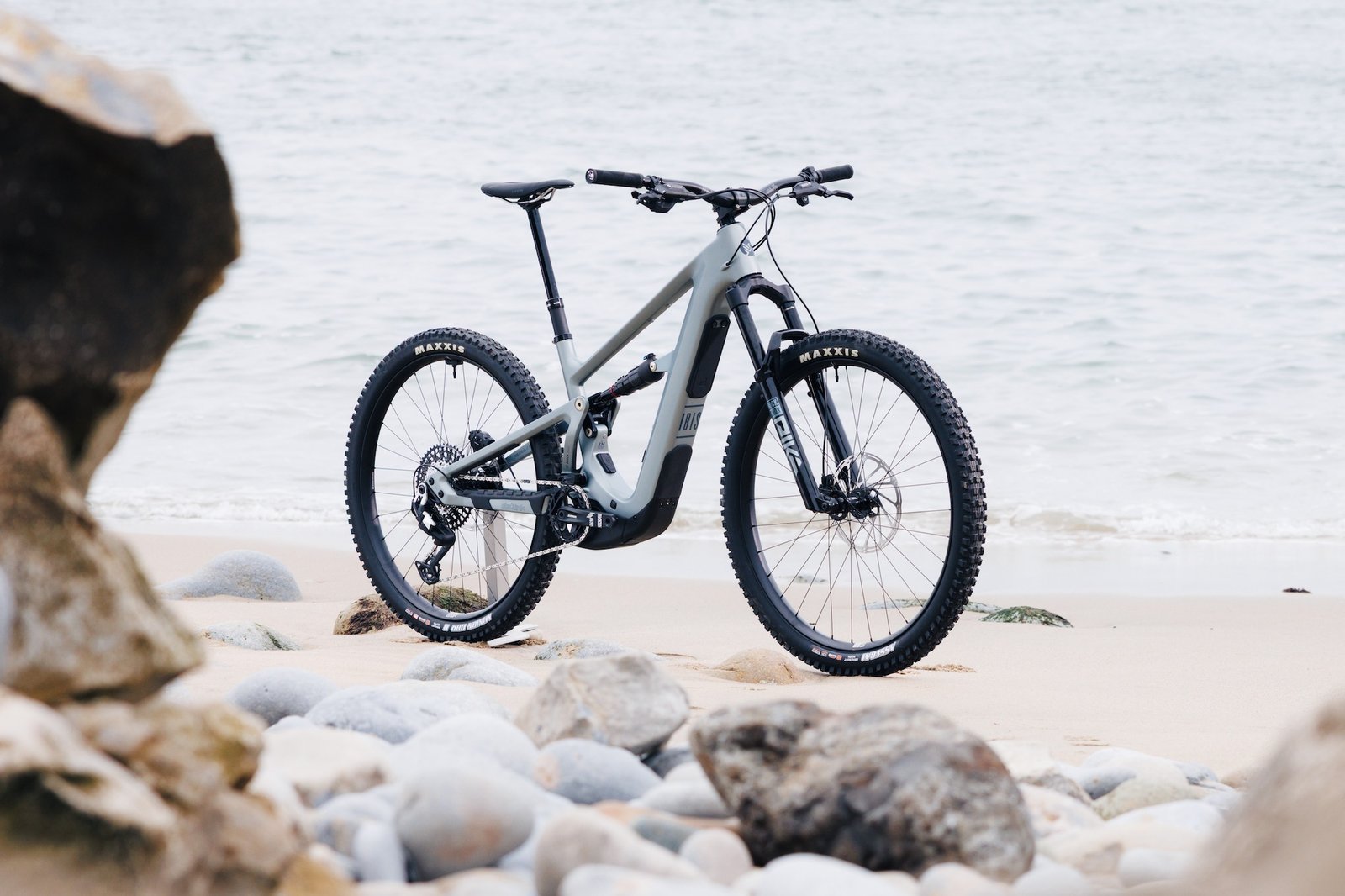
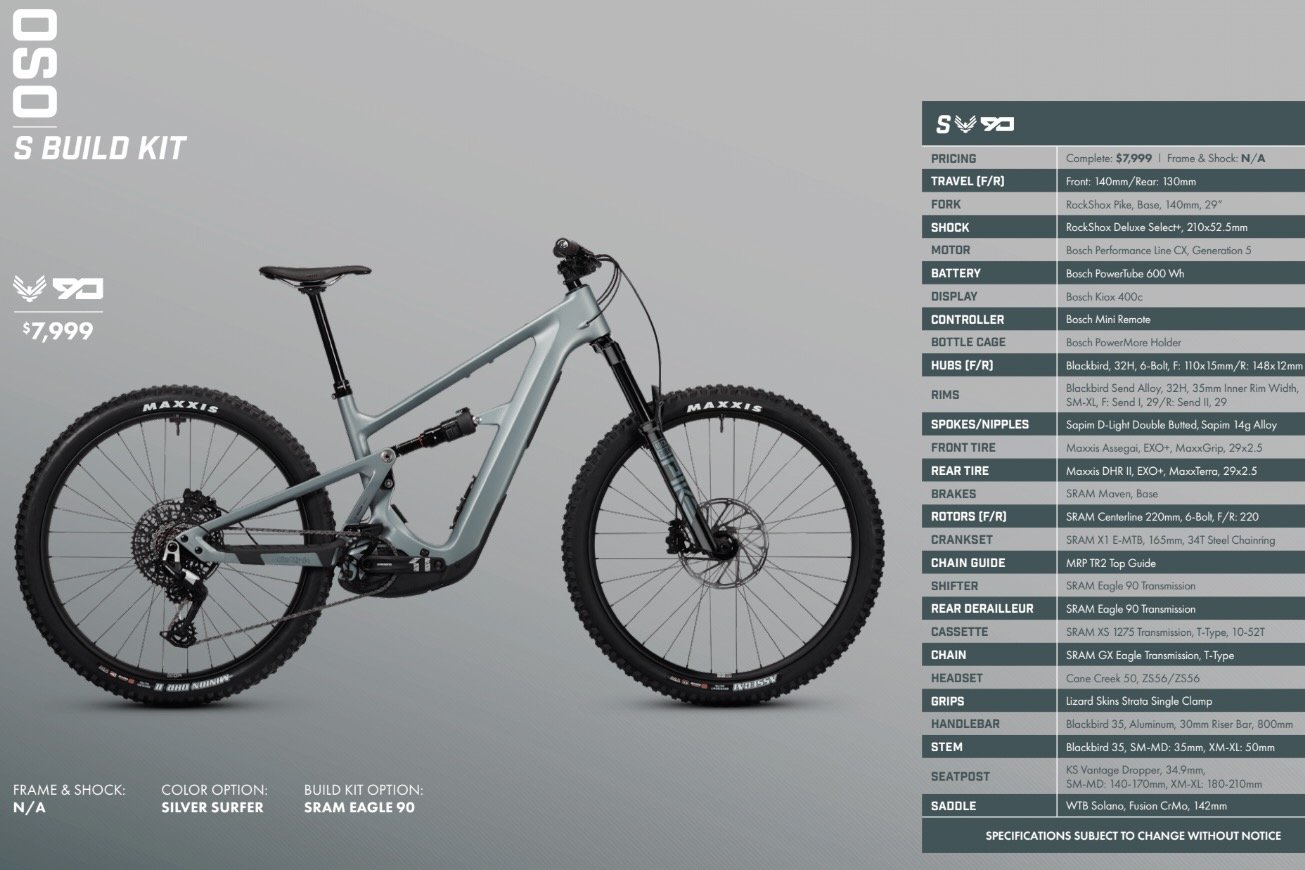
The Oso S is the shortest travel member of the Oso family that looks like, you guessed it, an electric Ripley. It has 130mm of rear wheel travel and comes with a 140mm fork. All sizes come with 29″ wheels front and rear. It’s intended to be a more agile and sporty version for those who prefer less travel. In that regard, it seems kinda similar to the Specialized Levo R that came out just recently.
Likewise, it has the most conservative geometry of the bunch, but numbers that are right in line with modern geometry standards for its travel bracket. Take a look at the chart above for the details. The Oso S comes in one complete build with SRAM Eagle 90 Mechanical shifting and RockShox suspension for $7,999.
Oso S Eagle 90: $7,999
Ibis Oso: Availability
According to Ibis, the new Oso models should begin shipping in May. Head to the Ibis website to learn more or place an order.
ibiscycles.com