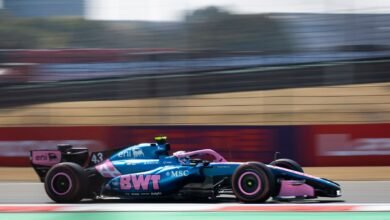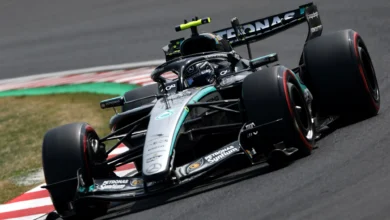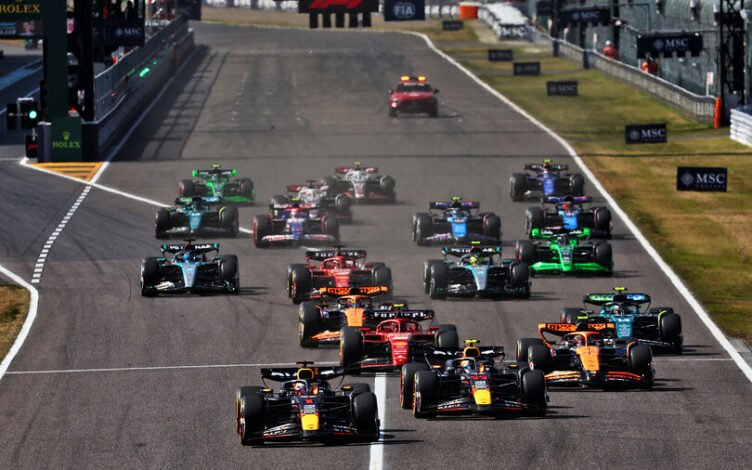
Suzuka remains one of Formula 1’s most treasured circuits, a place where drivers can truly demonstrate their skill, yet it is also one of the most punishing venues on the calendar.
With 18 corners, several of them etched into the sport’s history, and its distinctive figure‑of‑eight configuration, the 5.807‑kilometre Japanese Grand Prix track places extraordinary demands on both car and tyre.
The continuous high‑speed changes of direction generate significant lateral forces, making Suzuka one of the toughest tests for tyre durability and consistency.
It is for this reason that Pirelli has opted to bring the three hardest compounds in its range to Japan: the C1 Hard, C2 Medium, and C3 Soft. Notably, the C1—the hardest available option—will make its season debut, having not been required for the opening two race weekends. Suzuka’s combination of long, loaded corners and sustained high‑speed sections simply necessitates the most robust tyres available.
The circuit itself adds another layer of complexity. The Honda‑owned venue underwent significant resurfacing ahead of the 2025 race, with new asphalt laid from the exit of the first chicane to the end of Sector 1.
For 2026, the work continued, completing the resurfacing of the remaining two sectors all the way to Turn 17. As a result, almost the entire lap now features fresh asphalt that is expected to be smooth, relatively dirty early in the weekend, and offering lower‑than‑usual grip levels.
Such conditions naturally increase the likelihood of graining, particularly on the softest compound. Last year, graining appeared mainly on the front axle and diminished after Friday as the track rubbered in.
However, with a much larger area of new asphalt this season—sharing similar characteristics to the previously resurfaced first sector—teams may need to monitor the phenomenon more closely. The extent of graining and its impact on degradation will become clearer during Friday’s running, when teams gather their first real‑world data.
This year’s tyre selection also sets up an intriguing strategic picture. The behaviour of both the hardest and softest compounds will be especially interesting to observe.
What does Pirelli expect in terms of strategy?
Should the C1 provide stronger‑than‑expected grip on the new surface, and if the C3 proves as consistent as it did recently in Shanghai, all three compounds could become viable strategic tools during the race. Such a scenario is relatively rare at Suzuka, where the hardest tyres typically dominate.
Temperature will play a decisive role as well. The Japanese Grand Prix takes place one week earlier than last season, when ambient temperatures had stabilised around 15°C.
If conditions remain similarly cool, thermal degradation will be limited, placing even greater emphasis on graining as the primary factor influencing tyre performance. In such circumstances, the feasibility of a one‑stop race will depend heavily on how quickly the track evolves and how effectively teams can manage surface‑related wear.
Qualifying preparation will also be critical, as bringing tyres into the correct temperature window on a smooth, low‑grip surface will be essential for extracting peak performance.