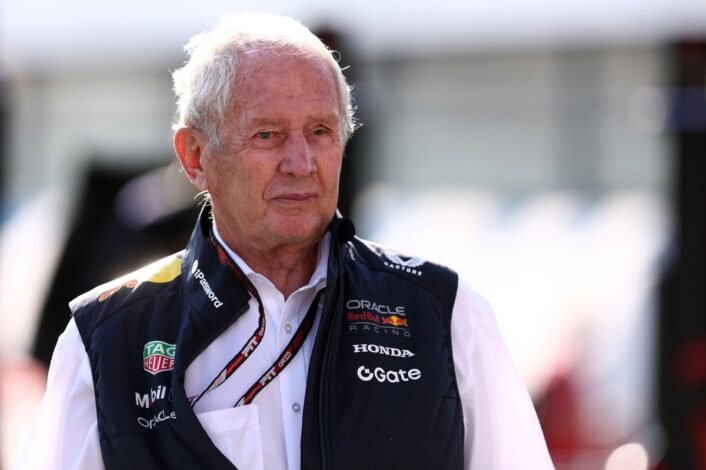
Former Red Bull team advisor Helmut Marko has become the latest figure to criticise the new Formula 1 rules and regulations, as he points to where the problems began and how he hopes solutions can be found.
F1’s new era has received a mixed response at best, with the increase in action and overtaking contrasting complaints by drivers about artificial overtakes and unnatural ways to drive the cars.
The crux of the conflict rests with amount of energy management and harvesting required in both qualifying and races; forcing drivers to lift and coast, downshift on straights and engage in super clipping, which prevents them from being able to fully push the new cars to their maximum over a lap.
Following a first meeting on 9 April regarding potential rule tweaks, all stakeholders will reconvene again on 20 April, after a sporting group meeting on 15 April and a technical group meeting on 16 April, to decide on what changes should be made for both this season and the following campaigns.
Marko believes the problem started when a near-50:50 split between internal combustion engine and electrical power was placed at the heart of the new power unit regulations – aimed to attract new and existing manufacturers to F1.
The result has seen F1 welcome Audi and Ford as new power unit manufacturers and usher Honda back on to the grid, but it did lose Renault as an engine supplier. Cadillac is also poised to join the competition as a fully-fledged engine manufacturer from 2029.
But Marko feels when the rules were being finalised two years ago, with the push for electrification at the forefront of manufacturers’ requests, interests have subsequently changed which has left the current rules flawed.
Race start
Photo by: Andrew Caballero-Reynolds / AFP via Getty Images
“They certainly overlooked a few things, but the regulations were decided at a time when there was still hope – or the view – that electric would be the only way,” Marko, who left Red Bull at the end of last year, told ORF.
“And that has changed significantly in the meantime; the internal combustion engine has made a comeback, we have fuel that is CO2-free, which means everything has been done from an environmental standpoint. And now we just have to make sure that we address these, I would say, shortcomings in the regulations as best as possible.
“50:50 [internal combustion engine and electrical power] sounds good on paper, but it doesn’t work because the battery has to be charged. And if there aren’t enough zones where it can charge…”
Marko has also cited safety concerns that need addressing following the incident involving Oliver Bearman and Franco Colapinto during the Japanese Grand Prix, when the Haas driver was caught out by the huge speed difference between the two as Colapinto was harvesting energy while he was attacking, which caused a 30mph difference.
“There’s also the situation we just had with Colapinto and Bearman. He comes in with an excess speed of over 50 km/h,” he said. “It’s almost as if a vehicle were standing still, and that has to be avoided.
“The other thing is that the starts aren’t consistent, and that has led to dangerous situations. But, it’s a new regulation, let’s give it a chance, and I think most of the development will be in the software area.”
Marko feels the new rules have changed the fundamentals of F1, which has caused the discontent within the driver ranks – most notably four-time world champion Max Verstappen who is weighing up his future amid his unhappiness with the new cars and rules.
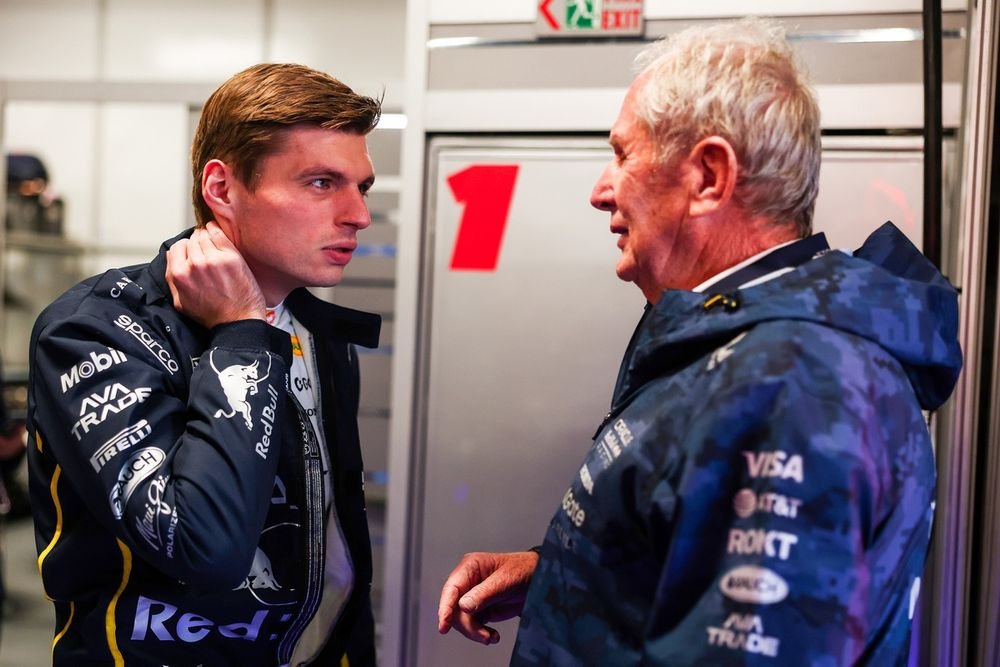
Max Verstappen, Red Bull Racing, Helmut Marko, Red Bull Racing
Photo by: Mark Thompson / Getty Images
Marko echoed his former driver’s sentiments, as he agreed with an assessment Lewis Hamilton made that the driver who can manage their energy use the best will come out on top in 2026.
“I think Hamilton is right [over energy management]. But that takes us away from what Formula 1 stands for, where the fastest driver in a good car or the best car wins,” Marko said.
“It’s not about a team of engineers getting the programming just right. Or a full battery overtaking an empty battery. That’s not real overtaking. That’s not overtaking; it’s just passing by, and that’s more than artificial, and it really shouldn’t be.”
Additional reporting by Ruben Zimmermann
We want to hear from you!
Let us know what you would like to see from us in the future.
Take our survey
– The Autosport.com Team