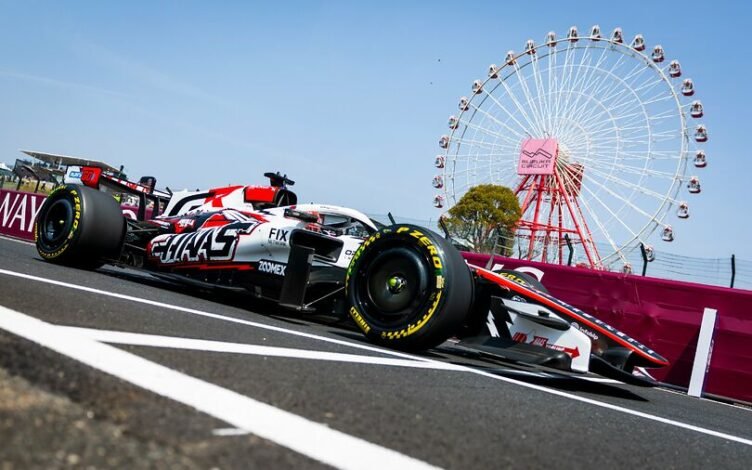
Haas arrived in Japan as one of the early surprises of the 2026 Formula 1 season. After years spent fighting at the back of the grid, the American team has opened the new regulatory era with consistency, reliability and a level of execution that has caught the paddock’s attention.
Ahead of the Japanese Grand Prix, team principal Ayao Komatsu reflected on what has driven that turnaround—and why the team’s internal cohesion has been its greatest asset.
Asked what aspects of Haas’s performance had pleased him most across the opening two rounds, Komatsu immediately pointed to the collective effort behind the scenes.
“I think it’s overall togetherness of the team.”
The 2026 regulations have been a monumental challenge for every organisation, but Komatsu stressed that the scale of the task was even greater for Haas, the smallest operation on the grid.
“I think, as everybody here knows, preparing for this brand‑new regulation has been a huge challenge, and for us, being the smallest team, that challenge was, I’d say, even bigger.”
Despite that, Haas hit every key milestone in its pre‑season programme—something Komatsu credits to discipline and relentless learning.
“But we managed to hit every single milestone in terms of hitting the shakedown, Barcelona, Bahrain 1, 2, and then throughout, like Andrea said, every lap we send a car out we are learning something. So, the learning rate is really, really steep.”
Where larger teams rely heavily on simulation tools and advanced modelling, Haas has had to extract more performance directly from track running. Komatsu was candid about the limitations they face—but also about how the team has adapted.
“We may lack some of the off‑track tools that some of the bigger teams may have. So the things we have to learn at the track are huge and we have to be doing it really, really quickly.”
That urgency has shaped the team’s mindset: “But everybody is working together, looking at the problems in front of you, making improvement every session, every run. So that’s what translated into the result.”
Haas entered the season with a simple philosophy: nail the fundamentals, stay reliable, and be ready to capitalise when others falter. Komatsu reiterated that this approach was deliberate.
“We always said we really need to focus on the basics first. Let’s say first five races, there will be reliability issues, which is normal for this brand‑new regulation, so we know what’s going to happen in front of us. We’ve just got to be there to pick up those places available.”
So far, that strategy has paid off. Haas has scored points, shown consistent pace, and avoided the operational errors that plagued previous seasons. Komatsu acknowledged there is still room for improvement—particularly in getting both cars into the points—but his satisfaction with the team’s execution was unmistakable.
“I feel like we’ve done most of that. Not quite, because we couldn’t get both cars into points, but overall, I’m really, really pleased how this team is putting it together.”