The cancellation of the Bahrain and Saudi Arabian Grands Prix has created an unexpected void in the early‑season calendar, stretching the gap between Japan and Miami to five weeks.
For Racing Bulls, the pause arrives at a moment of both opportunity and introspection. Team Principal Alan Permane has used the window to take stock of the opening flyaways, accelerate development, and refine the team’s understanding of its all‑new Red Bull-Ford power unit.
Despite modest expectations heading into 2026, Racing Bulls emerged from the first three rounds with points on the board and a clearer sense of direction. Permane’s assessment is measured but quietly confident.
A break that becomes a development sprint
The team had originally planned a significant upgrade for Bahrain, but with the race removed from the schedule, the development path has been reshuffled.
“We had a decent upgrade planned for Bahrain, which we’ll now take to Miami, and another planned for Montreal, so we’ll effectively have a quick double upgrade,” Permane explains.
“We’ll introduce one and then replace it straight away, as we can’t bring everything at once or move the Montreal upgrade forward.”
The freight returning from Japan has also opened a rare window to work on the chassis at the factory—something normally impossible during the relentless early‑season travel.
“We’ve taken the opportunity to carry out some unplanned work on the chassis—work that wasn’t scheduled until the end of this flyaway sequence,” he says. “Some areas of the business have been working harder than expected, so we’ve encouraged the race team to take some time off.”
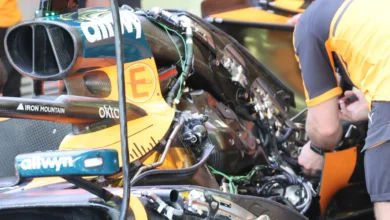
The break is also being used to fully assemble both cars at Faenza, giving the design office a chance to evaluate the RB chassis in a way that’s rarely possible once the season begins.
“The cars are hardly ever here during the season, so it’s a good chance to complete work we couldn’t do before,” Permane adds. “If one or both of the cancelled races are reinstated, we’re expecting a busy end to the year, so we want to make sure everyone can take rest where possible too.”
Extracting more than the car should give
Racing Bulls’ early‑season points haul has been built on execution rather than raw pace. Permane is candid about the team’s competitive position.
“I think we did a good job—I’m not often one to self‑praise, but we performed well in Shanghai,” he reflects. “We managed to score points in both the sprint and the main race, even though we weren’t really quick enough. It was similar in Suzuka, but we’ve been able to extract the maximum from the car.”
The team’s development cycle last year left them slightly behind rivals who continued upgrading deep into 2025.
“We are paying the price against the teams we’re racing who developed their cars last season, whereas we developed ours towards the end of the year,” Permane notes. “However, the upgrades we’re bringing should hopefully move us closer to the top of the midfield.”
The 2026 regulations have reshaped the power unit landscape, and Racing Bulls’ integration of the new Red Bull-Ford package remains a work in progress.
“The PU works very well, and with every lap we complete, we learn more,” Permane says. “One advantage we have is that we have powertrain engineers embedded within our engineering office, which allows us to work closely with them and better understand both them and how they operate.”
The break provides a rare chance to step back and reassess operational procedures.
“There will likely be some changes in how we operate the PU for Miami and beyond,” he adds. “We’re using this period to work closely together to extract the maximum performance from both the PU and the chassis.”
With the new rules still bedding in, discussions continue across the paddock about how to refine the racing product.
“It’s not an easy one,” Permane admits. “We have to listen to the drivers—there are two groups of fans, some who love the new racing and some who don’t. Watching it live is quite exciting, but we need to work as a team to find the right balance.”
The FIA and teams are evaluating several adjustment packages ahead of Miami.
“The two main focuses are making qualifying more flat‑out and driver‑focused rather than PU‑focused, and also reviewing previous incidents to see how we can reduce closing speeds,” he says. “Although we need to be careful not to reduce the spectacle.”
A young driver pairing finding its rhythm
Liam Lawson and Arvid Lindblad have settled into a constructive working relationship, something Permane was determined to foster from the outset.
“They are working together very well,” he says. “I was very clear with them in the off‑season that they would both benefit from driving alongside each other, supporting rather than taking away from one another.”
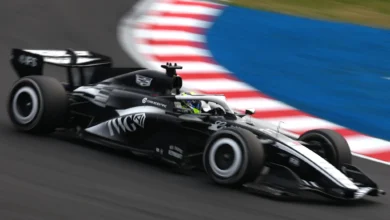
The early signs are encouraging: “There are differences between the drivers, but it’s still early to say with Arvid,” Permane notes. “They are very close in terms of speed. Liam was unfortunate in Japan with a front wing issue—without that, he would have been up there.”
Both drivers share a common foundation through the Red Bull Junior Programme, something Permane believes helps accelerate their development.
“We’re proud of the fact that we can get the best out of them, and coming from the same programme, they tend to work in a similar way.”