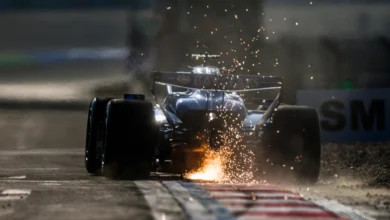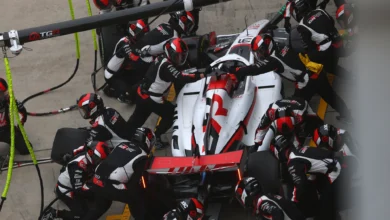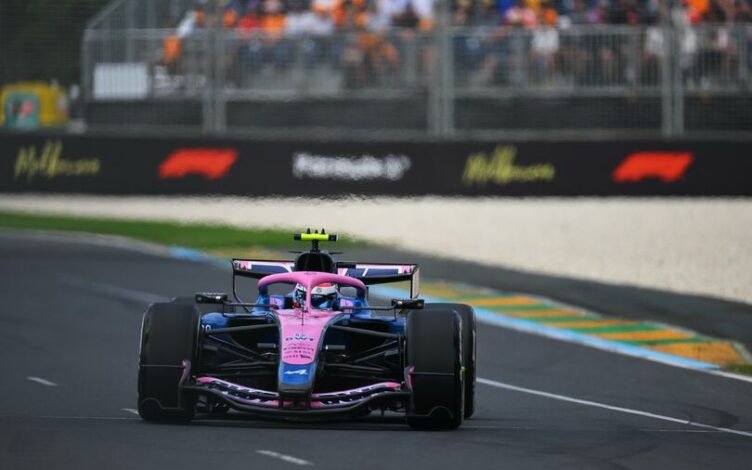
The start of the 2026 Formula 1 season has marked the most dramatic shift in car architecture since the hybrid era began in 2014, and for the first time in years the sport is genuinely moving toward lighter, more compact machinery.
The FIA has reduced the minimum weight from 800 kg to 768 kg, a 32 kg drop that becomes even more significant when paired with the dimensional changes: the maximum wheelbase has been shortened by 200 mm to 3.4 m, the floor width trimmed by 100 mm to 1.9 m, and the Pirelli tyres narrowed by 25 mm at the front and 30 mm at the rear.
These reductions, combined with the new power unit layout — a 50/50 split between internal combustion and electric power and the removal of the MGU‑H — have created a regulatory environment where weight is once again a decisive performance differentiator.
Early estimates from within the paddock reveal a striking spread in how teams have responded to the challenge. Some have produced cars that sit comfortably under the 768 kg limit, allowing ballast to be placed exactly where it benefits handling and tyre load.
Others are hovering right on the threshold. And several teams are carrying significant excess mass, in some cases more than 20 kg, which translates directly into lap‑time loss.
At the top of the overweight group is Williams, reportedly 26 kg above the limit — a deficit that could cost close to 0.9 seconds per lap if we apply a conservative estimate of 0.035 s per kilogram. Even traditionally efficient teams such as Red Bull and Aston Martin are said to be 9–10 kg over, a penalty in the region of 0.3–0.35 seconds.
Newcomer Cadillac sits at 6–7 kg above the limit, while Racing Bulls are believed to be 4–5 kg over. Alpine’s excess is smaller, around 2–3 kg, and Haas is only 1 kg above the limit— effectively negligible in performance terms.
Only one team, McLaren, is reportedly sitting exactly on the 768 kg minimum. That alone is a strong indicator of structural efficiency, especially given the team’s upward trajectory through 2024 and 2025.
The real headline, however, belongs to the trio of teams that have managed to come in under the limit: Ferrari, Audi, and Mercedes. Being underweight is a major competitive advantage.
It allows engineers to add ballast — sometimes 10 kg or more — and position it low and centrally to optimise centre of gravity, weight distribution, and cornering stability. In a season where the power units will rely heavily on electrical deployment, a lighter chassis also reduces energy consumption, improving battery usage over a lap.