The 2026 Formula One season has begun under unusual circumstances, with only three races — Australia, China, and Japan — taking place before the championship entered a five‑week break caused by the cancellation of the Bahrain and Saudi Arabian Grands Prix.
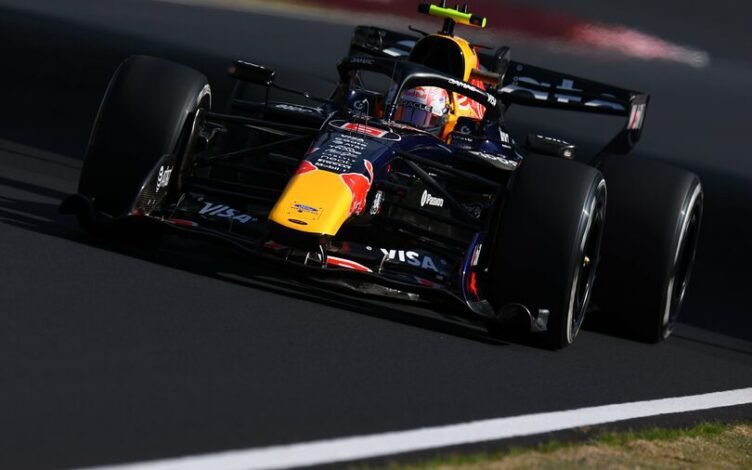
Despite the disrupted calendar, the early rounds have already revealed how teams are interpreting the radically revised 2026 technical regulations. Among the front‑running teams, Red Bull Racing’s approach stands out for its combination of regulatory compliance, aerodynamic refinement, and selective development timing.
Red Bull introduced a comprehensive regulatory‑driven package at the Australian Grand Prix, brought no updates at all to China, and then delivered a significant flow‑conditioning upgrade at the Japanese Grand Prix. This pattern suggests a team that entered the season with a strong baseline concept, used the early races to validate its aerodynamic platform, and then applied targeted refinements once correlation was confirmed.
Australia: A Regulation‑Driven Redesign of the Core Aerodynamic Surfaces
The Australian Grand Prix marked the debut of Red Bull’s 2026‑spec aerodynamic architecture. All three components updated — the front wing, nose, and rear wing — were redesigned to comply with the new regulations, but Red Bull’s interpretations reveal the team’s characteristic focus on aerodynamic efficiency and system integration.
Front Wing – Three‑Element Architecture with SM/CM Integration
The 2026 rules limit the front wing to three elements and allow attachment at either the first or second element. Red Bull chose to attach the wing at the first element, enabling both flaps to participate in the SM/CM (Sustainable Mode / Cornering Mode) actuation.
This design gives Red Bull greater control over drag reduction and balance shifts, allowing the team to fine‑tune the aerodynamic platform during both straight‑line and cornering phases. The decision to attach at the first element reflects a desire for maximum flexibility in how the front wing responds to the active aerodynamic systems that define the 2026 regulations.
Nose – Revised Profile with Internalised SM Actuation
The nose was also redesigned to comply with the new rules, which require the front wing flap actuation system to be integrated into the nosebox. Red Bull’s solution places all adjustment mechanisms inside the nose, creating a clean external profile and reducing aerodynamic disturbance at the wing‑nose junction.
This approach improves the quality of the airflow feeding the front wing and floor, while also simplifying the structural integration of the SM system. It is a typically Red Bull solution: compact, efficient, and aerodynamically clean.
Rear Wing – Two‑Pylon Support with Central Actuator
The rear wing update reflects the new 2026 requirement for two pylons intersecting the underside of the mainplane. Red Bull’s design features a one‑ or two‑element flap assembly capable of actuating for SM drag reduction, with the actuator placed on the centreline.
The return to perpendicular endplates and the freedom to define the mainplane chord length give teams new opportunities to shape the wing’s load profile. Red Bull’s early‑season dominance suggests that their interpretation strikes an effective balance between high downforce in standard mode and efficient drag reduction in SM mode.
China: No Updates Submitted
Red Bull did not bring any upgrades to the Chinese Grand Prix. This decision is significant because Shanghai is a circuit that exposes weaknesses in aerodynamic efficiency, balance stability, and energy management — all areas where Red Bull traditionally excels.
The absence of updates indicates that Red Bull was confident in the baseline performance of the RB20’s successor and preferred to gather correlation data across a second circuit before committing to further development. This mirrors the team’s approach in previous regulation cycles, where early‑season stability has often been a hallmark of their championship‑winning campaigns.
Japan: A Targeted Flow‑Conditioning Package for Suzuka
The Japanese Grand Prix saw Red Bull introduce a substantial aerodynamic update focused on flow conditioning, cooling efficiency, and integration of the sidepod‑floor‑engine cover system. Suzuka’s high‑speed, high‑load nature makes it an ideal circuit for validating such changes.
Sidepod Inlet – Revised Profile for Higher‑Pressure Air Ingestion
Red Bull updated the sidepod inlet to ingest higher‑pressure air from upstream, improving cooling efficiency and stabilising the airflow entering the sidepod channel. The new profile is based on simulation and early‑season running data, suggesting that Red Bull identified an opportunity to improve both thermal performance and aerodynamic consistency.
Coke/Engine Cover – Adapted Surfaces for Improved Downstream Efficiency
Because the sidepod inlet was revised, the coke bottle and engine cover surfaces were reshaped to match the new geometry. These changes improve the quality of the airflow feeding the rear suspension, beam wing region, and diffuser upper surfaces.
This is a classic Red Bull strength: integrating multiple surfaces into a single aerodynamic system rather than treating updates as isolated components.
Floor – Upper Surface Reprofiled to Match New Sidepod Geometry
The floor’s upper surface was revised to meet the new sidepod geometry, extending forward toward the chassis. This update takes advantage of the improved airflow generated by the new inlet and sidepod shape, allowing the floor to generate more load despite the simplified 2026 underbody regulations.
Brake cooling
Suzuka’s heavy braking demands required minor changes to the rear wheel bodywork, adjusting inlet and exit geometries to suit brake material requirements. This is a typical circuit‑specific update, ensuring that thermal management does not compromise aerodynamic performance.