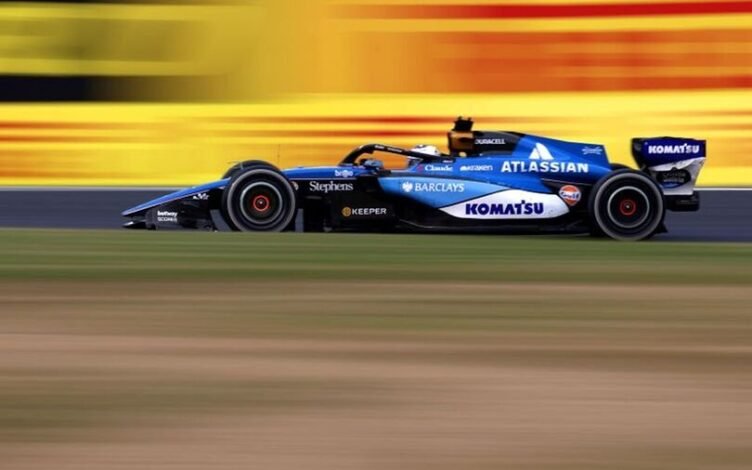
As Formula 1 returns from its five‑week break, the 2026 Miami Grand Prix presents teams with a dense combination of regulatory complexity, extreme conditions, and strategic nuance.
Ahead of the event, Paul Williams, Chief Trackside Engineer, outlined the technical factors that will shape the weekend — from the unique demands of the Hard Rock Stadium circuit to the evolving challenges of the 2026 hybrid regulations.
A sprint weekend with added complexity
Miami hosts the second Sprint event of the season, compressing preparation time and placing a premium on simulator work and pre‑event modelling. Although the single practice session has been extended by 30 minutes for this round, Williams notes that the challenge remains substantial: teams must converge on a competitive setup with minimal real‑world running.
The circuit itself demands a broad performance window. While the opening sector is dominated by high‑speed corners, there are two long straights in the first and final sectors. However, a slow, technical middle section forces teams into a compromise between aerodynamic efficiency and mechanical grip.
As a temporary venue, the track surface evolves rapidly, with grip levels shifting from session to session — a factor that becomes even more pronounced under Sprint parc fermé rules.
Heat, tyres, and the limits of rear grip
The warm Florida climate is a defining feature of the Miami weekend. Track temperatures regularly exceed 50°C, creating severe rear‑tyre overheating, particularly through the traction‑heavy middle sector. Managing surface temperatures becomes a lap‑by‑lap challenge, with drivers forced to balance aggression against thermal degradation.
Front‑axle behaviour is also a concern. The fast T6–T8 sequence generates high sliding loads, accelerating wear and complicating tyre preparation for qualifying laps. The long back straight can cool the tyres excessively before the final corner, especially when drivers must manage traffic.
Complicating matters further, the dark asphalt causes rapid temperature drops in late‑afternoon sessions, leading to significant balance shifts within a single run.
Energy management under the 2026 regulations
Williams emphasises that the 2026 rules have fundamentally reshaped weekend preparation: “Our focus and resource allocation for energy management has greatly increased, particularly the time spent by drivers preparing in the simulator. This is even more important as Miami is a Sprint event, limiting practice time.”
Miami’s layout, however, offers some relief. The long straights provide ample opportunity for harvesting, easing the energy‑management burden compared to earlier rounds.
The FIA’s regulatory refinements introduced ahead of Miami further reduce the difficulty, but Williams stresses that the core challenges remain unchanged: out‑lap preparation, optimising deployment and harvest, and building a robust plan for wheel‑to‑wheel combat.
The 2026 rules define three Straight‑Line Mode (SLM) zones at Miami: the start/finish straight, the run from Turns 8 to 11, and the back straight.
The second zone is disabled in wet conditions, and if a WET hazard is declared, teams may raise the front ride height under parc fermé — a rare regulatory exemption designed to improve safety.
Tyre Behaviour: The Decisive Variable
Pirelli brings the softest allocation (C3–C5) to Miami, a choice that amplifies the circuit’s thermal sensitivity. Sector 2 punishes the rear tyres with repeated traction demands, while Sector 1 stresses the fronts through long, loaded corners.
Qualifying preparation becomes a delicate balance between keeping the tyres alive and ensuring they are in the correct window at the start of the lap.
With temperatures fluctuating dramatically across the day, teams must anticipate balance swings and adjust run plans accordingly.
Strategy: overtaking, safety cars, and the one‑stop baseline
Miami is statistically one of the easiest circuits for overtaking, shifting the competitive emphasis toward race pace rather than qualifying performance. The baseline expectation is a one‑stop strategy using Mediums and Hards, though all three compounds remain viable.
Some drivers may attempt an aggressive alternative by starting on Softs to gain early track position and avoid the Hard tyre altogether.
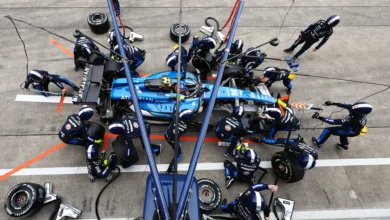
The circuit also has a high Virtual Safety Car probability, which can transform the race. A well‑timed VSC may allow drivers to pit with minimal time loss or even encourage a second stop. If tyre degradation rises even slightly above expectations, the field could naturally drift toward a two‑stop race.
Between the Sprint format, the evolving surface, the extreme heat, and the intricacies of the 2026 hybrid rules, Miami promises to be one of the most technically challenging events of the early season. Williams’ assessment makes clear that success will depend on adaptability — in setup, in tyre management, and in the constantly shifting energy‑management landscape.
It sure feels good to say race week again! 🏁🇺🇸 pic.twitter.com/YBmatYaYF0
— Scuderia Ferrari HP (@ScuderiaFerrari) April 27, 2026