On this week’s’ episode of the Fully Equipped Podcast with Johnny Wunder, we talked about the prospect of the LS model being on its way out and the questions that its potential exit raises. Let’s explore the theory and the implications.
There’s a few things at play here.
1.) The death of the LS driver
Johnny and I talked about this last week as well. Jack also did a good write-up on the topic that you can read here. The idea is that we’re starting to see less use of LS-style drivers such as the TaylorMade Qi4D LS, Cobra OPTM LS, and Callaway Quantum Triple Diamond. Players are opting instead for Qi4D Core, Cobra OPTM X, or Callaway Triple Diamond Max profiles.
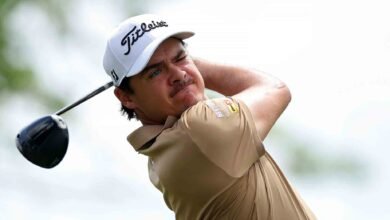
Chris Condon / Getty
The main reason is that ‘core’ style heads, those that sit in the middle of a woods lineup, have gotten so versatile. With any of the ‘core’ style heads I have mentioned, I have been able to fit them into the same numbers I would get out of their LS counterparts but with far more forgiveness. The looks have also been significantly improved as well. The idea of playing smaller, pear-shaped LS-style heads was never especially appealing, but that’s not as much of a factor as it used to be. In fact, many LS style heads are getting bigger to boost forgiveness, like the Cobra OPTM LS. The new Titleist GTS 4 is also rumored to be a bit bigger than it has been traditionally.
;)
Jordan Bank/Getty Images
The one category I believe is being overlooked, though, is the high-spin slice golfer. This is the golfer who traditionally steer clear of the LS head models because they worry about a lack of forgiveness. But with the modern heads that’s not such a problem anymore. I’ve fit quite a few higher handicap golfers into more forgiving LS models, like the OPTM LS or the Wilson DYNAPWR LS models, and it’s gone quite well. The big advantage is to take a 9-degree head and turn it all the way up on the sleeve to add loft and, even more importantly, close the face. A closed face with lower spin results in a much more friendly ball flight.
Is the LS head dead? No. Could it possibly be on its way out, or find itself in an increasingly niche market? I think it already has.
2.) The spawn of the Triple Diamond Max
A big reason why the lines between driver models are starting to get blurred was the emergence of the Callaway Triple Diamond Max model driver, which started in 2024 with the Ai Smoke Triple Diamond Max. As a special release item, the Ai Smoke Triple Diamond Max gave players a Triple-Diamond feel and flight bias but with a larger head for more forgiveness, a touch of added spin to complement the low-spin tendencies of the standard Triple Diamond head, and an easier time turning the ball over. It did all of that without losing the speed that the Triple Diamond is known for. The setup was the same as it was for the Triple Diamond: one weight forward in the head, and one weight in the rear of the head. This helps to control not only spin and launch, but also start line.
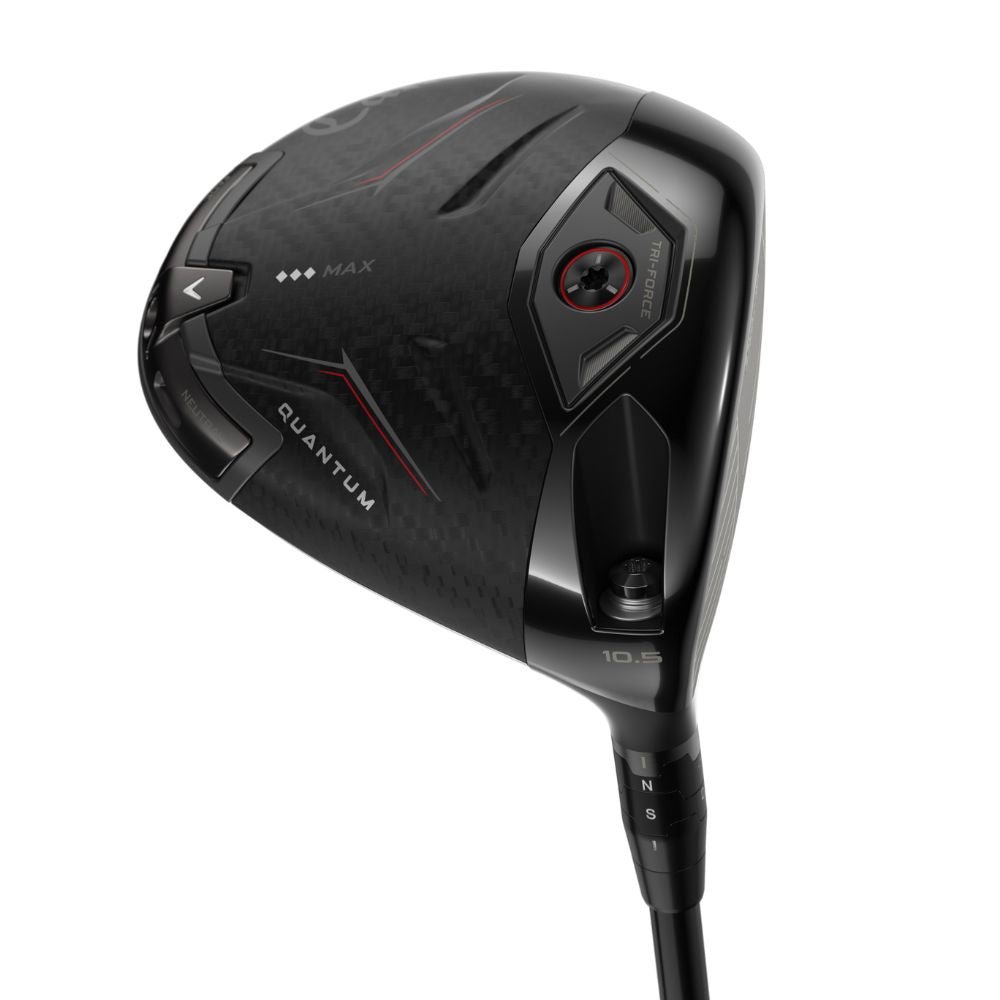
Callaway Quantum Triple Diamond Max Custom Driver
View Product
The normal in-line Triple Diamond head has always had a right-start bias with a tendency to support a fade for a right-handed golfer. By adding more weight to the front of the head, that feeling was intensified, and by adding weight back, start lines would get a bit more neutral and the face was easier to close so the player could manufacture a draw. Ai Smoke Triple Diamond Max was a monster. Non-contract athletes like Justin Rose and Sepp Straka won multiple times with the model. Fast forward to the new Quantum Triple Diamond Max, and many golf writers and equipment reviewers are wondering why the other heads in the Callaway lineup even need to exist. I said the same in my own launch video. I don’t think there’s a reason for fitters to take a second look at the Triple Diamond or the standard Max heads. Just go straight to the Triple Diamond Max for nine out of 10 players. That’s my opinion.
;)
Callaway launches Paradym AI Smoke Triple Diamond MAX driver
Ryan Barath
What makes the Triple Diamond Max so good is its versatility. You can add front weight or back weight, the head starts neutral and can be useful for players work work the ball either way, and spin is incredibly manageable on mis-hits across the face. If you look at the market over the last three years, you can see the response to the success of the Triple Diamond Max. TaylorMade’s new Qi4D core head shares lots of similarities. The OPTM X is a wonderful head that can change characteristics when you move the weights and play around with the FF33 adapter settings. There have been others. Wilson released its DYNAPWR MAX+ as a direct competitor to the Triple Diamond Max, and Ping’s new G440 K came into the fray as the new 900-pound gorilla in the room. All of these designs had the same goal: Make the platform as versatile and “fittable” as possible without sacrificing an ounce of forgiveness. Each company also happened to do this without sacrificing speed. Which was one of the original wins that we claimed for the new G440 K when we first tested the product.
Right now, we’re living in the best imaginable driver market for consumers. Having categories or types of heads that overlap or blur lines only means more chances for an incredibly detailed fitting. Each one is going to do something different, and because no two swings are the same, that can only be a good thing. Do I think that we are going to start seeing models taken out of lineups? No. But I do think the models are going to get more specific. There’s going to be a ‘core’ style head in each lineup that will work for 90% of golfers, something that wasn’t true even five years ago. And then you’ll have niche heads specific to golfer needs in specific areas. Which is nothing but fun, useful, and encouraging for the future of golf equipment.