Oscar Piastri’s third season in Formula One has demanded patience, resilience, and a willingness to grind through McLaren’s early‑season reliability setbacks.
But at the Japanese Grand Prix, the Australian finally had the platform to show the full breadth of his racecraft—and he delivered, securing his first podium of the 2026 campaign and what he himself described as one of his most complete performances in the sport.
Reflecting on the weekend, Piastri was unequivocal about the quality of his execution from the very first laps: “I think [that] weekend was probably one of my best weekends in F1. I think I felt like I hit the ground running in practice, qualifying.”
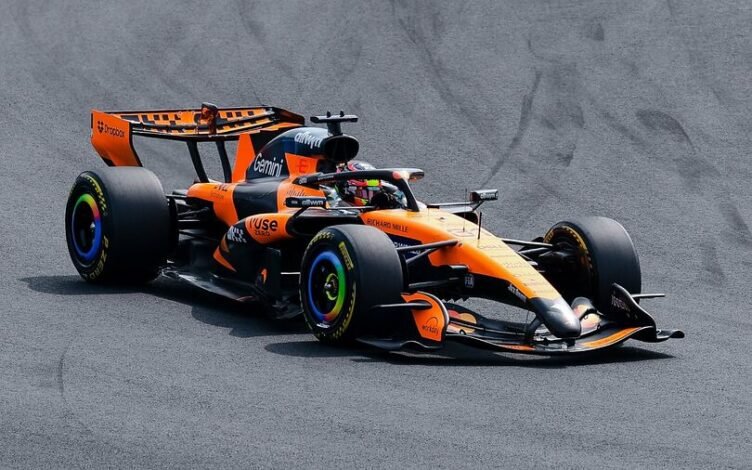
McLaren arrived at Suzuka needing a clean weekend after a turbulent start to the season marked by component issues and compromised preparation. For Piastri, the turning point came early: the team managed to place the MCL38 squarely in the operating window he needed.
“I think we did a really good job of getting the car into the window I was happy with on Friday.”
That foundation carried into qualifying, where Piastri delivered one of his sharpest sessions of the year: “I felt like I drove well in qualifying.”
But it was over the full Grand Prix distance—his first under the new 2026 regulations—that Piastri’s performance truly crystallised. With energy deployment now a decisive strategic tool, he showed maturity and precision in managing the race’s tactical layers.
“In the race, yeah, there wasn’t anything more we could have done. We got a good start, the pace was good. I felt like I was strategic or smart with how I used the boost and how I managed that side of racing.”
McLaren’s pit wall matched that execution with a measured approach that avoided overreacting to rivals’ moves: “Our strategy was good, you know, we didn’t blink too early.”
A mid‑race Safety Car neutralised some of Piastri’s hard‑earned advantage, but it did little to change the overall complexion of his weekend.
“Obviously, the Safety Car was a shame, but I think as race weekends go we couldn’t have done any better than that.”
For a team that has battled reliability gremlins since the season opener, the result was a welcome validation of the underlying performance of the car—and of Piastri’s ability to extract it when given a stable platform.
“So yeah, for me I’m very happy with the performance that I put in, very happy with the performance from the whole team.”
Still, Piastri was clear‑eyed about the broader picture. McLaren’s early‑season issues have cost them rhythm and points, and Lando Norris’ disrupted weekend in Japan underscored the fragility of their campaign to date.
“Clearly, we’ve still got some, firstly, performance to find, but also on Lando’s side of the garage was a pretty interrupted weekend with all the issues, and clearly the start of the season has not been easy for us with reliability, so we’ve got a long way to go.”
Yet the podium—and the manner in which it was earned—offered a glimpse of what McLaren can achieve when the package is operating at its peak.
“But yeah, I think we showed that if we get everything as good as we can get it, then we can cause a few headaches.”